
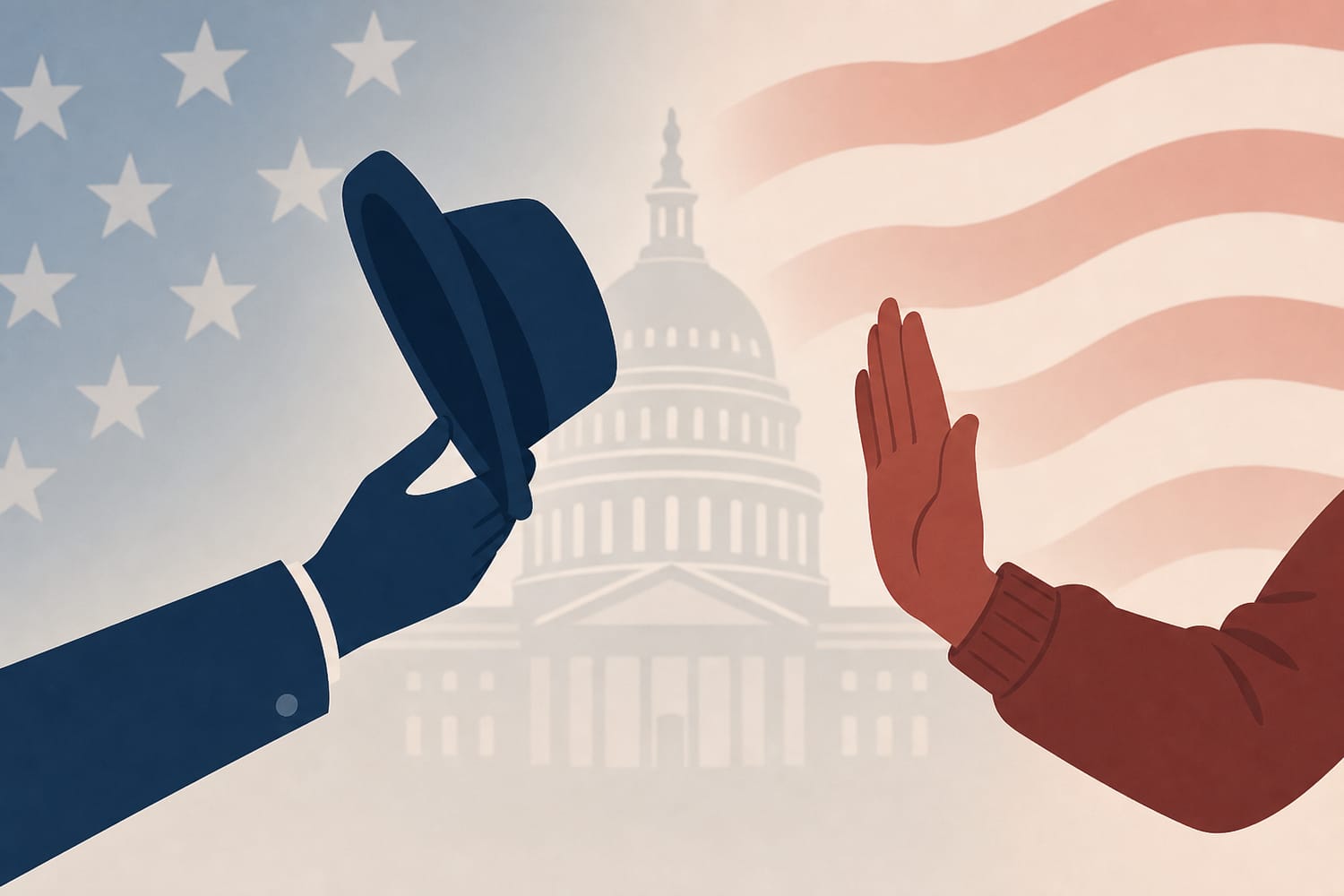
The Debate Over Everyday Courtesy
Complaints about the decline of manners in America are not new. Every generation seems to worry that the next one is less respectful, less polite, and less willing to follow the social rules that once held communities together. Today, those concerns often focus on people looking at phones during conversations, using casual language in professional settings, dressing informally in public, or seeming less willing to say “please,” “thank you,” or “excuse me.”
At the same time, others argue that manners have not disappeared so much as changed. They point out that many older rules of etiquette were tied to social hierarchies, gender expectations, class distinctions, and cultural norms that no longer fit modern life. From this perspective, what looks like rudeness to one person may simply be a different way of showing respect, comfort, honesty, or equality.
The question, then, is not only whether manners are disappearing. It is also about who gets to define manners, which traditions are worth preserving, and how politeness adapts in a more diverse, digital, and informal society.
The View That Manners Are Declining
One side of the debate argues that basic courtesy has weakened in American life. People who hold this view often point to everyday experiences: drivers who cut each other off without apology, customers who treat service workers poorly, people who talk loudly on speakerphone in public, or guests who fail to RSVP to events. To them, these are signs that consideration for others has become less common.
Supporters of this view often connect manners to social cohesion. They believe small gestures such as holding doors, greeting neighbors, writing thank-you notes, and letting others speak without interruption help create trust and mutual respect. When these habits fade, they argue, public life becomes more impatient and self-centered.
Some also blame the pace of modern life. Americans are often busy, stressed, and distracted. In that environment, people may forget or ignore the small courtesies that require attention to others. A person rushing through a commute or multitasking between work messages and family responsibilities may not notice how their behavior affects people around them.
Technology is another major concern. Critics say smartphones and social media have made people less present and less thoughtful. A dinner table where everyone is checking notifications can feel disrespectful. Online arguments can become harsh because people do not see each other face to face. For those worried about the decline of manners, digital communication has made it easier to be abrupt, dismissive, or cruel.
The View That Manners Are Evolving
Another side argues that manners are not vanishing but evolving with social change. According to this view, every era has its own etiquette. What counted as polite in the 1950s may not match the expectations of a society shaped by greater gender equality, racial diversity, workplace flexibility, and digital communication.
For example, first-name greetings in the workplace may seem too casual to some older Americans, but others see them as a sign of openness and collaboration. Wearing jeans to an office may once have seemed disrespectful, while today it may be normal in industries that value creativity or comfort over formality. Texting instead of calling may seem impersonal to one generation but considerate to another, especially if it avoids interrupting someone’s day.
People who see manners as evolving also argue that some traditional etiquette rules were exclusionary. Formal rules about dress, speech, dining, and social behavior often reflected upper-class norms and could be used to judge people who came from different backgrounds. In this view, relaxing those standards may make society more inclusive rather than less respectful.
This side often emphasizes intention over form. A handwritten thank-you note may be lovely, but a sincere text message may still express gratitude. Standing when someone enters the room may be traditional, but listening carefully and treating them as an equal may matter more. From this perspective, manners are not about following fixed rules but about adapting respect to the situation.
Generational Differences in Expectations
Much of the debate over manners is also a debate between generations. Older adults may have been raised with clearer expectations about how to address elders, behave at the dinner table, dress for church or travel, and interact with authority figures. When younger people do not follow those customs, it can appear disrespectful.
Younger Americans, however, may value different forms of respect. They may be less focused on titles, formality, or deference and more focused on authenticity, consent, boundaries, and inclusion. For example, asking someone’s pronouns may be seen by many younger people as polite and respectful, while some older people may find the practice unfamiliar or unnecessary. Similarly, younger workers may see it as acceptable to question a manager openly, while older workers may interpret that as a lack of respect for authority.
These differences can lead both groups to misread each other. A younger person may not intend to be rude when sending a short text instead of making a phone call. An older person may not intend to be dismissive when expecting more formal language. Each may simply be operating under a different etiquette system.
Technology and the New Rules of Politeness
Digital life has created new manners, even as it has disrupted old ones. Email, texting, video calls, group chats, and social media all come with expectations that are still developing. Should a text be answered immediately? Is it rude to leave someone on read? Should cameras be on during virtual meetings? Is it polite or intrusive to send voice messages?
Because these rules are still unsettled, misunderstandings are common. One person may see a delayed response as rude, while another sees immediate-response culture as stressful and unreasonable. Some people consider short messages efficient; others read them as cold. Emojis, punctuation, and message length can all affect tone in ways that are easy to misinterpret.
Social media adds another layer. Public criticism, sarcasm, and blunt disagreement are common online. Some see this as evidence that manners are deteriorating. Others argue that digital spaces have given people a voice who were once expected to remain quiet for the sake of politeness. In this view, what looks like incivility may sometimes be a challenge to unfair norms.
Still, many people across the debate agree that technology requires more thoughtfulness. Whether one believes manners are declining or changing, there is broad concern about distraction, online cruelty, and the difficulty of maintaining empathy through screens.
Cultural Diversity and Different Definitions of Respect
America’s diversity also complicates the question of manners. Different families, regions, religions, ethnic groups, and communities may have different standards for polite behavior. In some cultures, direct eye contact shows confidence and respect; in others, it can seem confrontational. Some families value loud, expressive conversation, while others value quiet restraint. Some people show warmth through physical affection, while others prefer more personal space.
Because of this variety, judging manners by one standard can be misleading. Behavior that seems rude in one context may be normal or respectful in another. An informal greeting, a direct answer, or a different approach to hospitality may reflect culture rather than discourtesy.
Those who emphasize cultural diversity often argue that modern manners require curiosity and flexibility. Instead of assuming bad intent, people can ask questions, observe context, and recognize that politeness is not universal. At the same time, others worry that too much flexibility makes it harder to maintain shared expectations in public life. They believe some common standards, such as saying thank you or waiting one’s turn, are necessary in a society where strangers interact daily.
The Role of Parents, Schools, and Communities
Many people who worry about declining manners point to changes in parenting, schooling, and community life. They argue that children are not always taught basic etiquette as consistently as in the past. Family dinners may be less frequent, schools may focus more on academics than social behavior, and communities may be less connected than they once were.
From this perspective, manners must be taught through repetition and example. Children learn how to treat others by watching adults. If adults are impatient, distracted, or disrespectful, young people may copy those behaviors. Supporters of this view often call for renewed emphasis on courtesy at home, in classrooms, and in public institutions.
Others caution against romanticizing the past. They argue that previous generations were not always as polite as memory suggests, especially toward people with less power. A child might have been taught to say “sir” or “ma’am” while also absorbing prejudices or rigid social roles. For this side, the goal should not be simply to return to older etiquette but to teach kindness, empathy, and respect in ways that fit contemporary values.
Civility, Honesty, and Power
Another important part of the debate concerns the relationship between manners and honesty. Some people believe Americans have become too willing to be rude in the name of “telling it like it is.” They worry that bluntness is often used as an excuse for cruelty, especially in politics, workplaces, and online debates. For them, manners help people disagree without dehumanizing each other.
Others argue that calls for civility can sometimes silence legitimate anger or criticism. Historically, marginalized groups have often been told to be polite while facing unfair treatment. From this perspective, demanding calm and courteous language may protect comfort more than justice. People who hold this view do not necessarily reject manners, but they question who is expected to be polite, under what conditions, and for whose benefit.
This tension is especially visible in political discourse. Some Americans want a return to more respectful public conversation. Others believe strong language is sometimes necessary to confront serious problems. The debate shows that manners are not only about etiquette but also about power, conflict, and social change.
Finding Common Ground
Despite disagreements, there is some common ground. Few people argue against kindness, gratitude, patience, or respect. The disagreement is usually about how those values should be expressed. One person may prefer formal etiquette, while another may prefer casual sincerity. One may value tradition, while another values adaptability.
A balanced view may recognize that some manners are worth preserving because they make shared life easier. Saying thank you, listening without interrupting, respecting personal space, being considerate to service workers, and acknowledging others’ time are habits that remain widely valued. At the same time, manners must evolve as society changes. New technologies, diverse communities, and shifting ideas about equality all require new forms of courtesy.
So, are manners disappearing in America or just evolving with the times? The answer may depend on which manners one is looking at. Some formal customs have clearly faded. Other forms of respect have emerged. The challenge is not simply to defend the old or celebrate the new, but to ask whether our behavior helps people feel seen, valued, and treated with dignity.