
Why the Debate Matters
Across the United States, pets have moved from the backyard to the bedroom, from being “owned” to being “parented,” and from household companions to central members of the family. Americans spend billions of dollars each year on pet food, veterinary care, insurance, grooming, toys, daycare, training, and even birthday parties. Dogs ride in strollers, cats have custom furniture, and many people refer to themselves as “dog moms,” “cat dads,” or “pet parents.”
To some observers, this shift reflects a positive expansion of care, empathy, and family life. Pets provide emotional support, structure, companionship, and joy. For many people, treating animals as family members is simply a sign of a more compassionate society.
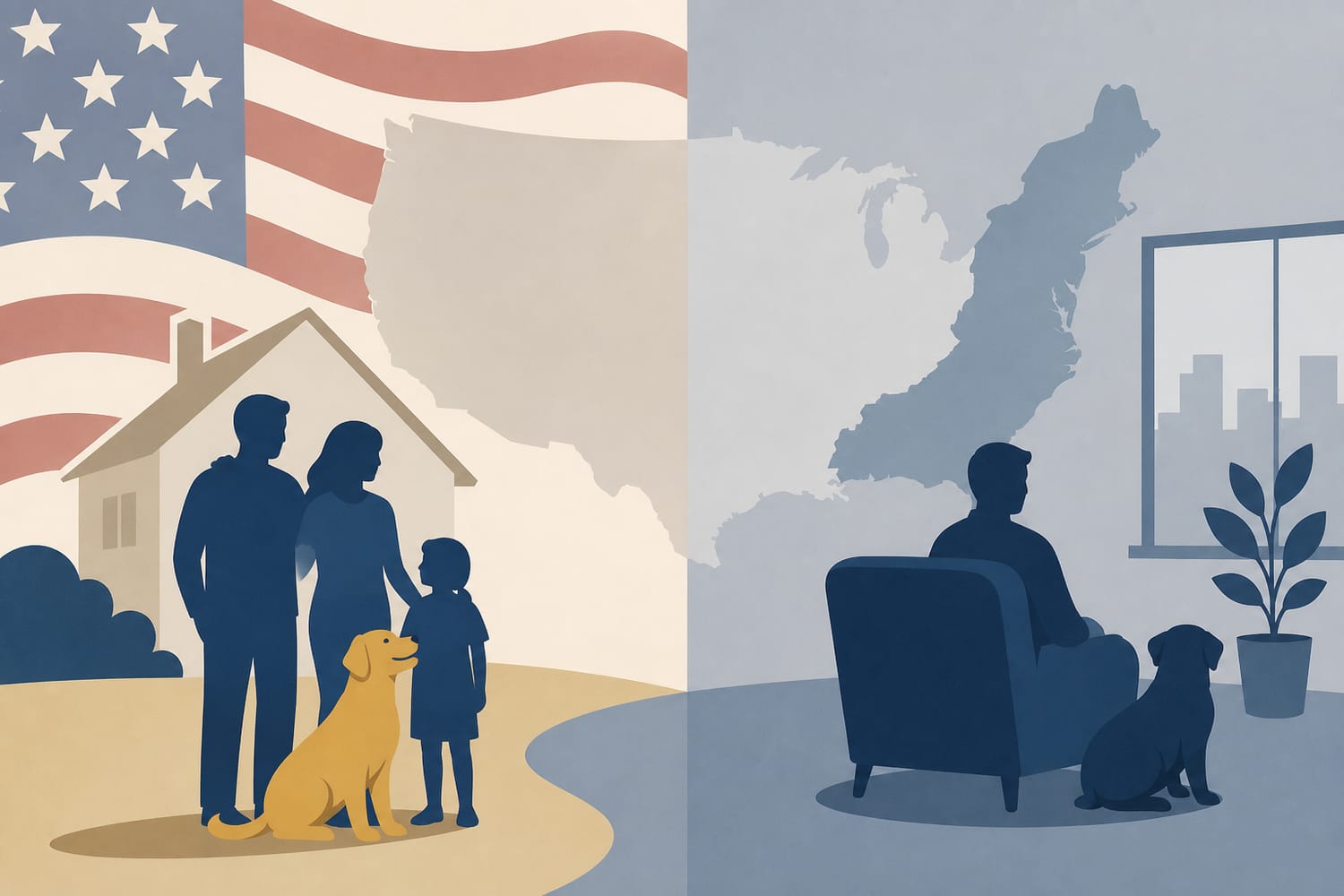
Others see the trend differently. They argue that the rise of pet parenting may point to deeper social problems: loneliness, delayed marriage, declining birth rates, weakened community ties, and a growing tendency to replace human relationships with animal companionship.
The debate is not really about whether pets matter. Most sides agree that pets can be deeply meaningful. The disagreement is about what the growing intensity of pet parenting says about American culture.
Pets as Family in a Changing Society
One side of the discussion begins with a simple point: families have always changed. The traditional image of a married couple with children is no longer the only widely accepted model of family life. Today, families may include single adults, couples without children, blended households, friends who function as relatives, multigenerational arrangements, and, increasingly, pets.
From this perspective, calling pets “family” is not a rejection of human relationships. It is an expansion of the idea of family to include the beings that share daily life, provide emotional closeness, and depend on care. Many pet owners organize their routines around feeding, walking, medical appointments, and companionship. These responsibilities can resemble caregiving in meaningful ways.
Supporters of this view often argue that love and commitment should not be measured only through traditional roles. A person who cares deeply for a dog or cat may be practicing patience, responsibility, and affection. For people who cannot have children, choose not to have children, live far from relatives, or have experienced loss, pets can become part of a stable emotional home.
In this sense, pet parenting may reflect changing family values rather than declining ones. The value being emphasized is not necessarily reproduction or tradition, but care.
The Case for Pets as Emotional Support
Another common argument in favor of modern pet parenting focuses on mental health. Many Americans report high levels of stress, anxiety, depression, and burnout. Pets can provide comfort in ways that feel immediate and reliable. A dog waiting at the door or a cat curling up nearby may offer a form of connection that is not complicated by social expectations.
Research has often suggested that interaction with animals can reduce stress, encourage physical activity, and create a sense of routine. Dogs, in particular, may help people get outside, meet neighbors, and maintain daily structure. For older adults, people living alone, or those facing grief, pets can be a source of continuity and purpose.
Supporters of pet parenting argue that these benefits should not be dismissed as sentimental or childish. If pets help people cope with isolation, trauma, or everyday stress, then the bond has real social value. In a country where mental health care can be expensive or difficult to access, animals may play an important role in emotional well-being.
This does not mean pets replace therapy, friendship, or family. Rather, advocates say pets can be one part of a broader support system.
Concerns About Social Isolation
Critics of the pet parenting trend often agree that pets are valuable, but worry about what the trend may reveal. They point to rising rates of loneliness, fewer close friendships, lower participation in religious and civic organizations, delayed marriage, and declining birth rates. In that context, they ask whether intense attachment to pets is partly a symptom of weakened human connection.
From this perspective, the language of “pet parent” may be significant. Critics argue that when pets are treated as substitutes for children, partners, or community, society may be normalizing withdrawal from human obligations. Human relationships are demanding, unpredictable, and reciprocal. Pets, by contrast, offer affection without the same kind of conflict, disagreement, or independence.
Some worry that this can make animal companionship emotionally safer but less socially challenging. A pet may provide comfort without requiring negotiation, compromise, or vulnerability in the same way another person does. Critics do not necessarily blame individuals for seeking comfort from animals. Instead, they question whether society is failing to create conditions where human connection feels accessible, affordable, and worthwhile.
In this view, pet parenting may not be the cause of social isolation, but it could be a visible sign of it.
Economic Pressures and Life Choices
The debate also overlaps with economic realities. Raising children in America is expensive. Housing, childcare, health care, education, and food costs have made parenthood feel financially out of reach for many young adults. At the same time, career instability and student debt can delay or discourage major family decisions.
Some commentators argue that pets have become a more manageable form of caregiving. They require time, money, and responsibility, but usually not on the scale of raising a child. For people who want companionship and nurturing roles but feel unable or unwilling to become parents, pets may fill part of that emotional space.
Others caution against framing pets as “replacement children.” Many people have pets for reasons unrelated to whether they want children. Some parents also treat pets as family members. Some childfree adults reject the idea that their pets are substitutes for children, arguing that they are simply animals they love.
Still, economic conditions shape the broader conversation. If fewer Americans are having children because they cannot afford to, and more are investing emotionally and financially in pets, some observers see a connection worth examining. Others see that connection as overstated and potentially unfair to people making personal choices in difficult circumstances.
The Pet Industry and Consumer Culture
Another side of the discussion focuses on business. The modern pet industry has grown rapidly, offering premium food, subscription boxes, luxury accessories, wellness products, DNA tests, pet hotels, and specialized medical treatments. Some critics argue that corporations have helped turn affection for animals into a major consumer market.
From this angle, “pet parenting” is not only a cultural shift but also a marketing category. Companies benefit when people see pets as children or family members, because they may be more willing to spend heavily on products and services. Emotional language can encourage consumption, making owners feel that buying more is proof of love.
However, defenders of the industry point out that many products respond to real needs. Better veterinary care, safer food, improved training, and pet insurance can enhance animal welfare. Spending money on pets is not automatically irrational or manipulated. People spend on what they value, and animals’ lives can be improved by responsible care.
The consumer culture critique raises an important question: where is the line between loving care and commercial excess? Different people answer that differently depending on income, values, and beliefs about animals.
Animal Welfare and Moral Responsibility
Pet parenting is also connected to changing views of animals themselves. Many Americans increasingly see animals as sentient beings with emotions, preferences, and needs. This has contributed to stronger concern for rescue adoption, humane training, anti-cruelty laws, and better living conditions.
Supporters argue that treating pets as family can lead to better welfare. Animals who are viewed as companions rather than property may receive more medical attention, affection, and protection. The language of parenting can encourage responsibility rather than casual ownership.
But some animal welfare advocates offer a more complicated view. They warn that humanizing pets too much can sometimes harm animals. Dogs and cats have species-specific needs. Treating them like human children may lead to overfeeding, lack of proper training, anxiety, or unrealistic expectations. A dog may need exercise, boundaries, and socialization more than costumes or constant indulgence.
This perspective suggests that the best approach may combine affection with respect for animals as animals. Caring deeply does not require pretending pets are human.
Generational and Cultural Differences
Opinions about pet parenting often vary by generation, region, and cultural background. Younger Americans may be more comfortable using family language for pets and sharing pet-related content online. Older generations may be more likely to remember a time when pets were loved but treated with clearer boundaries.
Cultural differences also matter. In some communities, strong human family networks remain central, and intense pet parenting may seem unusual or excessive. In others, especially urban areas where people live alone or move frequently, pets may play a larger emotional role.
These differences can lead to misunderstanding. One person may see a dog birthday party as harmless fun. Another may see it as evidence of misplaced priorities. One person may hear “fur baby” as affectionate language. Another may find it troubling or unserious.
Much of the debate depends on assumptions about what family should mean, what humans owe each other, and what role animals should play in daily life.
Finding a Balanced View
The rise of pet parenting in America can be interpreted in more than one way. It may reflect compassion, evolving family structures, and a broader recognition that meaningful bonds are not limited to traditional categories. It may also point to loneliness, economic strain, and a society where many people find animal companionship easier to access than deep human community.
Both views can contain truth. Pets can enrich human lives without replacing people. At the same time, the comfort pets provide should not distract from the need to address social isolation, affordability, mental health care, and declining community participation.
Perhaps the most balanced position is to take pet relationships seriously without making them carry the entire weight of human belonging. Loving an animal deeply can be a healthy and generous part of life. But people also need other people: friends, relatives, neighbors, partners, and communities.
Pet parenting may not be either a sign of changing family values or a sign of social isolation. In many cases, it is both: a reflection of how Americans are adapting to new emotional, economic, and social realities. The challenge is not to judge the bond between people and pets too quickly, but to understand what that bond reveals about the lives people are trying to build.