
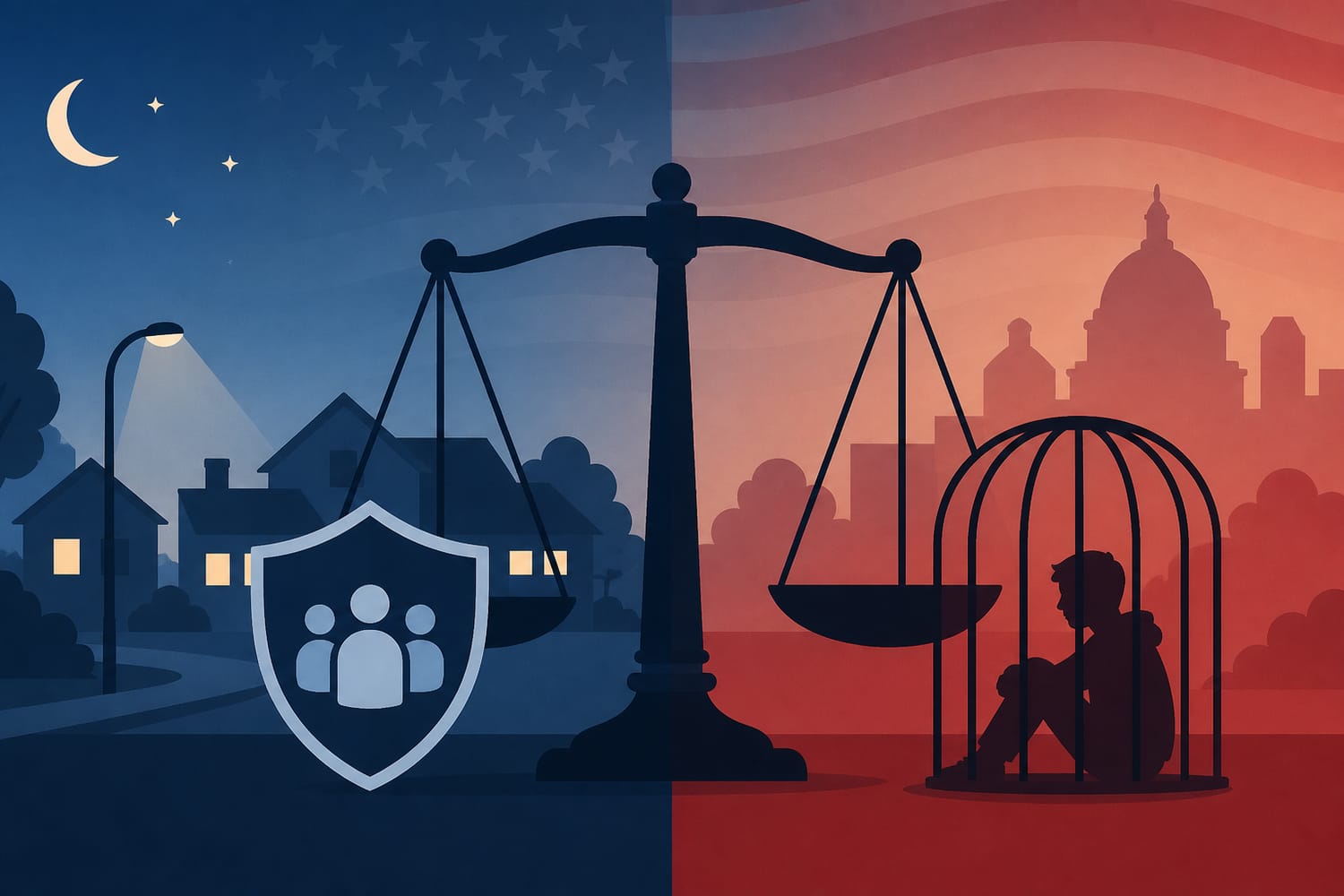
Youth curfews have long been a subject of debate in cities, suburbs, and small towns. Supporters often describe them as practical tools for reducing crime, protecting young people, and giving police a way to intervene before dangerous situations escalate. Critics argue that curfews limit teen freedom, unfairly target certain communities, and may not address the deeper causes of youth crime or vulnerability.
The debate is complicated because both sides often share some common goals. Most people want teenagers to be safe, communities to feel secure, and families to have support. The disagreement is usually over whether curfews are an effective and fair way to achieve those goals. For some, curfews represent common-sense prevention. For others, they represent unnecessary government control over young people’s lives.
What Youth Curfews Usually Involve
Youth curfew laws typically prohibit minors from being in public places during certain late-night or early-morning hours unless they have a valid reason. These reasons might include traveling to or from work, attending a school event, responding to an emergency, or being accompanied by a parent or guardian.
Curfew rules vary widely. Some apply only to younger teens, while others include anyone under 18. Some are enforced every night, while others apply only on weekends or during summer months. In some places, violations lead to warnings or calls to parents. In others, teens may face fines, community service, or temporary detention until a guardian arrives.
Because curfew policies differ so much, people often debate not only whether curfews should exist, but also how strict they should be, how they should be enforced, and what consequences should follow.
The Argument for Community Safety
One of the strongest arguments in favor of youth curfews is that they can improve public safety. Supporters believe that limiting unsupervised late-night activity reduces opportunities for crime, violence, vandalism, and risky behavior. They argue that late-night hours can expose teens to dangerous situations, whether as potential offenders or victims.
Some residents and business owners support curfews because they believe they help prevent disturbances in public areas. In neighborhoods where groups of young people gather late at night, residents may feel anxious about noise, property damage, or fights. A curfew can be seen as a way to restore order and reassure the public.
Law enforcement officials who support curfews sometimes say they provide a useful tool for early intervention. Instead of waiting for a crime to happen, officers can approach minors out late, check on their welfare, and contact their families. In this view, curfews are not mainly about punishment; they are about prevention.
The Argument for Protecting Teens
Another pro-curfew argument focuses less on protecting the public from teens and more on protecting teens themselves. Supporters point out that young people can be vulnerable to exploitation, peer pressure, substance use, violence, and accidents during late-night hours. They argue that curfews help reduce the chances of teenagers being in places where they may be harmed.
Parents who support curfews may see them as reinforcing household rules. A citywide curfew can make it easier for parents to say no to late-night outings because the rule is not just personal but legal. Some believe this helps parents maintain boundaries, especially when teens push for more independence.
In communities with high rates of youth victimization, some advocates see curfews as one part of a broader safety strategy. They may argue that while curfews are not a complete solution, they can reduce risk during certain hours and give families, schools, and community organizations more time to address deeper problems.
Concerns About Teen Freedom
Opponents of youth curfews often argue that they restrict the freedom of young people who have done nothing wrong. Teenagers may need or want to be out late for legitimate reasons, such as studying with friends, attending social events, participating in religious activities, working, or simply enjoying public spaces. Critics say that being young should not automatically make someone suspicious.
Some opponents see curfews as a form of collective punishment. Instead of addressing specific harmful behavior, curfews apply to all minors in a certain age group. A responsible teenager walking home from a friend’s house may be treated similarly to someone causing trouble. Critics argue that laws should focus on actions, not assumptions based on age.
There is also a broader philosophical concern. Adolescence is a period when young people gradually learn independence, decision-making, and responsibility. Critics argue that overly restrictive curfews may limit opportunities for teens to develop these skills. From this perspective, public policy should help young people learn responsible freedom rather than simply remove freedom altogether.
Questions About Effectiveness
A central issue in the debate is whether youth curfews actually reduce crime or improve safety. Supporters may point to local experiences where residents or police believe curfews have helped reduce disorder. However, critics often question whether decreases in crime can truly be linked to curfews, since many factors influence crime rates, including policing levels, economic conditions, school schedules, community programs, and seasonal changes.
Some researchers have found limited or mixed evidence that curfews significantly reduce youth crime. Critics argue that if a teen is already willing to commit a serious offense, a curfew law may not be much of a deterrent. They also note that many juvenile crimes occur outside curfew hours, such as after school, when teens are unsupervised but not necessarily out late at night.
Supporters respond that curfews do not need to eliminate crime entirely to be useful. If they reduce even some risky situations, they may still be worthwhile. They may also argue that the benefits are not always easy to measure, especially if curfews prevent incidents that never get recorded.
Concerns About Fair Enforcement
One of the most serious criticisms of youth curfews is that they may be enforced unevenly. Opponents worry that teens from certain racial, ethnic, or economic backgrounds may be stopped more often than others. In communities where trust in law enforcement is already low, curfews can increase tension between police and young people.
Critics argue that broad curfew laws give officers significant discretion. An officer might decide whether a teen appears suspicious, whether their explanation is believable, or whether to issue a warning or a citation. This discretion can lead to inconsistent outcomes, even if the law itself is written neutrally.
Supporters of curfews often acknowledge that fair enforcement matters. Some argue that curfews can be designed with safeguards, such as clear exceptions, data tracking, officer training, and policies that prioritize contacting parents over punishment. They may say that problems with enforcement should be fixed rather than used as a reason to reject curfews entirely.
The Role of Parents and Government
Youth curfews also raise questions about who should make decisions for teenagers: parents, local governments, or both. Supporters may argue that communities have a legitimate interest in setting rules for public safety, especially when minors are involved. They may compare curfews to school attendance laws, driving restrictions, or age limits on certain activities.
Opponents often respond that curfew decisions should be left mainly to families. Parents know their children’s maturity levels, responsibilities, work schedules, and social lives better than the government does. A single citywide rule may not fit every teenager or every family situation.
There is also disagreement among parents themselves. Some welcome curfews as extra support. Others see them as interference. For families with teens who work evening jobs, participate in late extracurricular activities, or rely on public transportation, curfews can create practical challenges even when exceptions exist.
Alternatives to Curfews
Many people on both sides of the debate agree that curfews alone cannot solve youth crime or safety concerns. This has led to discussion of alternatives or complementary approaches. These may include after-school programs, late-night recreation centers, youth employment opportunities, mentoring, mental health services, violence prevention programs, and improved transportation.
Critics of curfews often argue that these alternatives address root causes more directly. If young people are out late because they lack safe spaces, supervision, or meaningful activities, then providing those resources may be more effective than sending them home under threat of penalty.
Supporters of curfews may not oppose these programs, but they may view them as long-term solutions that do not fully address immediate late-night safety concerns. From this perspective, curfews and youth services can work together: one sets boundaries, while the other provides support.
Finding a Balanced Approach
The debate over youth curfews often comes down to balancing safety, freedom, fairness, and practicality. Supporters emphasize prevention, parental support, and community peace. Opponents emphasize civil liberties, unequal enforcement, and the need for more constructive youth policies.
Some communities try to find middle ground by narrowing curfew hours, limiting penalties, building in broad exceptions, or requiring regular reviews of the policy’s impact. Others choose not to use curfews and instead invest in youth programs or targeted enforcement of existing laws against specific harmful behavior.
Ultimately, the question is not only whether teenagers should be out late at night. It is also how communities view young people: as potential problems to control, individuals to protect, citizens with rights, or developing adults who need both boundaries and opportunities. Different communities may answer that question differently, depending on their experiences, values, and concerns.