
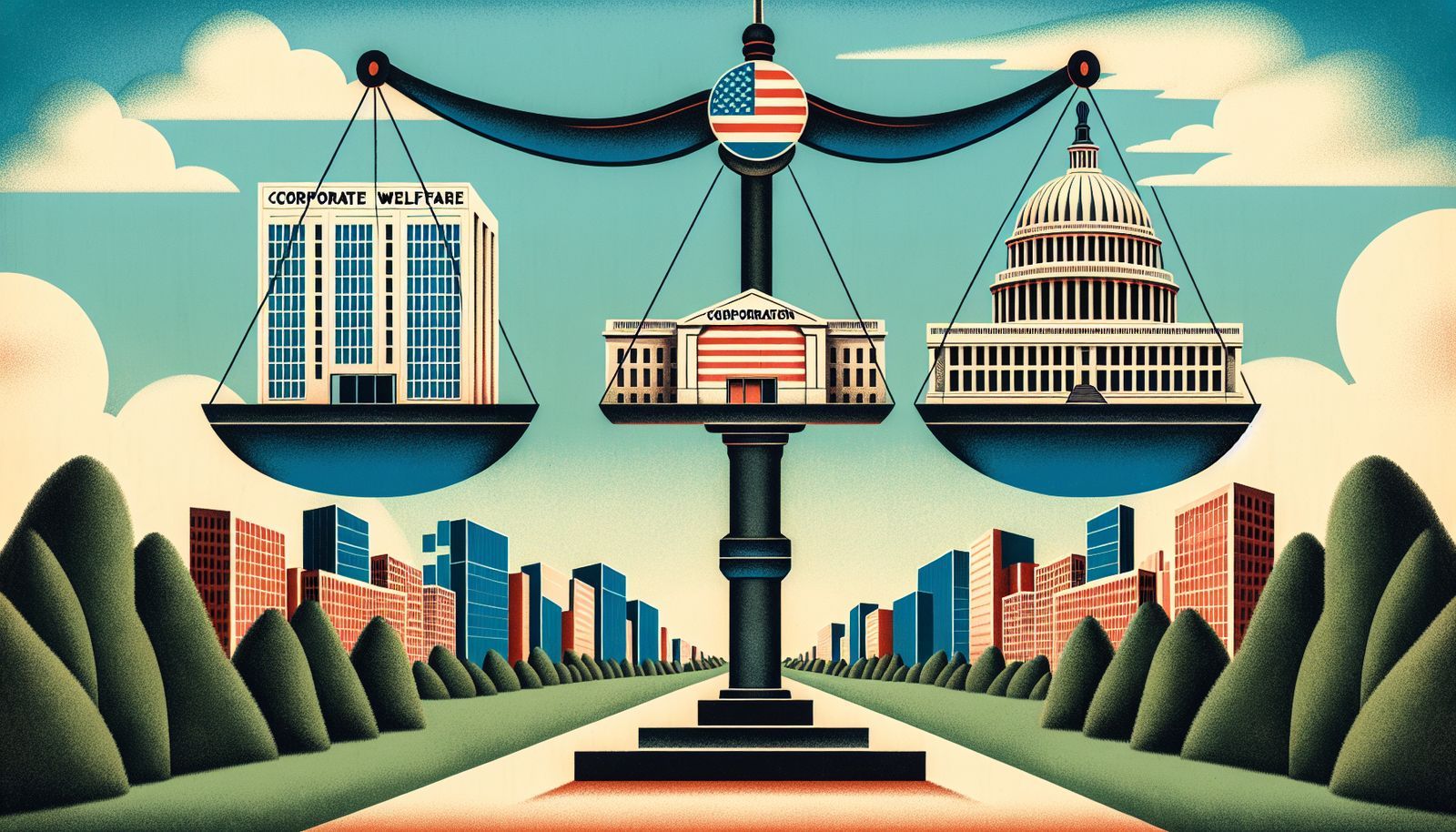
The topic of corporate welfare, defined as government subsidies, tax breaks, or other financial incentives provided to companies, has sparked significant debate across political and economic spectrums. Proponents argue that these measures stimulate economic growth, create jobs, and attract investment, while critics contend that they distort the market, favor large corporations over small businesses, and waste taxpayer money. This blog post will explore the various sides of the debate regarding the ethics of corporate welfare and whether government subsidies to companies should be eliminated.
Arguments in Favor of Corporate Welfare
Supporters of corporate welfare often point to several key benefits that they argue justify government intervention in the economy.
One of the primary arguments is that subsidies can help stimulate economic growth, particularly in regions that are struggling. By attracting businesses to economically depressed areas, governments can create jobs and stimulate local economies. This, in turn, can lead to increased tax revenues that can be reinvested into public services.
Additionally, proponents argue that corporate welfare can level the playing field. In competitive global markets, companies often face pressure from foreign competitors that may benefit from their own government subsidies. By providing similar incentives domestically, governments can help ensure that local businesses can compete effectively on an international scale.
Moreover, supporters contend that well-targeted subsidies can lead to innovation and technological advancements. By investing in research and development through grants or tax incentives, the government can encourage companies to innovate, potentially leading to breakthroughs that benefit society as a whole.
Arguments Against Corporate Welfare
On the other side of the debate, critics of corporate welfare raise several concerns about its ethical implications and overall effectiveness.
One significant argument against corporate welfare is that it creates an uneven playing field. By providing financial assistance to certain companies, governments can inadvertently disadvantage smaller businesses that do not have the same access to resources or lobbying power. Critics argue that this can lead to a concentration of wealth and power in the hands of a few large corporations, undermining the principles of free market competition.
Additionally, opponents of corporate welfare argue that it often leads to wasteful spending and misallocation of resources. They contend that government officials may not have the expertise needed to make informed decisions about which companies to subsidize, leading to investments in failing or inefficient businesses. This can result in taxpayer money being used to prop up companies that would otherwise go out of business.
Furthermore, critics highlight the potential for corruption and cronyism in the allocation of subsidies. When government funds are distributed to businesses, there is a risk that political connections and lobbying efforts may influence decisions, rather than objective criteria. This undermines public trust and can lead to a perception that government is not acting in the best interest of its citizens.
The Role of Public Opinion
Public opinion plays a significant role in the debate over corporate welfare. Many citizens are skeptical of government spending on corporations, viewing it as a misuse of taxpayer dollars. Surveys have shown that a majority of people believe that companies should not rely on government assistance to succeed and that resources should be directed toward social programs rather than corporate bailouts.
However, opinions can vary significantly based on political affiliation. Supporters of conservative ideologies may be more likely to oppose corporate welfare on the grounds of free market principles, while those on the left may have mixed feelings, recognizing the potential benefits of subsidies for job creation and economic development.
Moreover, public opinion can shift based on context. For example, during economic downturns, there may be greater support for corporate welfare as a means to stabilize the economy and protect jobs. Conversely, in times of economic prosperity, there may be a stronger call for reducing government intervention and allowing the market to function without subsidies.
The Impact on Innovation and Economic Growth
One of the crucial points of contention in the corporate welfare debate is its impact on innovation and economic growth. Proponents argue that government subsidies can stimulate innovation by providing companies with the financial resources necessary to invest in research and development. This can lead to technological advancements that benefit society as a whole, such as renewable energy solutions or advancements in healthcare.
Critics, however, argue that reliance on government funding can stifle true innovation. They contend that when companies know they can rely on subsidies, they may be less incentivized to innovate on their own. This could lead to a culture of dependency, where businesses prioritize securing government funding over developing competitive products and services.
Additionally, some argue that the focus on subsidizing certain industries can lead to a misallocation of resources. For example, if the government heavily subsidizes fossil fuel companies while neglecting renewable energy sectors, it may hinder progress towards sustainability and long-term economic health.
The ethics of corporate welfare and the question of whether government subsidies to companies should be eliminated is a complex and multifaceted debate. Advocates argue that these measures can stimulate economic growth, create jobs, and foster innovation, while critics contend that they distort the market, favor large corporations, and waste taxpayer money.
As public opinion continues to evolve and the economic landscape changes, this debate is likely to remain relevant. Ultimately, finding a balance between supporting businesses and ensuring a fair and competitive market may be key to addressing the ethical implications of corporate welfare. Engaging in open discussions and considering diverse perspectives will be essential as society navigates this contentious issue.