
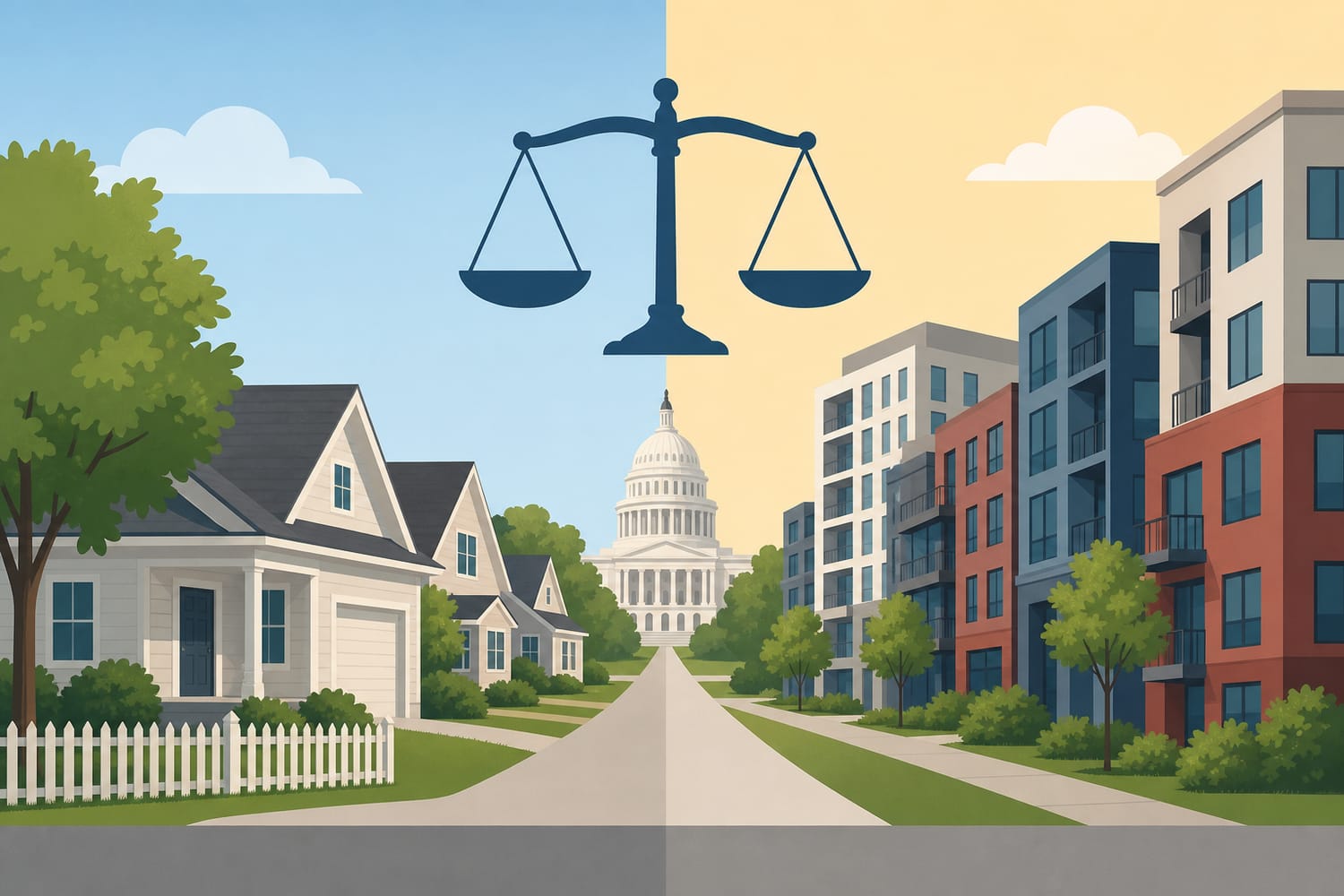
Why Zoning Reform Has Become a Central Housing Debate
Across many cities and suburbs, housing costs have risen faster than incomes, leaving renters and prospective buyers struggling to find homes they can afford. In response, policymakers, housing advocates, neighborhood groups, developers, and residents are debating whether zoning reform is a necessary solution or a threat to the character and stability of existing communities.
Zoning laws determine what can be built, where it can be built, and how land can be used. In many places, zoning restricts large portions of residential land to single-family homes, limits building height, requires minimum lot sizes, or mandates off-street parking. Supporters of reform argue that these rules prevent enough housing from being built, worsening shortages and driving up prices. Critics worry that loosening zoning rules may lead to overdevelopment, displacement, infrastructure strain, and the loss of neighborhood identity.
The debate is not simply between people who want more housing and people who do not. It involves competing priorities: affordability, community control, environmental sustainability, property rights, racial and economic equity, infrastructure capacity, and quality of life. Understanding the different sides requires looking at what each group believes zoning reform can accomplish—and what risks they believe it may create.
The Case for Zoning Reform as a Housing Solution
Supporters of zoning reform often begin with a basic supply-and-demand argument. If a city has growing demand for housing but restricts the number and types of homes that can be built, prices will rise. From this perspective, zoning rules that allow only single-family homes in high-demand areas artificially limit supply and exclude lower-cost options such as duplexes, triplexes, accessory dwelling units, townhomes, and small apartment buildings.
Pro-reform advocates argue that allowing more housing types can create “missing middle” housing: homes that are denser than detached houses but less intense than large apartment towers. They see this as a way to provide more choices for renters, first-time buyers, seniors who want to downsize, multigenerational families, and workers who need to live closer to jobs.
Many reformers also argue that current zoning patterns contribute to segregation and inequality. Historically, some zoning laws were used to separate people by income and race, even after explicitly discriminatory housing policies became illegal. Large minimum lot sizes and bans on multifamily housing can make neighborhoods inaccessible to lower-income households. Reformers say that opening more neighborhoods to a wider variety of housing is a step toward fairer access to schools, parks, transit, and economic opportunities.
Environmental arguments are also common. Supporters say that allowing more homes near jobs and public transportation can reduce long commutes, car dependence, and pressure to build on farmland or natural areas at the urban fringe. In their view, compact growth can be more sustainable than sprawl.
Concerns About Neighborhood Disruption
Opponents or skeptics of zoning reform often focus on the local impacts of rapid change. Many residents worry that new development could alter the scale, design, and feel of their neighborhoods. A quiet street of one- or two-story homes may change significantly if larger buildings are allowed without careful planning. Critics argue that people invest not only money but also emotional and social value in their communities, and they should have a meaningful voice in how those communities evolve.
Some concerns are practical. More housing can mean more demand for parking, roads, schools, sewers, water systems, parks, and emergency services. In places where infrastructure is already strained, residents may see zoning reform as an unfunded mandate that increases density without providing the public investments necessary to support it.
There are also concerns about construction disruption, tree loss, shadows, traffic, and reduced privacy. While these issues may seem secondary compared with regional affordability, they are often central to residents’ daily lives. Opponents may argue that broad zoning changes made at the state or citywide level can overlook local differences and impose one-size-fits-all rules on neighborhoods with distinct histories and conditions.
Will More Housing Actually Become Affordable?
A major point of disagreement is whether zoning reform produces housing that ordinary people can afford. Supporters argue that even if new market-rate housing is not cheap at first, adding supply can reduce competition for older and less expensive units. They also argue that restricting new construction does not stop wealthy households from moving in; it simply causes them to bid up the price of existing homes.
Skeptics counter that new development often consists of expensive apartments or luxury condos, especially in desirable areas where land and construction costs are high. They question whether allowing more density will meaningfully help low-income households without direct affordability requirements, subsidies, rent protections, or public housing investment.
Some critics point to “filtering,” the idea that new housing becomes more affordable as it ages. They argue that this process can take decades and may not help people facing housing insecurity now. Others respond that without new housing, older units may never become affordable because scarcity keeps prices elevated across the entire market.
This disagreement often leads to debate over whether zoning reform should be paired with affordability mandates, such as inclusionary zoning, where developers must set aside a share of units at below-market rents. Supporters see such requirements as essential to ensure public benefit. Critics, including some economists and developers, warn that overly strict mandates can make projects financially unworkable, reducing the total number of homes built.
Displacement and Gentrification Fears
One of the most sensitive issues is displacement. In lower-income neighborhoods, residents may worry that zoning reform will attract developers, raise land values, and accelerate gentrification. Even if more housing is built, longtime renters may be priced out before new units become accessible to them.
Tenant advocates often argue that zoning reform alone is insufficient and potentially harmful without protections such as rent stabilization, eviction prevention, community land trusts, right-to-return policies, and affordable housing funding. They may support more housing in principle but oppose reforms that appear to benefit developers more than existing residents.
On the other hand, some pro-reform advocates argue that blocking new housing in wealthier neighborhoods pushes growth pressure into lower-income communities. If high-opportunity neighborhoods restrict apartments, developers may concentrate in areas with weaker political resistance and lower land costs. From this view, broad reform across many neighborhoods could reduce displacement pressure by distributing growth more evenly.
The disagreement is often about where new housing should go and who benefits from it. Many people support affordable housing in theory but disagree over whether market-rate development, upzoning, or public investment should lead the way.
Property Rights and Local Control
Zoning reform also raises philosophical questions about property rights and democratic decision-making. Some property owners believe they should have more freedom to build additional homes on land they own. They see restrictive zoning as government overreach that limits their ability to adapt to changing family needs or benefit economically from their property.
Others emphasize local control. They argue that zoning decisions should be made by the people who live in a community and understand its needs. State-level reforms that override local zoning can be seen as undermining municipal authority and resident participation. Local control advocates often argue that communities are not opposed to all growth, but they want growth to be planned, gradual, and compatible with existing conditions.
Reformers respond that local control can sometimes function as a veto against needed housing, especially when existing homeowners have more political influence than renters, future residents, or lower-income households. They argue that housing shortages are regional problems and cannot be solved if every neighborhood has the power to reject new homes.
The Role of Developers and Market Incentives
Developers occupy a complicated place in the debate. Supporters of reform often view private builders as necessary partners because governments alone are unlikely to produce enough housing to meet demand. If zoning allows more homes, developers can respond by building them.
Critics worry that zoning reform may primarily increase profits for landowners and developers without guaranteeing affordability. When land is upzoned, its value often rises. Some argue that the public should capture part of that increased value through taxes, fees, or affordability requirements to fund infrastructure and housing programs.
Developers, meanwhile, often argue that regulations, lengthy approval processes, parking mandates, and neighborhood opposition increase costs and delays. They say these costs are ultimately reflected in higher rents and sale prices. From their perspective, streamlining approvals and allowing more density can make housing production more feasible.
Possible Middle-Ground Approaches
Because the debate involves legitimate concerns on multiple sides, many policymakers are exploring compromise approaches. These may include allowing accessory dwelling units, duplexes, or small multifamily buildings in more neighborhoods while maintaining design standards. Some cities focus density near transit corridors, commercial areas, or job centers rather than applying the same rules everywhere.
Other proposals pair zoning reform with tenant protections, infrastructure funding, affordable housing requirements, or anti-displacement strategies. This approach acknowledges that increasing supply may be important but not sufficient on its own.
Design guidelines can also play a role. Residents may be more open to additional housing if new buildings fit the scale and appearance of the neighborhood. However, reformers caution that design rules can become so restrictive that they undermine the goal of producing more housing.
A Debate About Trade-Offs
Zoning reform is unlikely to be either a complete solution to the housing crisis or the sole cause of neighborhood disruption. It is one tool among many, and its effects depend heavily on local market conditions, policy details, enforcement, and complementary investments.
Supporters see reform as essential to addressing scarcity, expanding opportunity, reducing exclusion, and creating more sustainable communities. Opponents and skeptics worry about affordability promises that may not materialize, displacement risks, infrastructure burdens, and the loss of local voice.
The central challenge is balancing the needs of current residents with those of future residents, renters, workers, families, and people who have been priced out entirely. Housing policy forces communities to decide not only what they want to preserve, but also who gets the chance to belong.