
Chronic absenteeism—often defined as missing 10% or more of the school year for any reason—has become one of the most debated issues in education. Unlike truancy, which usually refers to unexcused absences, chronic absenteeism includes excused absences, suspensions, illness-related absences, transportation problems, family responsibilities, mental health struggles, and many other reasons students may not be in school.
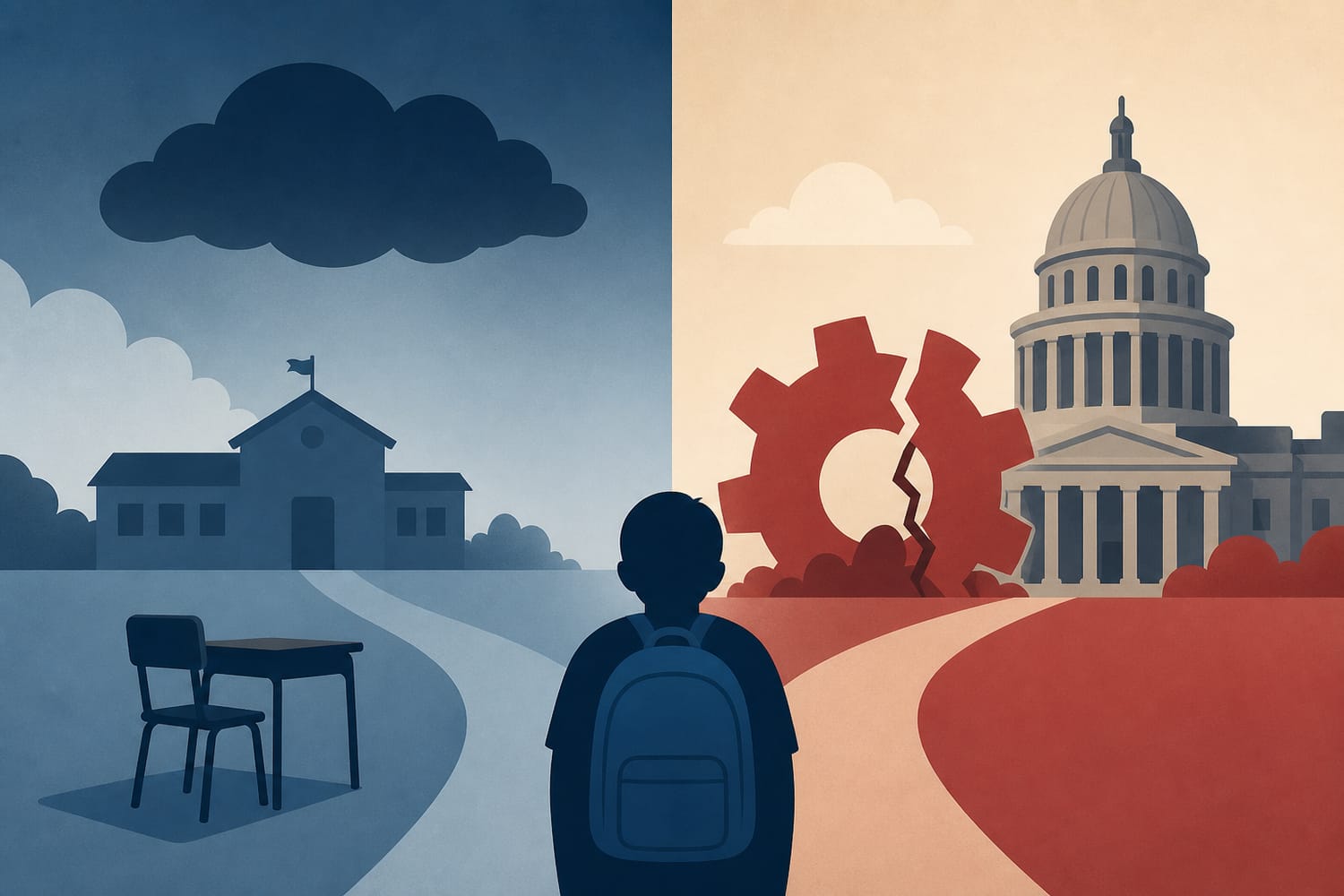
The debate around chronic absenteeism often centers on a difficult question: is this primarily a student and family crisis, or is it evidence of a broader system failure? Some argue that students and families must take more responsibility for attendance, since regular participation is essential for learning, social development, and future success. Others argue that widespread absenteeism reflects deeper failures in schools, communities, health systems, housing, transportation, and public policy.
In reality, the issue is complex. Different groups—educators, parents, policymakers, students, researchers, and community advocates—often see the problem from different angles. Understanding those perspectives is important before deciding what solutions are fair, effective, and realistic.
The View That Chronic Absenteeism Is a Student and Family Crisis
One side of the debate emphasizes the role of student behavior and family responsibility. From this perspective, attendance is a basic expectation of school life. Students cannot benefit from instruction, relationships, extracurricular activities, or support services if they are not physically or virtually present. Missing many days, even for understandable reasons, can create academic gaps that become harder to close over time.
Supporters of this view often argue that families play a central role in setting routines, prioritizing education, and making sure children attend school consistently. They may point out that many schools provide calendars, reminders, counseling, and outreach, but still struggle to get some students to attend. In their view, schools cannot replace the daily role of parents and guardians in ensuring that children wake up, get ready, and arrive on time.
Some also worry that cultural attitudes toward attendance have shifted. After the COVID-19 pandemic, many families became more comfortable keeping children home, especially when minor illness, stress, or inconvenience arose. Remote learning may have changed perceptions of what “going to school” means, while pandemic disruptions weakened routines that once felt automatic.
From this perspective, chronic absenteeism is sometimes seen as part of a broader decline in student engagement, discipline, and accountability. Advocates may support stronger attendance enforcement, clearer consequences, parent accountability measures, and messaging campaigns that emphasize the importance of showing up every day.
The View That Chronic Absenteeism Reflects School System Failure
Another side argues that blaming students and families misses the larger point. If absenteeism is widespread across districts, grade levels, and communities, critics say it cannot be explained only by individual choices. Instead, it may indicate that schools are failing to meet students’ needs or failing to make attendance feel meaningful, safe, and worthwhile.
People who hold this view often ask why so many students feel disconnected from school. Some students report boredom, bullying, anxiety, lack of belonging, or the belief that school does not relate to their future. Others may feel that disciplinary policies are unfair, that academic expectations are either too low or too overwhelming, or that adults in the building do not know them well.
From this perspective, chronic absenteeism is a signal. It tells educators and policymakers that something in the school experience is not working for many students. Instead of asking, “Why won’t students come to school?” this side asks, “What are students avoiding, and what would make school a place they want and need to be?”
Supporters of this view often favor reforms such as stronger student-teacher relationships, culturally relevant curriculum, mental health supports, anti-bullying efforts, restorative discipline, flexible scheduling, career-connected learning, and more engaging instruction. They argue that attendance will improve when students see school as safe, supportive, and relevant.
The Role of Poverty and Community Conditions
A major part of the debate involves poverty and unequal access to resources. Many researchers and advocates argue that chronic absenteeism is closely connected to conditions outside the school building. Students may miss school because they lack stable housing, reliable transportation, clean clothes, internet access, health care, or safe routes to school.
For example, a student who moves frequently may struggle to stay enrolled and attend regularly. A student with asthma may miss class because of poor housing conditions or limited medical care. A teenager may stay home to care for younger siblings while a parent works. A child may miss the bus because the family car broke down or public transit is unreliable.
Those who focus on these issues often argue that punitive attendance policies are ineffective and unfair. If a student is absent because of homelessness, illness, caregiving responsibilities, or transportation barriers, punishment may only deepen the problem. Fines, court referrals, or threats may increase stress without solving the reason the student is missing school.
However, others respond that poverty should explain the need for support, not lower expectations. They argue that schools and communities must still communicate that attendance matters, while also helping families overcome barriers. In this view, the challenge is to combine compassion with urgency.
Mental Health, Safety, and Student Well-Being
Mental health has become central to discussions of chronic absenteeism. Anxiety, depression, trauma, social isolation, and school avoidance can all contribute to frequent absences. Some students miss school because they feel emotionally unable to attend. Others may struggle with panic attacks, grief, family conflict, or fear of violence.
Those who emphasize mental health argue that absenteeism should be treated as a warning sign, not simply a rule violation. A student who repeatedly misses school may need counseling, a trusted adult, a gradual reentry plan, or specialized support. For some students, demanding immediate full attendance without addressing underlying distress may backfire.
School safety is another concern. Students who experience bullying, harassment, racism, discrimination, or threats may avoid school to protect themselves. In those cases, the absence is not necessarily a lack of motivation. It may be a response to an environment the student experiences as unsafe.
At the same time, some educators worry that mental health explanations can become too broad if not handled carefully. They argue that while genuine mental health needs must be supported, schools also need to help students build resilience and reestablish routines. The disagreement is often not about whether mental health matters, but about how schools should balance accommodation, treatment, and expectations.
Accountability and Policy Debates
Policymakers often view chronic absenteeism as a measurable indicator of school performance. Attendance data can reveal problems early and help identify students who need intervention. Some states include chronic absenteeism in school accountability systems, arguing that schools should be responsible for tracking and reducing it.
Supporters of accountability measures say that what gets measured gets attention. If schools are required to report absenteeism, they may invest more in outreach, family engagement, and student support. Data can also highlight inequities among different student groups and help direct resources.
Critics, however, warn that accountability systems can create perverse incentives. Schools serving high-poverty communities may be judged harshly for absences caused by factors beyond their control. Educators may feel pressure to improve attendance numbers without having the resources to address transportation, housing, health care, or family instability.
There is also debate over enforcement. Some communities have used truancy courts, fines, or legal consequences for families. Supporters argue that consequences may be necessary when families ignore repeated outreach. Opponents say punitive approaches often harm vulnerable families and do little to address root causes.
What Schools Can Reasonably Be Expected to Do
A key question is how much responsibility schools should bear. Schools are educational institutions, but they increasingly serve as hubs for meals, counseling, health screenings, social services, and family support. Some believe this expanded role is necessary because students cannot learn if basic needs are unmet.
Others worry that society asks schools to solve problems they did not create and cannot fully control. Teachers and principals may be expected to address poverty, mental health, transportation, family instability, and community violence while also improving test scores and graduation rates. From this perspective, calling chronic absenteeism a school failure may unfairly burden educators.
A middle-ground view holds that schools cannot solve everything, but they can play a central coordinating role. They can identify patterns, build relationships with families, connect students to services, create welcoming environments, and intervene early. But lasting progress may require partnerships with health agencies, housing organizations, transportation systems, local governments, and community groups.
Student Voice in the Debate
Students themselves are sometimes left out of the conversation, even though they are closest to the issue. Their reasons for missing school can vary widely. Some may feel overwhelmed academically. Some may work jobs to support their families. Some may not see the value of school. Some may be exhausted, sick, afraid, embarrassed, or disengaged.
Listening to students can complicate simple narratives. A student who appears unmotivated may be dealing with serious responsibilities at home. A student with good grades may still be chronically absent because they feel socially isolated. A student who skips certain classes may be avoiding a specific conflict or teacher.
Including student perspectives can help schools distinguish between different types of absenteeism. The solution for a student with transportation problems will differ from the solution for a student experiencing depression, bullying, or academic frustration. Without student voice, schools risk applying generic solutions to highly individual situations.
Toward a Balanced Understanding
The debate over chronic absenteeism often becomes polarized: either students and families are blamed, or schools and systems are blamed. But many experts argue that the most accurate view includes both individual and systemic factors.
Attendance is undeniably important. Students who miss large amounts of school are at greater risk of falling behind academically, becoming socially disconnected, and not graduating. Families and students do have a role in building habits and prioritizing school.
At the same time, chronic absenteeism is rarely just a matter of attitude. When large numbers of students are absent, it suggests broader issues that may include poverty, health, safety, school climate, curriculum relevance, transportation, and trust between families and institutions.
The most constructive approaches tend to avoid blame as the starting point. Instead, they ask what is preventing attendance and what combination of expectations, supports, relationships, and resources might help. That may mean clear communication about the importance of attendance, but also flexible problem-solving, mental health care, community partnerships, and changes within schools themselves.
Chronic absenteeism can be understood as both a student crisis and a system failure, depending on the case. For some students, the central issue may be family routines or personal choices. For others, absence may be a rational response to hardship, disconnection, or unmet needs. The challenge for schools and communities is to recognize those differences and respond with solutions that are firm, fair, and humane.