
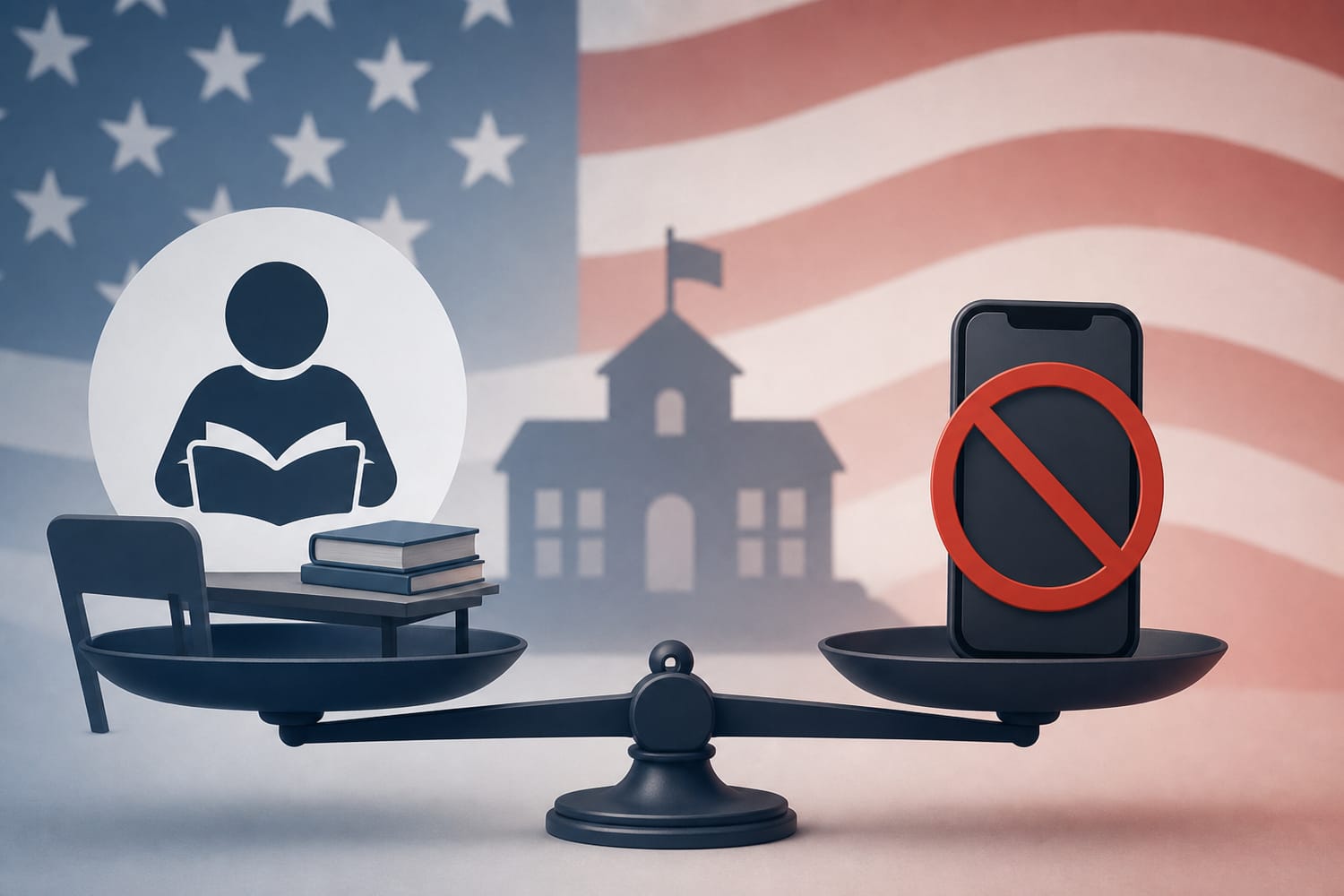
Why the Smartphone Debate Is So Difficult
Smartphones have become one of the most debated objects in modern education. For some people, they are powerful learning tools that connect students to information, creativity, communication, and digital skills. For others, they are constant distractions that interrupt lessons, weaken attention spans, and contribute to social and emotional problems among young people.
The question of whether schools should ban smartphones is not simply about technology. It is also about student freedom, classroom management, equity, safety, mental health, parenting, and the purpose of education itself. Different schools, families, teachers, and students often view the issue through very different experiences. A teacher trying to keep thirty students focused may see phones differently from a parent who wants to reach their child in an emergency. A student who uses a phone responsibly may feel punished by a ban, while another student may privately welcome fewer distractions.
Because smartphones are both useful and disruptive, the debate is rarely simple. The strongest arguments on both sides often begin with real concerns.
The Case for Banning Smartphones
Supporters of smartphone bans usually begin with classroom focus. They argue that phones make it harder for students to pay attention, participate in discussions, and complete work. Even when students are not actively using their phones, the possibility of receiving a message or notification can divide their attention. Teachers may have to spend valuable class time reminding students to put phones away instead of teaching.
Many educators say that smartphones change the classroom atmosphere. Instead of listening to a lesson, some students may scroll through social media, watch videos, play games, or message friends. This can affect not only the individual student but also the rest of the class. If several students are distracted, teachers may need to slow down instruction, repeat information, or deal with conflicts about phone use.
Supporters of bans also point to research suggesting that multitasking with digital devices can reduce learning. A student may believe they can listen to a teacher while checking messages, but attention is limited. Switching between a lesson and a phone can make it harder to remember information and think deeply. From this perspective, banning smartphones is not about being anti-technology; it is about protecting the learning environment.
Concerns About Mental Health and Social Pressure
Another argument for banning smartphones focuses on student well-being. Many parents and educators worry that constant access to social media contributes to anxiety, comparison, bullying, and social pressure. During the school day, students may feel pressure to respond immediately to messages, follow online drama, or monitor how they are being perceived by others.
Cyberbullying is also a major concern. Conflicts that once might have ended at the classroom door can now continue through group chats, posts, images, and videos. Some students may be photographed or recorded without permission. In extreme cases, embarrassing content can spread quickly, creating emotional harm and discipline problems for schools.
Supporters of bans argue that school should provide a break from this always-connected environment. If phones are not accessible during the day, students may spend more time talking face to face, joining activities, and focusing on their surroundings. Some schools that restrict phones report that lunchrooms become louder in a positive way, with more conversation and less silent scrolling.
The Argument for Digital Freedom
Opponents of smartphone bans often argue that phones are now part of everyday life, and schools should teach responsible use rather than simply prohibit them. Students will eventually need to manage digital distractions in college, workplaces, and personal life. From this view, banning phones may avoid the problem temporarily but does not help students build self-control.
Some also argue that students deserve a reasonable degree of freedom and trust. A total ban can feel overly strict, especially for older students who may have jobs, family responsibilities, or legitimate reasons to communicate during the day. High school students, in particular, may see phone restrictions as treating them like young children rather than preparing them for adulthood.
There is also the question of consistency. Adults use smartphones constantly, including teachers, administrators, and parents. Students may see a ban as hypocritical if they are told phones are harmful while adults rely on them for communication, organization, and information. Opponents of bans suggest that schools should model healthy phone use instead of pretending phones do not exist.
Smartphones as Learning Tools
Another major argument against bans is that smartphones can support learning. Students can use them to look up information, take photos of assignments, access translation tools, record reminders, use educational apps, check grades, or collaborate on projects. For students without laptops or tablets, a phone may be their main digital device.
In some classrooms, teachers incorporate phones into lessons. Students might answer quiz questions, conduct research, create videos, or use calculators and dictionaries. When used intentionally, smartphones can make learning more interactive and flexible. A strict ban may limit these possibilities, especially in schools with fewer technology resources.
However, this argument depends heavily on classroom structure. A phone can be a useful tool during a specific activity but a distraction during a lecture or discussion. Some educators support limited academic use but oppose unrestricted access. This leads to a middle-ground position: phones should not be banned entirely, but their use should be clearly controlled.
Safety and Parent Communication
Safety is one of the most emotionally powerful arguments against smartphone bans. Many parents want their children to have phones in case of emergencies, illness, transportation changes, or family issues. In a world where school emergencies receive significant media attention, some families feel more secure knowing they can contact their child directly.
Students may also rely on phones for practical reasons. They might need to coordinate after-school pickup, check public transportation, communicate with employers, or care for younger siblings. For some families, a school-day phone ban can create real inconvenience.
Supporters of bans respond that schools already have office phones and emergency procedures. They argue that during a serious emergency, large numbers of students using phones could create confusion, spread misinformation, or distract from safety instructions. They may also point out that parent-student communication during class can interrupt learning for reasons that are not always urgent.
This part of the debate often reflects trust. Parents who trust the school’s communication systems may be more comfortable with restrictions. Parents who feel uncertain about school safety or responsiveness may strongly oppose any rule that limits access to their child.
Equity and Fairness Questions
Smartphone policies can also raise questions of equity. A ban may affect students differently depending on their family situation, disability, language needs, or access to other technology. Some students use phones for translation, medical monitoring, reminders, or accessibility tools. Others may not have reliable internet or computers at home, making the phone especially important for schoolwork.
At the same time, unrestricted phone use can also create equity concerns. Students with newer devices, expensive data plans, or constant access to apps may have advantages or social status that others do not. Phones can become symbols of wealth, popularity, or exclusion. Students without smartphones may feel left out if teachers rely too heavily on them for classroom activities.
Fair enforcement is another challenge. If rules are applied unevenly, students may feel targeted. Some schools may confiscate phones, which can create conflict between students, teachers, and parents. Others may use locked pouches or phone storage systems, but these can be costly and difficult to manage.
The Middle Ground: Restrictions Instead of Total Bans
Many schools try to avoid both extremes by creating partial restrictions. For example, phones may be banned during class but allowed during lunch or passing periods. Some schools require phones to be stored in backpacks, lockers, or classroom phone holders. Others allow teachers to decide when phones are appropriate.
This approach attempts to balance focus and freedom. Students can still have phones for transportation, emergencies, or after-school communication, but they cannot use them whenever they want. Teachers gain more control over classroom distractions without requiring a full ban.
However, middle-ground policies can be difficult to enforce. If every teacher has a different rule, students may become confused or frustrated. If phones are allowed during some parts of the day, social media conflicts and distractions can still spill into class. Partial policies require clear expectations, consistent enforcement, and cooperation from families.
What Different Groups Tend to Value
Teachers often emphasize attention, classroom order, and the ability to teach without constant interruptions. Many have seen firsthand how difficult it can be to compete with entertainment apps designed to capture attention.
Parents may be divided. Some prioritize safety and communication, while others worry about distraction, social media, and mental health. Their views may depend on their child’s age, maturity, and personal experiences.
Students also have mixed opinions. Some dislike bans and see phones as essential for social life, music, schedules, and communication. Others admit that phones are distracting and may appreciate rules that make it easier to focus. Some students may support restrictions but dislike harsh punishments or rules that feel disrespectful.
Administrators often focus on school-wide consistency, discipline, academic performance, and community expectations. They must balance the concerns of teachers, parents, students, and policymakers while creating rules that can realistically be enforced.
A Debate Without a Perfect Answer
The smartphone debate is difficult because both sides identify real problems. Phones can distract students, disrupt classrooms, and intensify social pressures. They can also support learning, provide communication, and help students develop digital responsibility.
A successful policy may depend less on whether a school chooses a ban or a flexible approach and more on how clearly the policy is explained, how fairly it is enforced, and whether it fits the age and needs of the students. Younger students may need stricter limits, while older students may benefit from guided responsibility. Schools with serious distraction problems may choose stronger restrictions, while others may focus on digital citizenship and classroom-based rules.
Ultimately, the debate is not only about smartphones. It is about what kind of environment schools should create: one protected from digital distraction, one that reflects the connected world outside school, or something carefully balanced between the two.