
Why the Debate Matters
Artificial intelligence is no longer a distant technology reserved for researchers, engineers, or science fiction. Students already encounter AI when they use search engines, social media feeds, translation apps, writing assistants, recommendation systems, tutoring platforms, and image generators. Because AI is becoming part of everyday life, many educators, parents, policymakers, and employers are asking whether schools should teach AI literacy as a core part of education.
Supporters argue that students need to understand AI in order to live, work, and make informed decisions in a technology-driven world. They believe AI literacy is becoming as important as digital literacy, media literacy, and basic computer skills. Critics and skeptics, however, worry that schools are already overwhelmed. They question whether adding another major topic will crowd out essential subjects, increase pressure on teachers, and widen inequalities between well-funded and under-resourced schools.
The debate is not simply about whether AI is useful or harmful. It is about priorities, timing, curriculum design, teacher preparation, and the purpose of education itself. Different sides agree that AI is important, but they disagree on how much schools should do, when instruction should begin, and whether AI literacy should be treated as a separate subject or woven into existing classes.
The Case for Teaching AI Literacy
Those in favor of AI literacy argue that schools have a responsibility to prepare students for the world they are entering, not the world that existed decades ago. AI is expected to affect many careers, from medicine and law to manufacturing, marketing, education, agriculture, and the arts. Even students who never become programmers may need to use AI tools, evaluate AI-generated information, or understand how automated systems affect hiring, finance, healthcare, and public policy.
From this perspective, AI literacy does not necessarily mean teaching every student advanced coding or machine learning theory. Instead, it could mean helping students understand what AI is, how it works at a basic level, what it can and cannot do, and how to use it responsibly. Students might learn how algorithms make predictions, why AI systems can produce biased or inaccurate results, and how to question information generated by machines.
Supporters also argue that AI literacy can help students become more independent and critical users of technology. Without instruction, students may either overtrust AI tools or fear them unnecessarily. Teaching AI literacy could help them recognize when AI is useful, when human judgment is needed, and when a tool may be misleading. In this view, education should not ignore AI simply because it is complicated. Schools have addressed other complex issues, such as internet safety, plagiarism, digital citizenship, and media bias, and AI may be the next necessary step.
Concerns About Overloading the Curriculum
Opponents or cautious observers often begin with a practical concern: schools are already stretched. Teachers are expected to cover reading, writing, mathematics, science, history, social-emotional learning, digital skills, test preparation, career readiness, and more. Adding AI literacy may sound reasonable in theory, but in practice it could mean less time for foundational skills.
Some critics argue that students who struggle with reading comprehension, math fluency, or basic research skills may not benefit from AI instruction if those foundations are weak. They worry that schools might rush to teach a trendy topic while neglecting long-standing academic needs. In this view, AI literacy should not become another educational reform that promises transformation but adds more pressure without providing enough support.
There is also concern about teacher workload. Many teachers are still learning how AI tools work themselves. Asking them to teach AI literacy without proper training, curriculum materials, planning time, and technical support could create frustration. Schools may adopt new expectations faster than they can prepare educators, leaving teachers to interpret vague requirements on their own.
Questions About Equity and Access
Equity is one of the most important issues in the debate. Supporters of AI literacy often argue that if schools do not teach it, only students with access to technology at home or in wealthier districts will develop these skills. AI could become another area where advantaged students move ahead while others are left behind. Public education, in this view, should help ensure that all students—not just those in elite schools—understand emerging technologies.
However, critics point out that teaching AI literacy may itself deepen inequity if implementation is uneven. Some schools have reliable devices, fast internet, updated software, and teachers trained in technology. Others lack basic infrastructure. If AI literacy becomes an expectation without investment, under-resourced schools may be judged for failing to meet standards they were never equipped to reach.
There is also the question of what kind of AI education students receive. Wealthier schools might offer hands-on projects, robotics, coding, and discussions of ethics, while poorer schools may rely on simplified worksheets or restricted tools. If AI literacy is introduced, many argue that it must come with funding, teacher development, and accessible materials to avoid widening existing gaps.
AI as a Tool for Learning
Another side of the debate focuses less on teaching about AI and more on teaching with AI. Some educators see AI as a powerful classroom tool that can personalize learning, provide instant feedback, help students brainstorm ideas, translate materials, support students with disabilities, and reduce administrative tasks for teachers. If students are going to use these tools anyway, schools may be the best place to teach appropriate use.
From this viewpoint, banning or ignoring AI may be unrealistic. Students can already access AI tools outside school, and many will use them for homework, writing, studying, or problem-solving. Instead of pretending the tools do not exist, schools could teach students how to use them ethically. This might include when AI assistance is acceptable, how to cite or disclose AI use, how to check AI-generated claims, and how to avoid replacing their own thinking with automated answers.
Skeptics respond that AI tools can also interfere with learning. If students rely on AI to write essays, solve math problems, or summarize readings, they may miss the struggle that helps build understanding. There are concerns about plagiarism, shallow thinking, data privacy, and the difficulty of determining what work is truly a student’s own. For these critics, schools should be careful not to embrace AI tools before understanding their effects on learning.
Ethical and Civic Dimensions
Many advocates believe AI literacy is not only a workforce issue but also a civic one. AI systems can influence what news people see, which job applicants are selected, how police resources are allocated, what prices consumers are offered, and how public services are delivered. Citizens may need enough understanding of AI to ask informed questions about transparency, accountability, privacy, and fairness.
Teaching AI literacy could help students explore ethical questions: Who is responsible when an AI system causes harm? How should society handle biased data? Should AI-generated content be labeled? What happens to creative work when machines can generate images, music, and text? These discussions connect technology to philosophy, law, social studies, and human rights.
On the other hand, some people worry that ethical discussions about AI can become too abstract or politically charged, especially for younger students. They may question whether schools are the right place to address unresolved debates about technology companies, surveillance, automation, and regulation. Others respond that schools already teach controversial or complex civic topics, and AI is increasingly part of public life.
When and How It Should Be Taught
Even among those who support AI literacy, there is disagreement about how it should be introduced. Some favor a dedicated AI literacy course, especially in middle or high school. A separate course could provide structure and depth, covering technical basics, practical tool use, ethics, career impacts, and critical evaluation.
Others argue that AI literacy should be integrated across subjects rather than taught separately. In English class, students might analyze AI-generated writing or discuss authorship. In science, they might study pattern recognition and data. In social studies, they might examine surveillance or algorithmic bias. In art, they might debate AI-generated images and creativity. This approach may be more realistic for crowded schedules, but it requires coordination and teacher confidence across departments.
There is also debate about age appropriateness. Some believe students should begin learning simple concepts early, such as how recommendations work or why computers follow patterns. Others think formal AI instruction should wait until students have stronger foundations in math, reading, and critical thinking. The best approach may depend on developmental level, school resources, and community goals.
Finding a Balanced Path
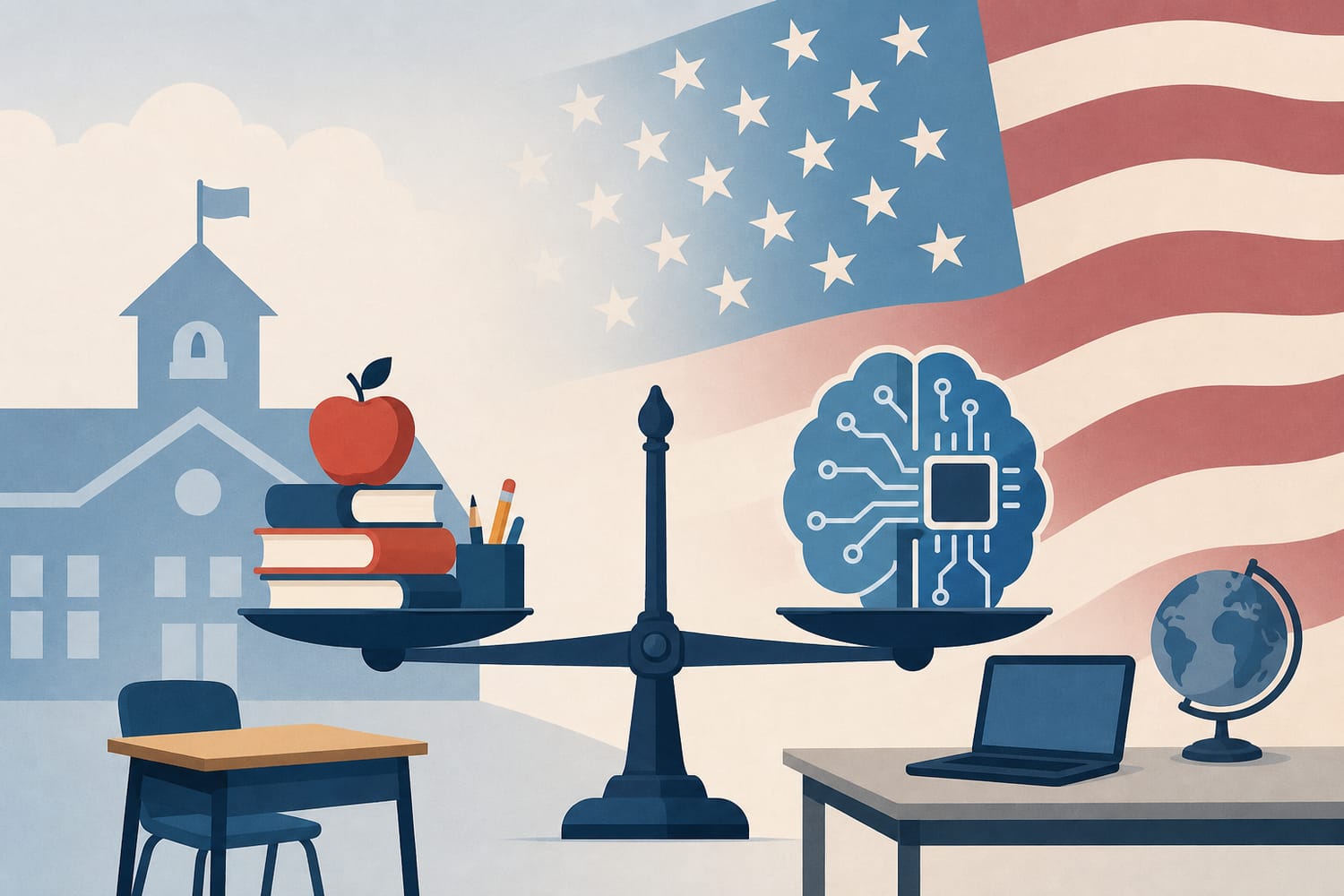
The debate over AI literacy is not a simple choice between embracing the future and protecting the classroom from overload. Many people occupy a middle position. They believe students should learn about AI, but not through rushed mandates, expensive technology programs, or lessons that displace core academic skills. They support thoughtful integration, teacher training, clear guidelines, and age-appropriate instruction.
A balanced approach might begin with basic AI awareness and responsible use rather than advanced technical content. Schools could teach students to question AI outputs, protect personal data, recognize bias, and understand that AI systems are created by people and shaped by data. Over time, students who are interested could pursue deeper study through computer science, robotics, data science, or career-focused programs.
The central question may not be whether schools should teach AI literacy, but how they can do so responsibly. If AI is taught carefully, it may help students navigate a changing world with confidence and judgment. If it is added hastily, it may become one more burden in an already crowded system. The challenge for schools is to prepare students for the future without losing sight of the essential skills they still need today.