
Why the Debate Matters
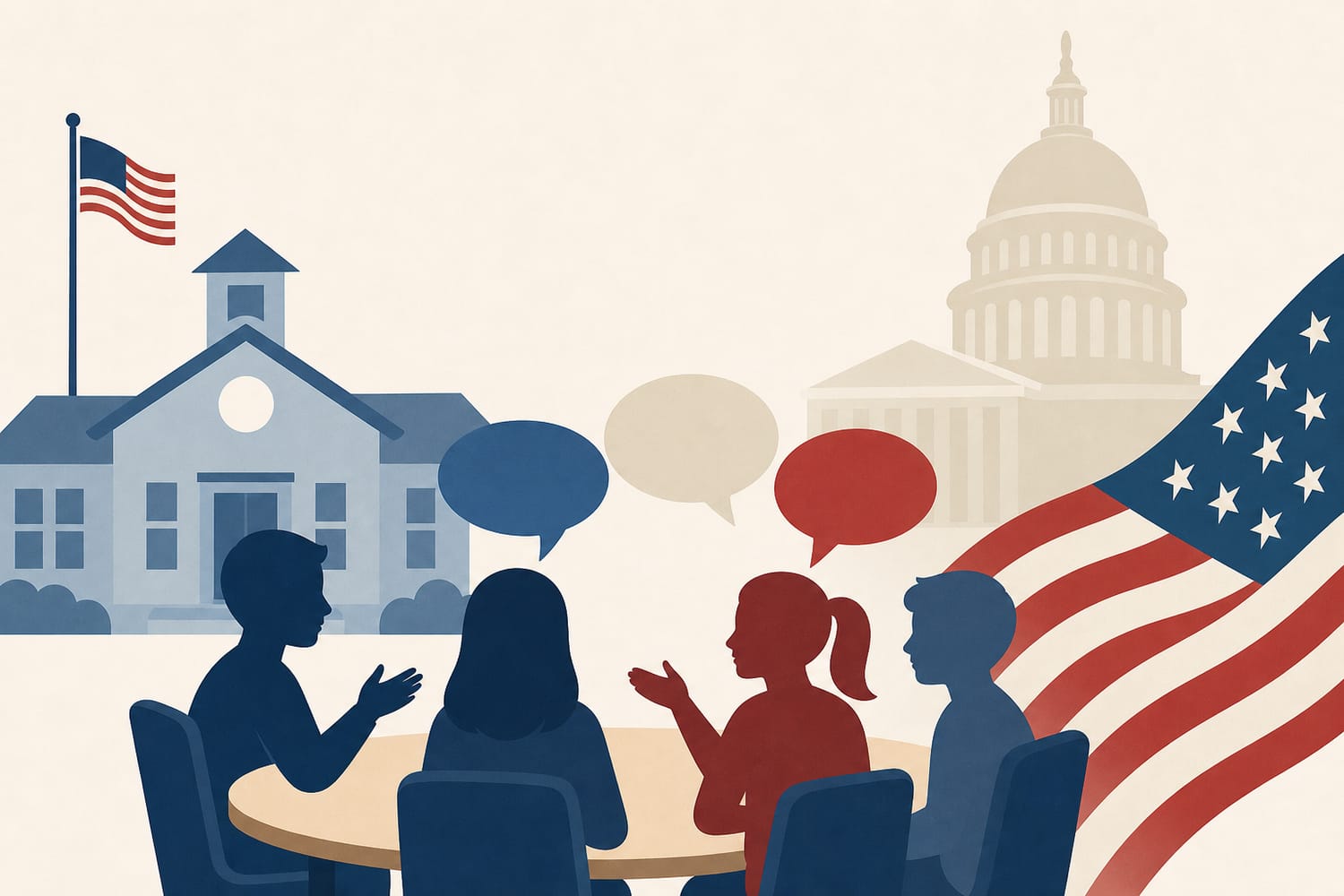
Schools have long been expected to do more than teach reading, math, science, and history. They are also asked to help young people become responsible members of society. In democracies, that often means preparing students to understand public issues, listen to others, and participate in civic life. The question is whether schools should directly teach “civil discourse”—the ability to discuss disagreements respectfully—or whether doing so risks bringing political conflict into the classroom.
Supporters argue that civil discourse is an essential democratic skill, especially in a polarized society. They believe students need structured opportunities to practice disagreement without personal attacks, misinformation, or fear. Critics worry that lessons on civil discourse can become a way for schools to promote particular political viewpoints, intentionally or unintentionally. They argue that what counts as “civil,” “respectful,” or “appropriate” can be subjective and may silence some students more than others.
The debate is not simply between people who support kindness and people who oppose it. Most participants agree that students should learn how to communicate well. The disagreement is about who decides the content, how political topics are handled, and whether schools can remain neutral while teaching students how to discuss controversial issues.
The Case for Teaching Civil Discourse
Those in favor of teaching civil discourse often begin with the idea that democratic societies depend on citizens who can talk across differences. Voting, serving on juries, attending public meetings, working in diverse workplaces, and participating in community life all require some ability to hear opposing views. If students graduate without learning how to engage with disagreement, supporters argue, they may be less prepared for adult civic responsibilities.
Advocates also point to the current media environment. Young people encounter political arguments constantly through social media, news clips, comment sections, podcasts, and online influencers. These spaces often reward outrage, sarcasm, and quick judgment. Schools, supporters say, can provide a different model: one where students slow down, check facts, ask questions, and distinguish between criticizing an idea and attacking a person.
In this view, civil discourse is not about avoiding conflict. It is about making conflict productive. Students can learn how to support claims with evidence, summarize an opposing argument fairly, recognize emotional manipulation, and change their minds when presented with better information. Supporters see these as academic skills as much as civic ones.
Some also argue that civil discourse can improve school climate. When students learn how to disagree respectfully, classrooms may become safer places to discuss literature, history, science, current events, and personal experiences. Teachers may be better able to manage difficult conversations before they become hostile or exclusionary.
Concerns About Politicizing the Classroom
Opponents or skeptics often worry that teaching civil discourse sounds neutral but may not be neutral in practice. They argue that political and moral disagreements are deeply contested, and schools may not be the right place to referee them. Even a lesson framed around “respectful discussion” can raise questions: Which topics are chosen? Which perspectives are represented? Which statements are considered harmful? Who decides when a viewpoint crosses the line?
Some parents and community members fear that civil discourse programs may introduce controversial political issues before families believe children are ready. Others worry that lessons may frame certain positions as reasonable and others as unacceptable. For example, debates involving race, religion, gender, immigration, policing, war, or climate policy can quickly become emotionally charged. A school’s effort to create ground rules may be seen by some as necessary protection and by others as ideological control.
Critics also note that teachers have their own beliefs, as all people do. Even well-intentioned educators may signal approval or disapproval through tone, examples, grading, or classroom management. Students may feel pressure to echo what they think the teacher believes, especially if the issue is tied to grades or participation.
From this perspective, schools should focus on core academic subjects and basic civic knowledge, such as the Constitution, branches of government, and historical events, rather than facilitating discussions on divisive current issues. Some skeptics are not opposed to respectful conversation itself; they simply believe schools should avoid becoming arenas for political debate.
Different Views on Neutrality
A major disagreement in this debate is whether schools can or should be neutral. Some argue that neutrality is both possible and necessary. Teachers, in this view, should present multiple perspectives, enforce discussion rules evenly, and avoid revealing their personal political opinions. The goal is to teach process, not conclusions: how to reason, listen, and respond.
Others argue that complete neutrality is impossible. The selection of curriculum, classroom examples, historical narratives, and discussion norms always reflects values. Even the decision to discuss or not discuss a topic can be seen as a political choice. For these observers, the more honest goal is not perfect neutrality but transparency, fairness, and intellectual humility.
There is also disagreement over whether all views deserve equal treatment. Some believe civil discourse requires exposing students to a wide range of opinions, including unpopular or uncomfortable ones. They argue that shielding students from controversial views leaves them unprepared for real-world debate. Others respond that not every claim deserves a platform in school, especially if it targets students’ identities, denies their dignity, or spreads demonstrably false information.
This raises one of the hardest questions: Can a classroom be both open to disagreement and protective of students? Supporters of broad discussion worry about censorship. Supporters of stronger limits worry about harm. Many schools attempt to balance these concerns, but the balance is often contested.
The Role of Teachers
Teachers are central to the debate because they are the ones who would guide classroom conversations. Supporters of civil discourse education often emphasize that teachers need training, not just expectations. Facilitating difficult discussions requires skill: setting norms, asking neutral questions, intervening when comments become personal, and helping students use evidence.
Some educators welcome this role. They see classrooms as places where students can practice the habits of citizenship in a structured environment. They may use debates, Socratic seminars, mock trials, deliberation exercises, or media literacy lessons to help students engage thoughtfully with complex issues.
Other teachers are cautious. They may fear backlash from parents, administrators, school boards, or students. In highly polarized communities, even a carefully planned lesson can be accused of bias. Teachers may also worry about saying the wrong thing, mishandling a sensitive topic, or being recorded and criticized online.
This concern has led some to argue that schools should provide clear policies and professional support before asking teachers to lead civil discourse activities. Without guidance, teachers may either avoid controversial subjects entirely or handle them inconsistently. With guidance, supporters argue, teachers may be better equipped to create fair and productive discussions.
Parents, Communities, and Local Control
Parents and local communities often have strong views about what schools should teach. Many supporters of civil discourse believe families benefit when students learn to discuss disagreements respectfully. They argue that these skills can help students navigate conflicts at home, online, and in their communities.
However, some parents see civil discourse education as an area where schools may overstep. They may believe moral and political formation belongs primarily to families, religious communities, or other institutions outside school. For them, classroom discussion of controversial topics may feel like interference with parental values.
Local control is another important issue. In some communities, school boards may strongly support civic discussion and encourage teachers to address current events. In others, boards may restrict discussion of certain topics to avoid controversy. This means the debate may play out differently depending on local culture, state laws, and community trust in educators.
Some propose that schools involve parents by sharing curriculum materials, explaining discussion guidelines, and offering opt-out policies for certain activities. Others argue that too much parental control can prevent schools from fulfilling their public mission to educate students for life in a pluralistic society.
Possible Middle Ground
Between strong support and strong opposition, many people look for compromise. One middle-ground approach is to teach civil discourse as a set of general communication and reasoning skills rather than through highly partisan topics. Students might practice listening, evidence evaluation, and respectful disagreement using historical questions, school policy issues, literature, or hypothetical scenarios before moving into current events.
Another approach is to emphasize viewpoint diversity and clear ground rules. Teachers can require students to represent opposing views accurately, avoid personal insults, cite credible sources, and distinguish facts from opinions. These norms can be applied without requiring students to agree on the underlying issue.
Some schools also use deliberation rather than debate. In a debate, students often try to win. In deliberation, students try to understand trade-offs and consider possible solutions. This format may reduce pressure and encourage more thoughtful engagement.
Transparency may also help. If schools clearly explain that the goal is not to tell students what to think but to help them think and communicate more effectively, some concerns may be eased. Still, transparency does not eliminate disagreement over which topics are appropriate or how boundaries should be drawn.
What Is at Stake
The debate over civil discourse in schools reflects larger questions about education and democracy. Should schools prepare students mainly for academic success and employment, or also for citizenship? Can students learn to engage controversial issues without classrooms becoming politically biased? How should schools protect students while also exposing them to challenging ideas?
There are reasonable concerns on multiple sides. Supporters see civil discourse as a necessary response to polarization, misinformation, and declining trust. Skeptics see potential risks: ideological influence, unfair treatment of viewpoints, and conflict between schools and families. Others accept the need for these skills but want careful limits, transparency, and teacher training.
Ultimately, the issue may depend less on whether civil discourse should be taught and more on how it is taught. A poorly designed approach can deepen mistrust. A thoughtful approach may help students become better listeners, stronger thinkers, and more constructive participants in public life. In a diverse society where disagreement is unavoidable, the challenge is deciding whether schools can teach students how to disagree well without turning the classroom into another political battleground.