
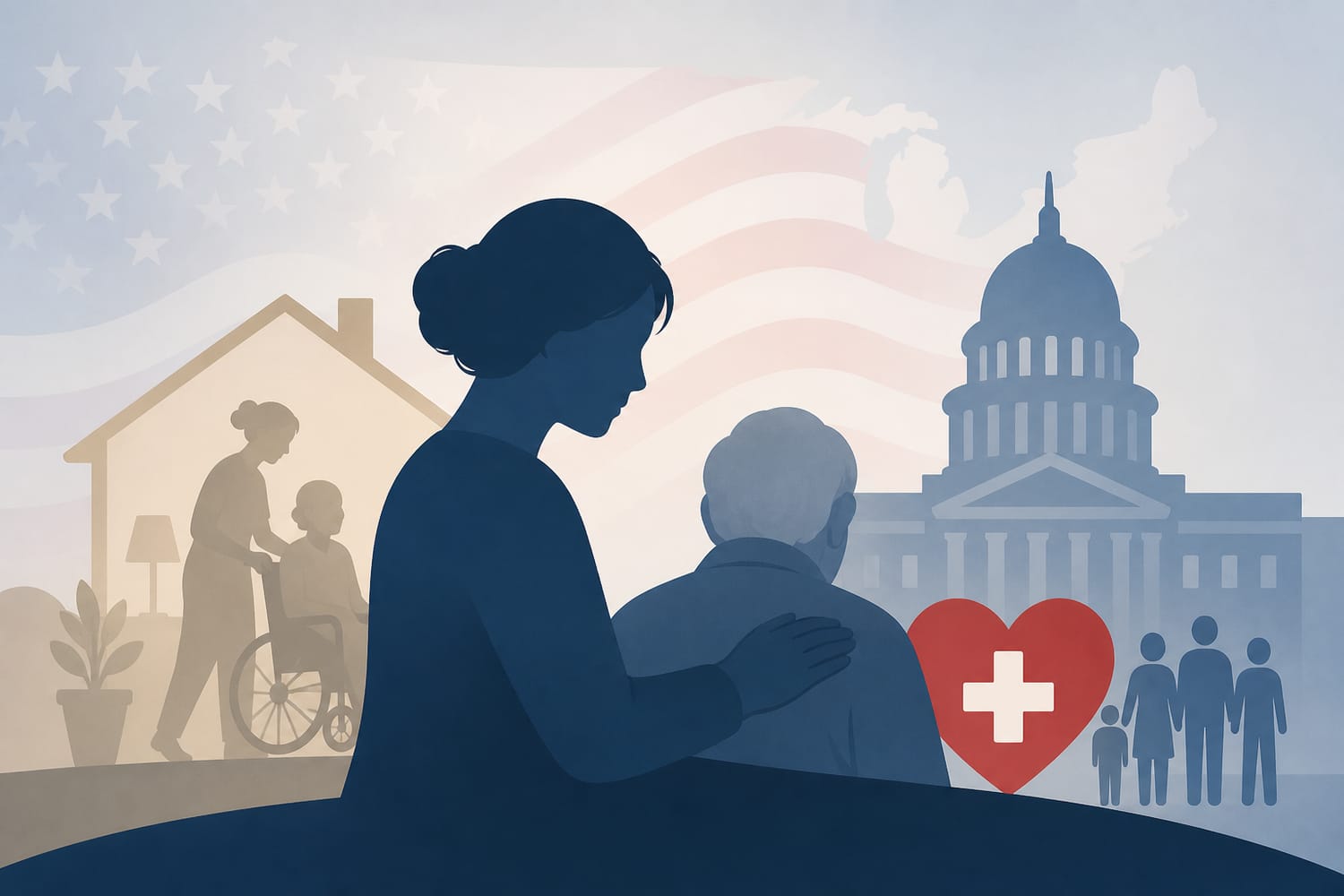
The Growing Strain Behind Closed Doors
Across the United States, millions of people provide unpaid care for aging parents, spouses, disabled relatives, chronically ill children, or loved ones recovering from serious medical conditions. They help with medications, bathing, transportation, meals, finances, emotional support, and medical decisions. Much of this work happens quietly, inside homes, often without formal training or pay.
The debate over caregiver burnout has become increasingly urgent as America’s population ages and health care costs rise. Some view caregiving primarily as a family responsibility: a moral duty rooted in love, loyalty, and community. Others argue that the scale and intensity of caregiving have become so overwhelming that burnout should be treated as a public health crisis requiring major policy intervention.
Both perspectives reflect real concerns. Families often want to care for their own, and many see caregiving as meaningful. At the same time, unpaid caregivers can face exhaustion, lost income, depression, physical illness, and social isolation. The question is not simply whether caregiving is noble or difficult. It is whether the current system relies too heavily on private sacrifice to solve a national care problem.
The View That Caregiving Is a Family Duty
For many Americans, caring for relatives is seen as a natural part of family life. Parents care for children, spouses care for one another, and adult children often feel responsible for aging parents. This view is shaped by cultural, religious, and personal values. In many communities, placing a loved one in an institution may be seen as a last resort, or even as a failure to honor family obligations.
Supporters of this perspective often argue that family caregiving provides emotional benefits that professional care cannot easily replace. A daughter helping her mother with daily routines, or a husband caring for his wife after a stroke, may offer familiarity, trust, and affection that are deeply important to the person receiving care. Family members may understand preferences, routines, fears, and histories in ways that paid caregivers do not.
Some also believe that family-based care preserves dignity and independence. Many older adults prefer to remain at home rather than move into assisted living or nursing facilities. Family caregivers can help make that possible. From this standpoint, caregiving is not only a burden but also an act of devotion that strengthens intergenerational bonds.
There is also concern that treating caregiving mainly as a public responsibility could weaken family commitments. Some worry that government programs may become impersonal, bureaucratic, or financially unsustainable. Others believe public support should assist families, not replace them.
The Argument That Burnout Is a Public Health Crisis
On the other side, many advocates, researchers, and health professionals argue that caregiver burnout has moved beyond a private family matter. They point to the sheer number of unpaid caregivers in the United States and the growing complexity of the tasks they perform. Caregivers are often expected to manage wound care, medication schedules, mobility equipment, dementia-related behaviors, insurance paperwork, and end-of-life decisions.
This work can take a serious toll. Caregivers may sleep poorly, skip their own medical appointments, develop anxiety or depression, or experience chronic stress. Some leave jobs, reduce work hours, drain savings, or delay retirement. The emotional strain can be especially severe for those caring for people with dementia, serious mental illness, or long-term disabilities.
From a public health perspective, caregiver burnout affects more than individual families. When caregivers become ill or financially unstable, health systems and social services may face greater pressure. Burned-out caregivers may be less able to provide safe care, increasing the risk of medication errors, falls, neglect, or emergency room visits. If a caregiver can no longer continue, the person receiving care may need costly institutional care.
Those who frame the issue as a public health crisis argue that unpaid caregiving saves the country hundreds of billions of dollars each year. If the health system depends on this labor, they say, then caregivers deserve structured support, training, respite services, workplace protections, and financial assistance.
Economic Pressures and Unequal Burdens
A major part of the debate centers on money. Professional long-term care is expensive, and Medicare generally does not cover extended custodial care. Medicaid may help, but eligibility rules are strict and often require people to spend down assets. As a result, families frequently step in because there are few affordable alternatives.
Some argue that this is practical reality: the government cannot pay for every need, and families are best positioned to provide flexible, personal care. Expanding public benefits could require higher taxes, increased government spending, or difficult tradeoffs with other priorities.
Others respond that the current system already has major costs, but those costs are hidden. They are paid through unpaid labor, lost wages, reduced retirement savings, and the health decline of caregivers. Lower-income families may have fewer choices, less flexible work, and less access to paid help. Women, especially middle-aged women, often carry a disproportionate share of caregiving duties. Racial and ethnic minority families may also face additional barriers due to income inequality, language access, or mistrust of institutions.
This raises a fairness question: if caregiving is essential to the functioning of the health system, should its burdens fall so unevenly? Some favor tax credits, paid family leave, caregiver stipends, or Social Security credits for time spent caregiving. Others worry that such policies may be expensive, hard to administer, or insufficient to address the deeper shortage of care workers and facilities.
The Role of Government Support
Policy proposals vary widely. Some advocates call for a national long-term care insurance program, expanded Medicaid home- and community-based services, paid leave, respite care, and direct payments to family caregivers. They argue that these supports could prevent burnout, delay nursing home placement, and improve outcomes for both caregivers and care recipients.
More moderate proposals focus on practical assistance rather than broad structural reform. These include caregiver training, better discharge planning from hospitals, flexible workplace policies, counseling, support groups, and easier access to short-term respite. Supporters say these steps could reduce stress without completely transforming the care system.
Skeptics of expanded government involvement raise concerns about cost, efficiency, and dependency. They may support community-based or nonprofit solutions instead, such as faith groups, local volunteer networks, and charities. Some argue that public programs can become complicated and may not reach those most in need. Others believe that employers, health insurers, and families should share responsibility rather than relying primarily on federal or state government.
The debate is not always divided between “government” and “family.” Many people support a blended approach, where public policy helps families continue caregiving without forcing them into poverty, illness, or isolation.
The Employer Perspective
Caregiver burnout also affects workplaces. Many caregivers are employed full-time or part-time while managing responsibilities at home. They may need time off for appointments, emergencies, or care coordination. Some experience reduced productivity or leave the workforce entirely.
Employees and caregiver advocates often argue for paid family leave, flexible schedules, remote work options, and protection from discrimination. They say these policies help workers remain employed while meeting family obligations. From this perspective, supporting caregivers is not only humane but economically sensible.
Employers, especially small businesses, may see the issue differently. They may sympathize with workers but worry about staffing, costs, and administrative burdens. Paid leave policies can be difficult to manage in workplaces with limited personnel. Some business groups prefer voluntary flexibility rather than government mandates.
Still, as caregiving becomes more common among working adults, many employers are beginning to see caregiver support as part of workforce retention. The debate is increasingly about how much responsibility should fall on employers and how much should be supported through public programs.
Personal Meaning Versus Systemic Stress
One reason the issue is difficult is that caregiving can be both rewarding and harmful at the same time. Many caregivers describe their role as an expression of love, gratitude, or commitment. They may not want to give it up, even when it is exhausting. Some find purpose in being present during a loved one’s most vulnerable moments.
At the same time, meaning does not erase strain. A person can deeply love a parent and still feel overwhelmed by sleepless nights, financial pressure, and constant worry. Recognizing burnout does not necessarily devalue family caregiving. It may instead acknowledge that love alone cannot replace rest, training, money, and support.
This is where the two sides may find common ground. Few people argue that families should have no role in care. Few argue that caregivers should be left entirely on their own. The central disagreement is about scale: whether current supports need modest improvement or major reform.
A Debate Likely to Intensify
As the U.S. population grows older, the caregiver burnout debate will likely become more prominent. Longer life expectancy, smaller families, geographic distance between relatives, workforce pressures, and rising medical complexity all make traditional family caregiving harder to sustain.
Those emphasizing family duty warn against losing the personal, moral, and relational dimensions of care. Those emphasizing public health warn that relying too heavily on unpaid caregivers is damaging families and creating preventable health and economic consequences.
Both sides are responding to legitimate realities. Families often want to care for their loved ones, and many care recipients prefer familiar support at home. But caregiving today can involve responsibilities that previous generations rarely faced at the same intensity or duration.
The challenge for America is to decide whether caregiver burnout should remain largely a private struggle or be addressed as a shared social problem. The answer may not be either family duty or public health crisis, but an acknowledgment that it is increasingly both.