
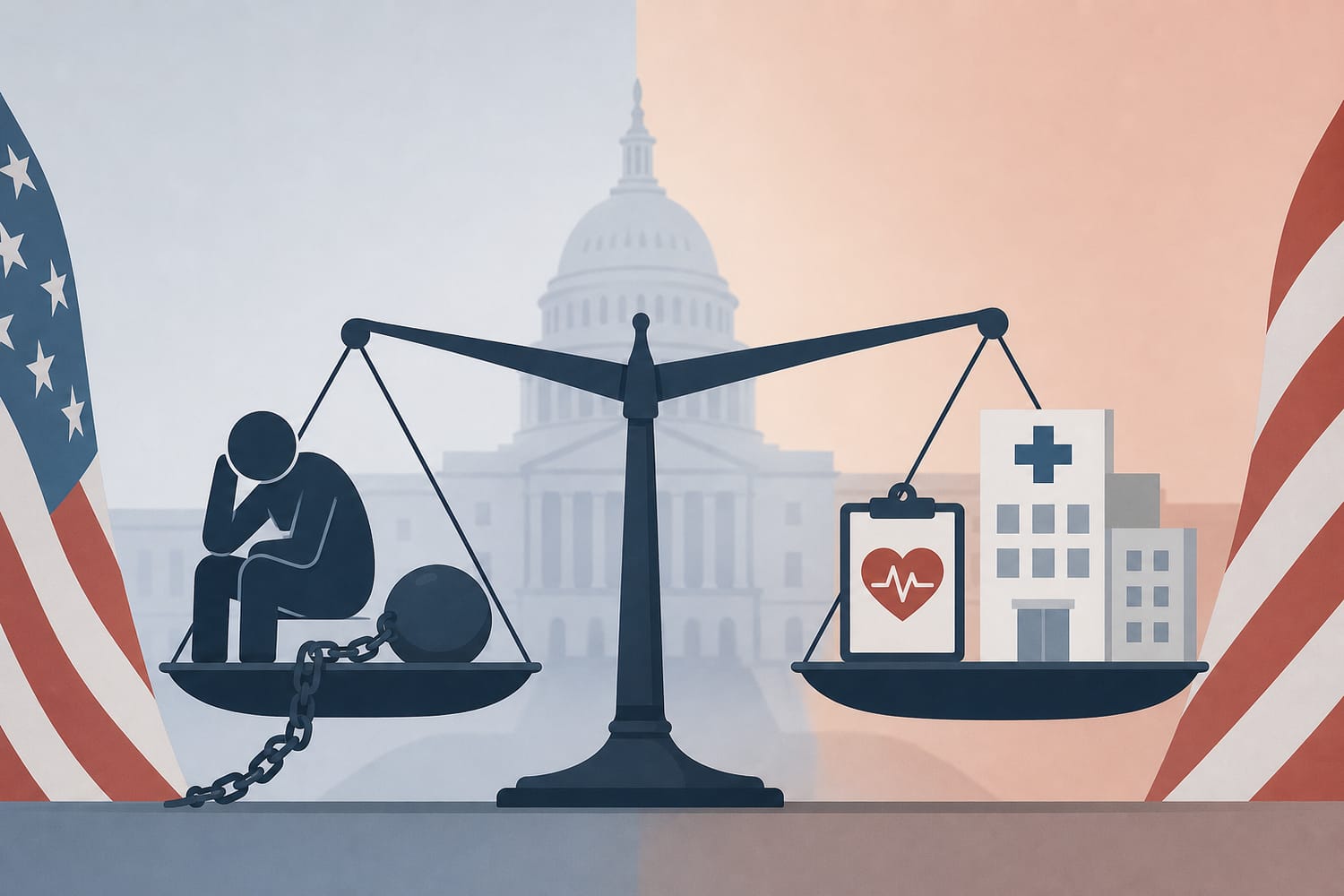
Medical debt is one of the most emotionally charged financial issues in the United States. For some, it represents the consequences of individual choices: whether someone purchased insurance, saved for emergencies, understood their coverage, or made informed decisions about where and when to seek care. For others, it is evidence of a healthcare system that is too expensive, too complex, and too unpredictable for ordinary people to navigate safely.
The debate over medical debt often centers on a difficult question: is it primarily a matter of personal responsibility, or is it a failure of the healthcare system? The answer depends heavily on one’s values, experiences, and assumptions about healthcare, economics, and fairness. Some people emphasize individual accountability and the need for consumers to make careful financial decisions. Others argue that medical care is unlike most consumer goods because illness is often unexpected, urgent, and impossible to shop for in the same way as other services.
Understanding this debate requires looking at both sides, as well as the middle ground between them.
The Personal Responsibility Argument
Those who emphasize personal responsibility often argue that individuals have some obligation to prepare for healthcare costs. In this view, medical debt can sometimes result from choices such as going uninsured, choosing a plan with high out-of-pocket costs without understanding the risks, failing to save for emergencies, or using emergency rooms for non-emergency care.
Supporters of this perspective may point out that insurance exists partly to protect against large, unexpected expenses. If people decline coverage when it is available, they may be taking a financial risk. Similarly, if someone chooses a lower-premium plan with a high deductible, they may be accepting the possibility of higher costs later. From this standpoint, medical debt is not always the result of systemic injustice; sometimes it reflects financial planning decisions.
This argument is often connected to broader beliefs about markets and incentives. If patients are insulated from costs, some worry they may overuse healthcare services or fail to consider price. Personal responsibility advocates may argue that patients should be encouraged to compare prices, ask questions about necessity, use preventive care, and maintain healthy lifestyles where possible.
They may also believe that forgiving medical debt too broadly could create moral hazard. If people expect bills to be erased, they may be less motivated to purchase insurance or pay what they owe. Hospitals, insurers, and taxpayers may ultimately absorb those losses, potentially raising costs for everyone.
Limits of the Personal Responsibility View
Critics of the personal responsibility argument respond that it assumes people have more control than they often do. Medical debt frequently arises from emergencies, chronic illnesses, accidents, childbirth, cancer treatment, or care for children and family members. These are not always predictable or avoidable.
Even insured patients can face large bills because of deductibles, copayments, coinsurance, denied claims, out-of-network providers, and surprise billing. A person may carefully choose an in-network hospital but unknowingly receive care from an out-of-network anesthesiologist, radiologist, or ambulance service. In those situations, critics argue, it is unrealistic to say the patient simply failed to be responsible.
Another objection is that healthcare pricing is often opaque. Patients may not know what a procedure will cost until after it happens. Even when price estimates are available, they can be inaccurate or difficult to interpret. Unlike buying a car or comparing airline tickets, healthcare decisions are often made under stress, pain, or urgency. A patient experiencing chest pain is usually not in a position to call multiple hospitals for quotes.
Critics also note that many Americans live paycheck to paycheck. Telling people to save for medical emergencies may be sound advice in theory, but difficult in practice when wages, housing costs, childcare, food, and transportation already consume most income. For low-income families, even a relatively small medical bill can become unmanageable.
The Healthcare System Failure Argument
Those who see medical debt as a healthcare system failure argue that the United States has unusually high medical costs compared with other wealthy nations. Hospital stays, prescription drugs, specialist visits, imaging, and surgeries can be extremely expensive. Even when insurance covers part of the bill, the remaining balance can be financially devastating.
From this perspective, medical debt is not mainly about irresponsible behavior. It is the predictable result of a system that combines high prices, fragmented insurance coverage, administrative complexity, and uneven access to care. Many people with medical debt are insured, employed, and trying to pay their bills. The problem, critics argue, is that the bills are simply too large.
This side often emphasizes that healthcare is a basic human need, not a luxury product. People do not choose to get appendicitis, develop diabetes, have a premature baby, or need chemotherapy. Because illness is often involuntary, critics argue that it is unfair to treat medical debt like credit card debt from optional purchases.
Advocates of systemic reform may support policies such as universal healthcare, stronger price regulation, expanded Medicaid eligibility, caps on out-of-pocket expenses, limits on hospital billing practices, and restrictions on medical debt collection. They argue that reducing medical debt requires changing the structure of healthcare financing, not merely encouraging better individual choices.
Concerns About System-Level Reform
Opponents or skeptics of broad healthcare reform do not always deny that medical debt is a serious problem. However, they may question whether proposed solutions would create new problems. For example, expanding government-funded healthcare could require higher taxes or increased public spending. Some worry that government price controls might reduce innovation, limit provider availability, or lead to longer wait times.
Others argue that healthcare systems in other countries have trade-offs of their own, including rationing, delayed access to specialists, or fewer choices among doctors and treatments. They may believe the American system, despite its flaws, offers advanced care, medical innovation, and patient choice that could be weakened by sweeping reforms.
There is also concern about shifting responsibility from individuals to institutions too completely. If the system absorbs more costs, someone still pays: taxpayers, employers, insurers, providers, or future patients. Skeptics may argue that any serious solution must address not only who pays the bills, but why the bills are so high in the first place.
Some also worry that focusing only on hospitals, insurers, or pharmaceutical companies oversimplifies the issue. Healthcare costs are shaped by many factors, including technology, labor shortages, malpractice concerns, aging populations, chronic disease, administrative costs, and consumer demand for advanced treatments.
The Role of Insurance
Insurance sits at the center of the debate because it is supposed to protect people from catastrophic medical expenses. Supporters of the current insurance-based model argue that coverage spreads risk and gives people access to care they could not otherwise afford. Employer-sponsored insurance, Medicare, Medicaid, and marketplace plans all play major roles in reducing the burden of medical bills.
Yet insurance can also be a source of confusion and frustration. Patients may not understand deductibles, networks, formularies, prior authorizations, or claim denials. A person may think they are covered only to discover that a specific service, drug, provider, or facility is excluded. Even when insurance works as designed, high deductibles can leave patients responsible for thousands of dollars before coverage fully begins.
Some argue that consumers need better education about insurance so they can choose appropriate plans and avoid unexpected costs. Others respond that the system is too complicated even for well-educated patients to navigate reliably. In this view, the problem is not a lack of consumer effort but excessive complexity.
Hospitals, Providers, and Billing Practices
Hospitals and medical providers are viewed differently depending on the perspective. Some see them as institutions trying to deliver care in a difficult environment. Hospitals must pay staff, purchase equipment, maintain facilities, comply with regulations, and provide emergency care regardless of a patient’s ability to pay. Rural hospitals and safety-net hospitals, in particular, may operate on thin margins.
Others criticize aggressive billing and collection practices, especially by nonprofit hospitals that receive tax benefits. Patients may be charged high list prices, pursued by debt collectors, or sued over unpaid bills. Critics argue that hospitals should do more to screen patients for financial assistance, offer reasonable payment plans, and avoid damaging credit reports over medical debt.
Providers may also face tension between clinical care and financial realities. Doctors typically do not control all billing decisions, and many are unaware of the exact costs patients will face. Still, patients often experience the healthcare system as a single entity, making it difficult to separate the actions of physicians, hospitals, insurers, and billing departments.
A Middle-Ground Perspective
Many people hold a mixed view. They believe individuals should make responsible choices when possible, such as maintaining insurance, reading plan details, seeking preventive care, and communicating with billing offices. At the same time, they recognize that the healthcare system often places unreasonable burdens on patients.
This middle-ground perspective sees medical debt as both personal and structural. Individual decisions matter, but they occur within a system that can be expensive, confusing, and unforgiving. A person can be financially careful and still be overwhelmed by a serious diagnosis or emergency surgery. Conversely, some cases of medical debt may involve avoidable decisions or poor planning.
Policy ideas from this perspective often focus on practical reforms rather than total transformation. These might include clearer price transparency, stronger surprise billing protections, simplified insurance language, expanded financial assistance, caps on interest or collections, better access to preventive care, and limits on out-of-pocket costs for essential treatments.
Why the Debate Is So Difficult
The debate over medical debt is difficult because it touches on competing values: responsibility, compassion, fairness, freedom, efficiency, and solidarity. People disagree not only about facts, but about what society owes to individuals when they become sick.
Those emphasizing responsibility worry that removing consequences may encourage poor choices and raise costs for everyone. Those emphasizing system failure worry that blaming patients ignores the reality of illness and punishes people for needing care. Both sides often agree that costs are too high, but they differ on where to place blame and how to fix the problem.
Medical debt in America does not fit neatly into one explanation. It can result from personal decisions, but also from emergencies, insurance gaps, opaque pricing, high healthcare costs, and administrative complexity. Any serious discussion has to acknowledge that more than one thing can be true at the same time.
The central question may not be whether medical debt is entirely about personal responsibility or entirely about system failure. It may be how to design a healthcare system that encourages wise choices while protecting people from financial ruin when illness strikes.