
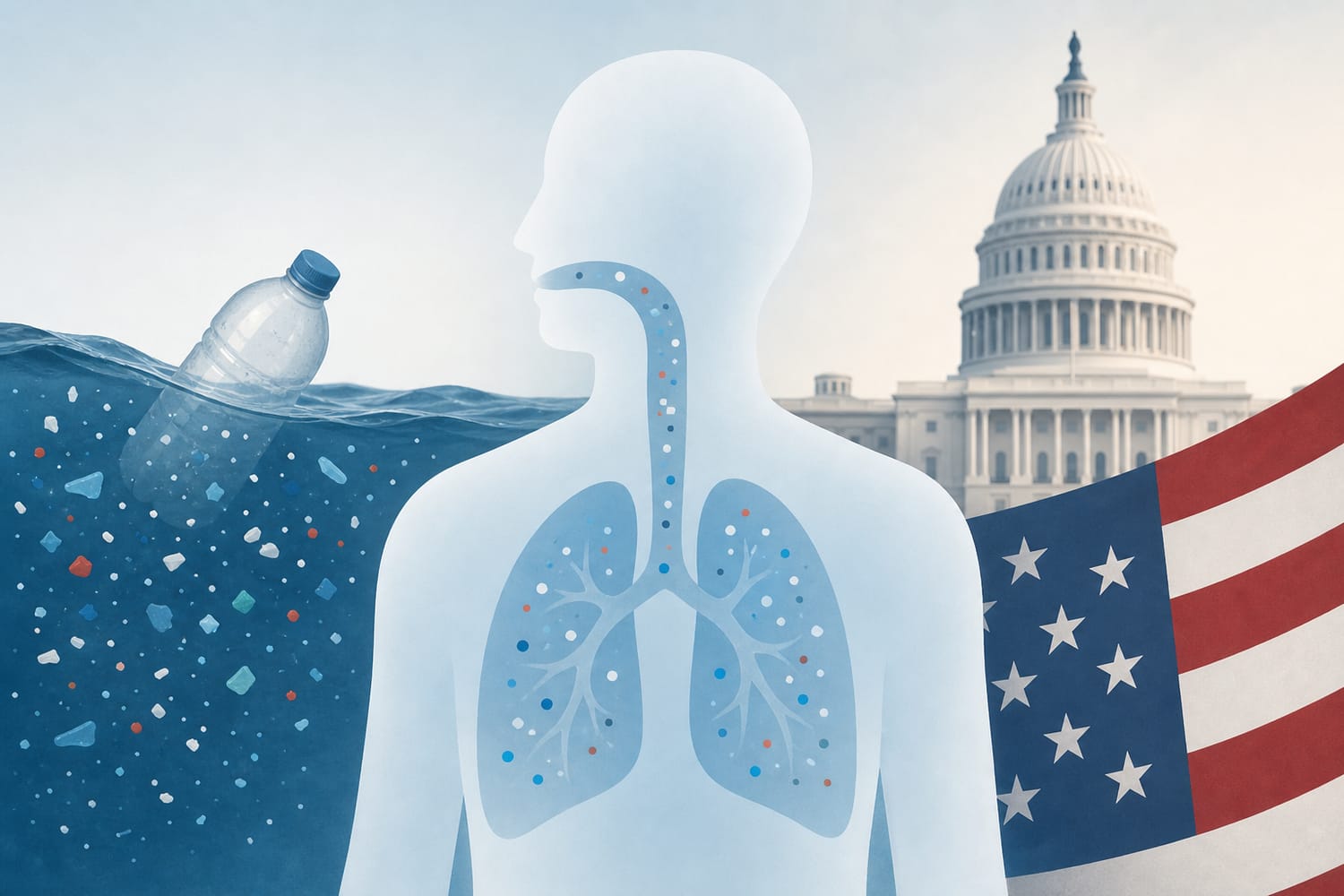
A Problem That Is Everywhere and Still Hard to Measure
Microplastics have become one of the most widely discussed environmental health concerns of the past decade. These tiny plastic particles, often defined as smaller than five millimeters, have been found in oceans, rivers, soil, air, food, drinking water, and even the human body. Studies have detected them in blood, lungs, placenta, breast milk, and stool. For some, these findings suggest a quiet public health crisis already underway. For others, they show that science has become better at detecting traces of contamination, but not necessarily that those traces are causing meaningful harm.
The debate is complicated because microplastics are not a single substance. They vary in size, shape, chemical composition, and source. A fiber shed from polyester clothing may behave differently from a fragment of degraded packaging or a microscopic bead from industrial processes. Some plastics contain additives such as flame retardants, plasticizers, or dyes. Others may carry pollutants or microbes on their surfaces. This diversity makes it difficult to make sweeping statements about health risks.
As a result, public discussion often splits into two broad camps: those who argue that microplastics represent an urgent, underappreciated threat, and those who caution that the evidence remains too uncertain to justify alarm. Between these positions is a growing group of researchers and public health experts who argue for precaution without panic.
The Case for Concern
Those who see microplastics as a serious health issue point first to their ubiquity. Humans are not just encountering microplastics occasionally; exposure appears to be constant. People may inhale airborne fibers indoors, ingest particles through food and beverages, and absorb chemicals associated with plastics through repeated contact with consumer products. The fact that microplastics have been found inside human tissues raises questions about whether they can cross biological barriers that once seemed protective.
Supporters of a more urgent response also point to laboratory and animal studies. In some experiments, microplastics have been linked to inflammation, oxidative stress, immune responses, gut microbiome disruption, and cellular damage. Nanoplastics, which are even smaller than microplastics, are of particular concern because their size may allow them to enter cells or move through the bloodstream more easily. Some scientists worry that the smallest particles could accumulate in organs over time.
Another major concern is chemical exposure. Plastics are not chemically inert in all contexts. Some contain additives that are known or suspected endocrine disruptors, meaning they may interfere with hormones. Examples include bisphenols, phthalates, and certain flame retardants. Microplastics can also attract environmental pollutants, such as heavy metals or persistent organic chemicals, though the real-world importance of this pathway is still debated. For people concerned about cumulative exposure, microplastics are not just physical particles but possible carriers of a broader chemical burden.
There is also an equity argument. Communities near plastic production facilities, waste sites, landfills, or polluted waterways may face higher exposure. Workers in textile, plastic manufacturing, recycling, or waste management industries may inhale larger amounts of plastic dust. From this perspective, microplastics are not merely a consumer lifestyle issue but part of a wider environmental justice problem tied to production, disposal, and regulation.
The Argument for Caution About Alarm
Those who are skeptical of dramatic claims do not usually argue that microplastics are harmless. Rather, they argue that current evidence does not yet prove that typical environmental exposures cause significant disease in humans. Detection, they note, is not the same as danger. Modern instruments can find extremely small amounts of substances in places where they previously went unnoticed. The presence of microplastics in blood or tissue may be concerning, but it does not automatically mean those particles are causing harm.
A key issue is dose. Many toxicologists emphasize that risk depends on how much of a substance enters the body, how long it stays there, and what biological effects it produces at realistic exposure levels. Some laboratory studies use concentrations much higher than what humans typically encounter. Others use uniform plastic particles that do not reflect the messy variety of real-world microplastics. This makes it difficult to translate experimental findings into predictions about everyday health risks.
Skeptics also point out that human studies are still limited. Research linking microplastics to health outcomes is emerging, but many studies are small, observational, or methodologically challenging. Contamination during sampling is a major problem because plastic is everywhere, including in lab equipment, clothing, and air. Measuring microplastics accurately in human tissue requires strict controls, and methods are still being standardized.
Another concern is that public fear can outrun evidence. Some commentators argue that microplastics have become a convenient symbol of modern pollution, attracting headlines that imply more certainty than the science supports. They worry that exaggerated claims could undermine trust in environmental health research or distract from better-established risks, such as air pollution, smoking, poor diet, climate change, or exposure to known toxic chemicals.
The Middle Position: Precaution Without Panic
Many experts occupy a middle ground. They acknowledge that the evidence of direct harm to humans is incomplete, but they also argue that waiting for perfect proof could be irresponsible. This view is shaped by past experiences with asbestos, lead, tobacco, and certain industrial chemicals, where early warning signs were often dismissed until damage became undeniable.
From this perspective, microplastics deserve serious attention because exposure is widespread, plastic production continues to rise, and environmental cleanup is extremely difficult once particles disperse. Even if the health risks turn out to be modest at the individual level, the population-level impact could still matter because billions of people are exposed.
The precautionary approach does not necessarily call for panic or extreme personal measures. Instead, it supports reducing unnecessary plastic use, improving waste systems, limiting avoidable emissions of plastic particles, and investing in better research. It also encourages regulation of known hazardous additives and greater transparency about chemicals used in plastics.
This middle position recognizes uncertainty as a reason for careful action, not paralysis. It suggests that society can reduce exposure while scientists continue to clarify the scale and mechanisms of risk.
Personal Responsibility Versus Systemic Change
Another debate centers on who should be responsible for addressing microplastics. Much public advice focuses on individual behavior: avoid heating food in plastic containers, use glass or stainless steel when possible, reduce bottled water consumption, vacuum regularly with a good filter, choose natural fibers, and avoid unnecessary single-use plastics. These steps may reduce exposure somewhat and can make people feel more in control.
However, critics of this individual-focused approach argue that it places too much burden on consumers. Microplastics are generated throughout industrial supply chains, from synthetic textiles and tire wear to packaging, paint, agriculture, and plastic manufacturing. A person can make careful choices and still inhale particles from roads, buildings, clothing, and public environments.
Those emphasizing systemic change call for policies that reduce plastic production, improve product design, regulate additives, capture microfiber pollution from washing machines, upgrade wastewater treatment, and address tire and road wear particles. They argue that the scale of the problem is too large for consumer choice alone.
Others counter that broad restrictions may bring trade-offs. Plastic packaging can reduce food waste, lower transportation weight, improve medical safety, and provide affordable materials. Replacing plastic with alternatives is not automatically better if those alternatives require more energy, water, land, or emissions. This side argues that policy should be targeted and evidence-based rather than driven by a general assumption that all plastic is equally harmful.
What the Science Still Needs to Answer
Several major questions remain unresolved. How many microplastics do people actually inhale and ingest over a lifetime? Which types are most likely to remain in the body? Do they accumulate, or are most eliminated? Are nanoplastics more dangerous than larger microplastics? Which additives or surface chemicals matter most? Are certain groups, such as infants, pregnant people, industrial workers, or people with chronic diseases, more vulnerable?
Researchers also need better methods for measuring microplastics consistently. Different studies use different definitions, tools, and contamination controls, making comparisons difficult. Without standardized methods, it is hard to assess trends or set safety thresholds.
Long-term human studies will be especially important. These studies are difficult and expensive, but they could help determine whether microplastic exposure is associated with inflammation, cardiovascular disease, reproductive effects, immune changes, or other health outcomes. Even then, separating microplastic effects from other pollutants and lifestyle factors will be challenging.
A Debate Defined by Uncertainty
The debate over microplastics and human health is not a simple clash between science and denial, or between alarm and complacency. It is a debate about how to act under uncertainty. One side emphasizes early warning signs, biological plausibility, and the danger of waiting too long. Another side emphasizes the limits of current evidence, the importance of dose, and the risk of overstating findings. Between them is a practical position that supports reducing unnecessary exposure while continuing to investigate.
What seems clear is that microplastics are not imaginary, and their presence in the human environment is not temporary. Whether they become recognized as a major public health crisis or a more limited environmental concern will depend on evidence still being gathered. In the meantime, the most balanced response may be neither fear nor dismissal, but sustained attention, better research, and thoughtful efforts to reduce avoidable pollution.