
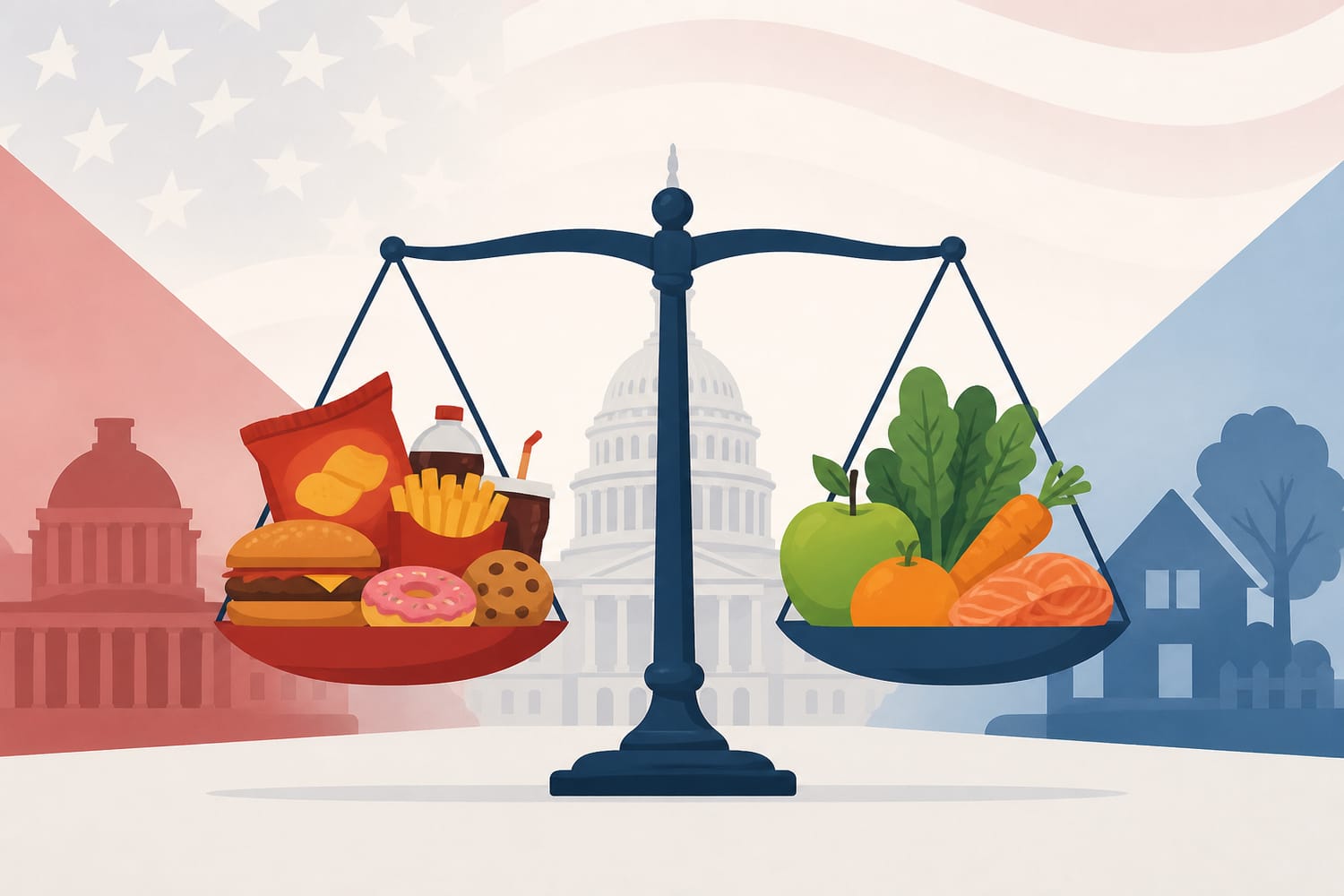
Ultra-processed foods have become one of the most contested topics in nutrition, public health, and consumer policy. They include many packaged snacks, sugary drinks, instant noodles, processed meats, frozen meals, sweetened cereals, and ready-to-eat products made with industrial ingredients, additives, flavorings, emulsifiers, and preservatives. For some researchers and health advocates, these foods represent a major driver of obesity, diabetes, heart disease, and other chronic conditions. For others, the debate is more complicated: ultra-processed foods can be affordable, convenient, safe, and sometimes fortified with important nutrients.
At the center of the debate is a difficult question: should ultra-processed foods be treated as a public health crisis requiring government action, or as a matter of personal choice in which individuals decide what to eat? The answer depends on how people weigh scientific evidence, economic realities, personal responsibility, food industry practices, and the role of government in shaping diets.
The Public Health Concern
Those who see ultra-processed foods as a public health crisis often point to the growing body of research linking high consumption of these products with poorer health outcomes. Observational studies have associated diets high in ultra-processed foods with increased risks of obesity, type 2 diabetes, cardiovascular disease, certain cancers, depression, and early mortality. While these studies cannot always prove direct causation, many public health experts argue that the consistency of the findings is concerning.
One reason for concern is that ultra-processed foods are often designed to be highly palatable. They may combine sugar, salt, fat, and flavor enhancers in ways that encourage overeating. Critics argue that these products can override normal hunger cues and make portion control difficult. A bag of chips, a sugary beverage, or a fast-food meal may be easier to consume quickly and in large quantities than less processed whole foods.
Supporters of stronger public health action also argue that ultra-processed foods have changed the food environment. In many communities, especially low-income areas, heavily processed products are more accessible and heavily marketed than fresh fruits, vegetables, and minimally processed foods. From this perspective, the issue is not simply that individuals make poor choices. It is that the food system makes unhealthy choices easier, cheaper, and more visible.
The Personal Choice Argument
On the other side, many people argue that food decisions should remain primarily a matter of personal choice. From this perspective, individuals have different preferences, budgets, lifestyles, cultural habits, and nutritional needs. A food that one person considers unhealthy may be a practical option for another person trying to feed a family on limited time and money.
Critics of strict regulation often worry that public health campaigns against ultra-processed foods can become moralizing or classist. Telling people to avoid packaged meals or convenience foods may sound reasonable, but it can overlook the realities of long work hours, limited kitchen access, disability, caregiving responsibilities, or food insecurity. For some households, ultra-processed foods are not simply indulgences; they are affordable, shelf-stable, and easy to prepare.
The personal choice argument also emphasizes that not all ultra-processed foods are nutritionally equal. A sweetened soda, a protein bar, a fortified breakfast cereal, and a packaged whole-grain bread may all be classified as ultra-processed under some systems, yet they have very different nutritional profiles. Some critics argue that focusing too much on processing can distract from more specific nutritional concerns, such as excess calories, added sugars, sodium, low fiber, or poor overall diet quality.
Questions About Definitions
A major point of debate is how ultra-processed foods are defined. The most widely used classification system is NOVA, which groups foods based on the extent and purpose of processing. Under this system, ultra-processed foods are typically industrial formulations made mostly from substances extracted from foods or synthesized in laboratories, often with additives designed to improve taste, texture, appearance, or shelf life.
Supporters of the NOVA framework argue that it captures something important that traditional nutrition labels may miss. A product can be low in fat or fortified with vitamins while still being engineered for overconsumption. They believe the category helps explain why modern diets have become so dependent on packaged, ready-to-eat products.
Skeptics argue that the category can be too broad and sometimes confusing. They note that food processing itself is not inherently harmful. Cooking, freezing, fermenting, pasteurizing, and canning can improve safety, reduce waste, and make nutrients more available. Even industrial processing can produce foods that are useful and nutritious. Critics worry that the term “ultra-processed” may create fear without giving consumers clear guidance about what to eat instead.
The Role of the Food Industry
For those who favor stronger intervention, the food industry plays a central role in the problem. They argue that major food companies invest heavily in product design, advertising, and distribution strategies that promote frequent consumption of highly profitable processed foods. Children are often a particular concern because they may be more vulnerable to advertising and brand loyalty.
Public health advocates compare the issue to tobacco, alcohol, or sugary drinks, arguing that individual choice is shaped by corporate behavior. If companies spend billions marketing products that contribute to poor health, they argue, governments have a responsibility to respond. Proposed policies include warning labels, restrictions on marketing to children, taxes on sugary or ultra-processed products, school food standards, and incentives for healthier food production.
The food industry and its defenders often respond that companies are meeting consumer demand. They may argue that many people want convenient, tasty, affordable foods and that industry innovation can help improve nutrition. Some companies have reduced sodium, removed trans fats, added whole grains, or created smaller portion sizes. From this view, collaboration with industry may be more effective than treating companies as adversaries.
Economic and Social Considerations
The debate over ultra-processed foods is also a debate about inequality. Healthier diets are often easier to achieve for people with stable incomes, transportation, time to cook, safe kitchens, and access to grocery stores. Fresh and minimally processed foods may be more expensive, spoil faster, or require more preparation. For families living paycheck to paycheck, a cheap frozen meal or packaged snack may be a rational choice.
Some public health advocates argue that this is exactly why government action is needed. They support subsidies for fruits and vegetables, better school meals, restrictions on unhealthy food marketing, and policies that make nutritious food more affordable. They believe that without structural change, simply telling people to make better choices is ineffective.
Others caution that regulations such as taxes or bans could disproportionately burden low-income consumers. If ultra-processed foods are cheap and filling, making them more expensive without improving access to alternatives could worsen hardship. This side argues that policy should focus on expanding options rather than punishing consumption.
Scientific Uncertainty and Interpretation
Although the evidence against high consumption of ultra-processed foods is growing, there is still debate over how to interpret it. Many studies are observational, meaning they can show associations but not always establish cause and effect. People who eat large amounts of ultra-processed foods may also differ in income, education, physical activity, sleep, stress, smoking, and access to healthcare.
However, some experimental evidence supports concerns. In one well-known controlled feeding study, participants ate more calories and gained weight when given an ultra-processed diet compared with a minimally processed diet, even when meals were matched for nutrients such as fat, sugar, and fiber. Supporters of regulation see this as evidence that processing itself may influence eating behavior.
Skeptics respond that more research is needed to understand which features matter most. Is the problem additives, texture, calorie density, low protein, low fiber, speed of eating, marketing, or overall dietary pattern? Depending on the answer, different policies would make sense.
Possible Middle Ground
Many experts and commentators occupy a middle position. They do not argue that every ultra-processed food must be eliminated, but they also reject the idea that the issue is purely about willpower. From this perspective, the goal is to reduce dependence on the least nutritious ultra-processed foods while preserving convenience, affordability, and choice.
A middle-ground approach might encourage clearer labeling, better public education, healthier school and workplace meals, limits on marketing to children, and support for affordable minimally processed foods. It might also encourage companies to reformulate products while acknowledging that reformulation alone may not solve the problem.
For individuals, this approach could mean focusing on overall eating patterns rather than perfection. People might aim to eat more vegetables, legumes, fruits, whole grains, nuts, and minimally processed proteins while still using some packaged foods when needed. This view recognizes that food is not only about nutrients; it is also about time, money, culture, pleasure, and practicality.
The debate over ultra-processed foods is not simply a disagreement about snacks, frozen meals, or sugary drinks. It reflects larger questions about health, freedom, inequality, corporate responsibility, and the role of government. One side sees ultra-processed foods as a major public health threat shaped by powerful industry forces and unhealthy food environments. Another side warns against oversimplification, excessive regulation, and blaming products that many people rely on for convenience and affordability.
Both perspectives raise important points. High consumption of many ultra-processed foods is associated with serious health concerns, and the modern food environment clearly influences behavior. At the same time, people’s food choices are shaped by real-world constraints, and not every processed product has the same nutritional impact.
The most balanced discussion may be one that avoids both panic and dismissal. Ultra-processed foods are likely neither harmless matters of taste nor the sole cause of modern health problems. They are part of a complex food system that affects people differently depending on income, access, culture, and lifestyle. Understanding the debate requires looking not only at what people eat, but also at why those foods are available, affordable, appealing, and so deeply embedded in daily life.