
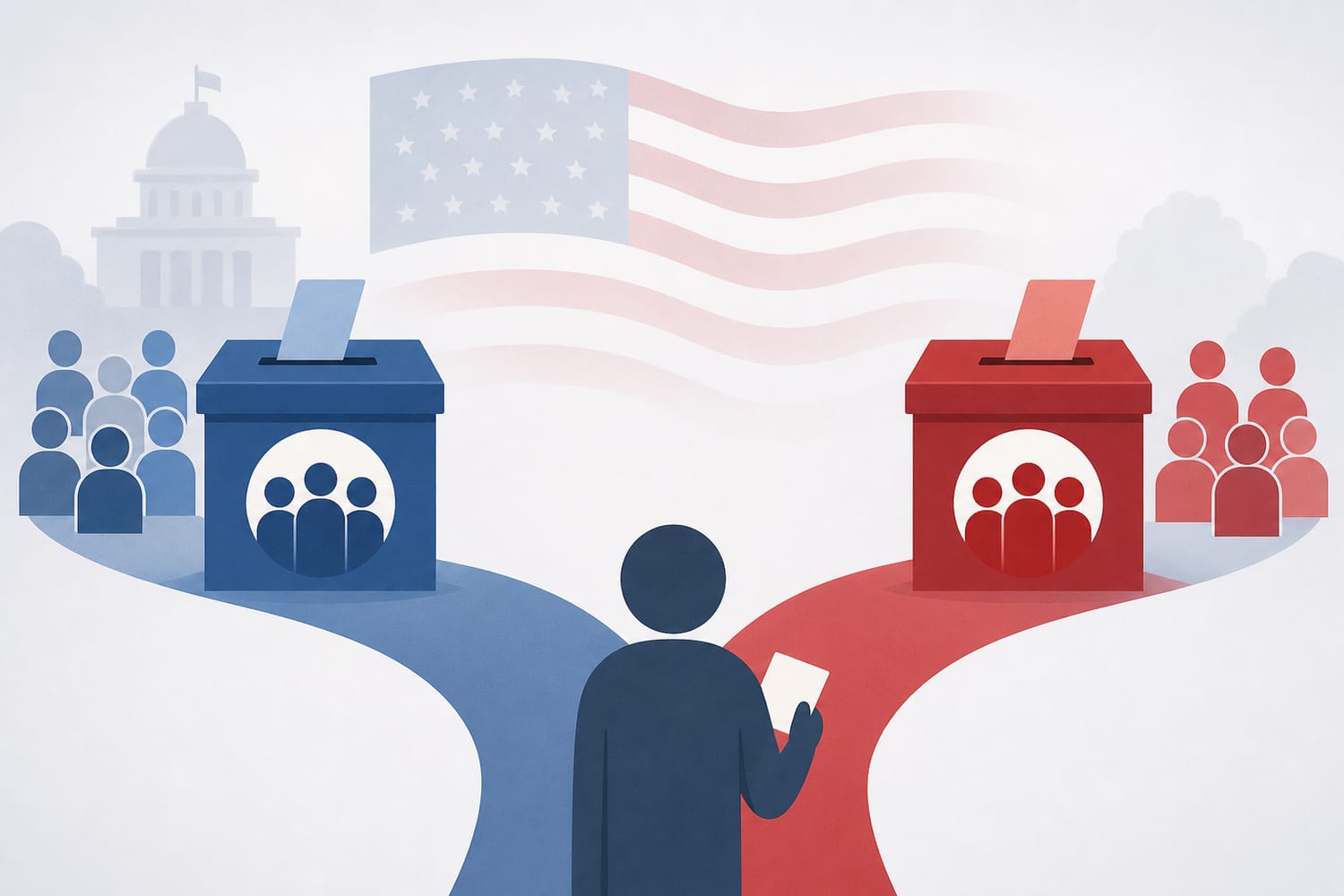
Primary elections are one of the most important but often least understood parts of the democratic process. In many elections, especially in areas dominated by one political party, the primary can effectively determine who wins office. That makes the rules for who gets to participate highly consequential.
At the center of the debate is a basic question: should all voters be allowed to help choose party nominees, or should that decision be limited to voters who formally belong to a party?
Supporters of open primaries argue that elections should include as many voters as possible, especially independents and unaffiliated citizens who still help fund elections through taxes. Supporters of closed primaries counter that political parties are private or semi-private associations with distinct platforms, values, and members, and that only those members should choose their nominees.
The debate is not simply about election mechanics. It touches on representation, party identity, polarization, voter rights, strategic voting, and the role of political parties in American democracy.
What Open and Closed Primaries Mean
In an open primary, voters do not have to be registered members of a political party to vote in that party’s primary. Depending on the state, voters may be able to choose which party’s primary ballot they want on Election Day. For example, an independent voter could decide to vote in the Democratic primary or the Republican primary without formally joining either party.
In a closed primary, only voters registered with a political party may vote in that party’s primary. A registered Democrat votes in the Democratic primary, a registered Republican votes in the Republican primary, and unaffiliated voters are usually excluded unless they register with a party before a deadline.
There are also variations. Some states have semi-open primaries, where unaffiliated voters can participate but registered party members cannot cross over into another party’s primary. Others have semi-closed systems, top-two primaries, or nonpartisan blanket primaries, where candidates from all parties appear on the same ballot and the top vote-getters advance regardless of party.
These differences matter because primary rules can shape who participates, which candidates win, and how parties define themselves.
The Case for Open Primaries
Supporters of open primaries often begin with the argument that more participation is healthier for democracy. Many voters do not identify strongly with either major party. In some states, independents or unaffiliated voters make up a large share of the electorate. Advocates say it is unfair to exclude these voters from meaningful elections, especially when the primary may be the decisive contest.
This argument is especially strong in heavily partisan districts. If one party is almost certain to win the general election, the real competition happens in the primary. In that case, closed primaries can mean that only a small slice of voters effectively chooses the officeholder. Open primary supporters say this undermines representative government by giving disproportionate influence to party loyalists.
Another argument is that open primaries may encourage more moderate candidates. If candidates have to appeal to independents and voters outside the party base, they may adopt broader positions and less polarizing rhetoric. Some reformers believe that closed primaries reward ideological purity because candidates mainly compete for the support of highly engaged party members. Open primaries, they argue, could push politicians toward compromise and problem-solving.
Open primary advocates also point out that elections are publicly administered and often publicly funded. Since taxpayers pay for primary elections, they argue, all taxpayers should have the right to participate. From this perspective, parties benefit from a public election system and therefore should not be allowed to exclude large numbers of voters.
The Case for Closed Primaries
Supporters of closed primaries tend to focus on the rights and responsibilities of party membership. They argue that political parties are organized around shared principles, policy goals, and political strategies. If a party is choosing its nominee, then members of that party should make the choice.
From this view, allowing nonmembers to participate weakens the meaning of party affiliation. A voter who has not joined a party, supported its platform, or participated in its internal debates should not have the same say as those who have committed to it. Closed primary supporters often compare this to other organizations: members of a group typically choose that group’s leaders, not outsiders.
Another concern is strategic voting. In an open primary, voters from one party may cross over to vote in the opposing party’s primary, not because they support that party, but because they want to influence the outcome. They might vote for the candidate they think would be easiest to defeat in the general election or vote against a candidate they strongly dislike. While research suggests widespread strategic voting is not always common, the possibility worries many party leaders and activists.
Closed primary supporters also argue that parties play a crucial role in organizing democratic choices. Parties develop platforms, recruit candidates, mobilize voters, and provide accountability. If primaries are opened too widely, parties may lose their ability to present clear alternatives to voters. The result, critics say, could be weaker parties and less coherent politics.
Independent Voters and the Question of Fairness
Independent voters are central to this debate. Many people choose not to register with a party because they dislike partisan labels, feel alienated from both major parties, or prefer to evaluate candidates individually. Open primary supporters say these voters should not be penalized for their independence.
Closed primary supporters respond that participation comes with choices. If a voter wants to help choose a party’s nominee, they can register with that party. They argue that remaining independent while demanding a role in party decisions asks for influence without affiliation.
There is also disagreement about what independence means. Some independents are genuinely nonpartisan and open to candidates from either side. Others consistently vote for one party but avoid the party label. This complicates the fairness question. Should all independents be treated as outsiders, or as ordinary voters who simply reject formal registration?
The answer often depends on how people understand political parties. If parties are public pathways to elected office, exclusion seems less fair. If parties are membership organizations, exclusion seems more reasonable.
Effects on Polarization and Candidate Behavior
One of the most common claims about open primaries is that they reduce political polarization. The theory is straightforward: if candidates must appeal to a wider electorate, they will avoid extreme positions and focus on issues that matter to a broader public.
However, the evidence is mixed. Some studies suggest that primary rules can influence candidate behavior, but they are only one factor among many. District partisanship, campaign finance, media environments, voter turnout, and national political trends may matter just as much or more.
Closed primary defenders also challenge the assumption that moderation is always the best democratic outcome. They argue that parties should be able to nominate candidates who clearly represent their members’ views, even if those views are more ideological. From this perspective, democracy is not just about producing centrist candidates; it is also about allowing groups of citizens to organize around distinct ideas.
Open primary advocates respond that when nominees are chosen by a narrow and highly motivated electorate, elected officials may feel less accountable to the general public. Closed primary advocates reply that the general election still gives all voters the final say.
Party Rights Versus Voter Access
The debate often becomes a conflict between two democratic values: freedom of association and broad voter participation.
Freedom of association means that people have the right to form political groups and decide who represents them. Closed primary supporters see this as essential. A party’s nominee carries its name on the ballot, so the party should control who gets to choose that nominee.
Broad voter participation emphasizes inclusion. Open primary supporters argue that democracy works best when fewer barriers stand between voters and meaningful choices. They worry that closed primaries shut out independents and reduce the influence of average voters.
Courts and state governments have wrestled with this tension for decades. Election laws vary widely because states have different political cultures and different ideas about the proper role of parties. In some places, party registration is seen as a normal part of civic life. In others, voters strongly value independence and resist formal party labels.
Concerns About Voter Confusion and Engagement
Practical concerns also shape opinions. Open primaries may be easier for some voters because they do not require advance party registration. This can make participation more accessible, especially for new voters or those who do not closely follow registration rules.
On the other hand, open systems can create confusion if voters do not understand that they may choose only one party’s ballot or if rules differ between presidential and state primaries. Closed systems can also confuse voters who discover too late that they are ineligible to participate because of their registration status.
Turnout is another issue. Open primary supporters believe broader eligibility can increase participation. Closed primary supporters argue that committed party members are more likely to be informed about the candidates and the party’s goals. But turnout depends on many factors, including competitiveness, publicity, convenience, and voter enthusiasm.
Alternative Reform Ideas
Some reformers argue that the open-versus-closed debate is too limited. They support systems that move beyond traditional party primaries altogether.
One alternative is the top-two primary, used in states such as California and Washington. All candidates appear on the same primary ballot, and the top two vote-getters advance to the general election, regardless of party. Supporters say this gives all voters equal participation and encourages candidates to appeal to a wider electorate. Critics argue it can shut minor parties out of the general election and sometimes result in two candidates from the same party competing in November.
Another option is ranked-choice voting, sometimes paired with nonpartisan primaries. Voters rank candidates in order of preference, and votes are redistributed until someone reaches a majority. Supporters say this can reduce negative campaigning and allow voters to express more nuanced preferences. Critics say it can be complicated and may not solve deeper problems in the party system.
These alternatives show that the debate is not only about who may vote in a party primary, but also about how elections should structure competition.
Why the Debate Remains Unsettled
There is no single answer that satisfies all democratic values. Open primaries emphasize inclusion, flexibility, and broader participation. Closed primaries emphasize party identity, member rights, and ideological clarity.
Both sides raise legitimate concerns. A system that excludes independents may leave many voters without a meaningful voice in safe districts. A system that allows everyone to participate in party nominations may weaken parties’ ability to define themselves and represent committed members.
The best choice may depend on local circumstances. In states with many independent voters, open primaries may feel more democratic and practical. In states with strong party traditions, closed primaries may seem more consistent and fair. The effects may also vary depending on district competitiveness, political culture, and the behavior of voters and candidates.
Ultimately, the question is not just whether primaries should be open or closed. It is about what role parties should play in democracy, how much influence independent voters should have, and how election systems can balance participation with meaningful political organization.