
Why the Question Keeps Returning
Government shutdowns have become a recurring feature of American politics, often arriving when Congress and the president fail to agree on funding bills before a deadline. During a shutdown, many federal operations are paused, federal employees may be furloughed or required to work without immediate pay, and public services can be delayed or disrupted. National parks may close, federal contractors may go unpaid, benefit processing can slow, and agencies may operate with limited staff.
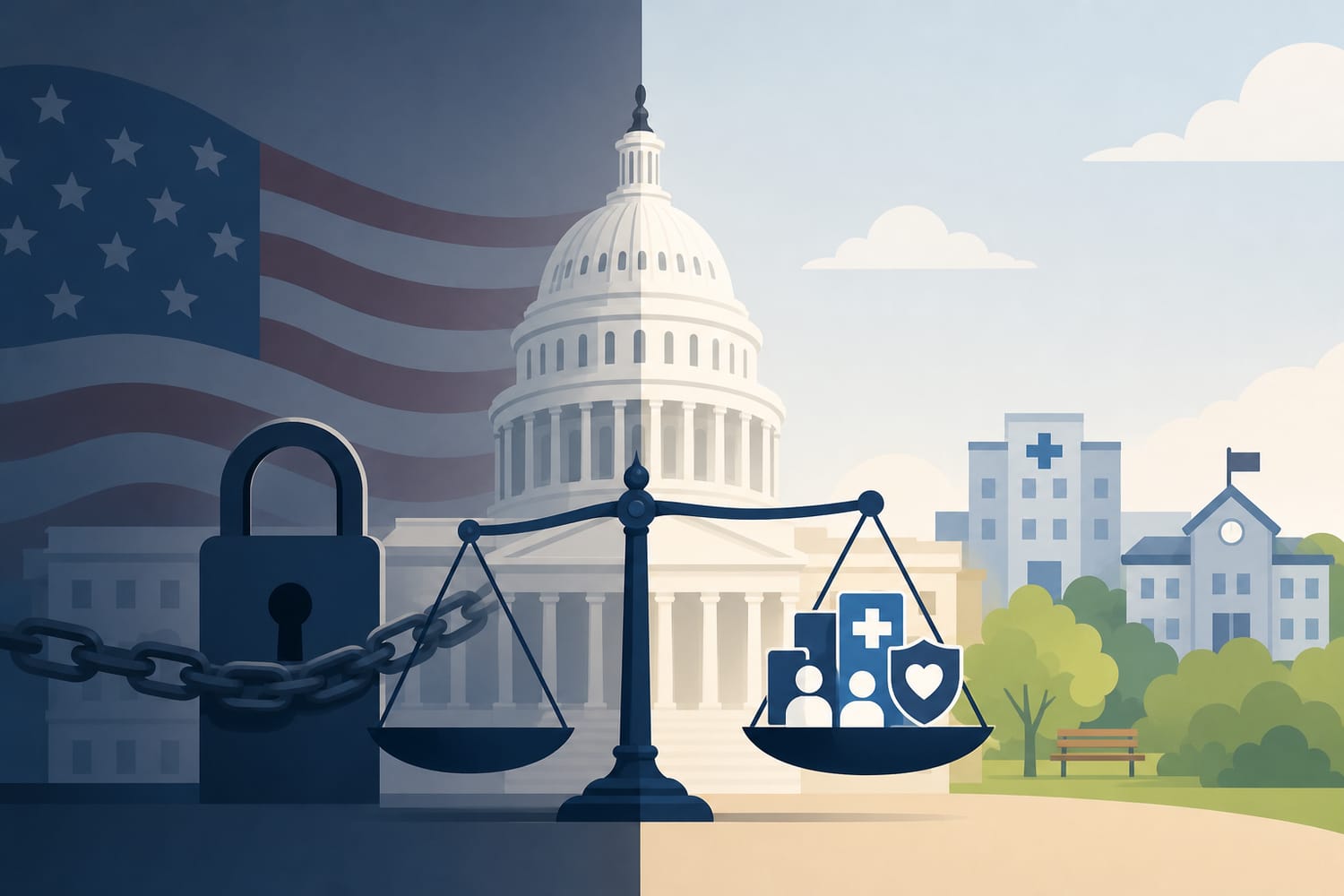
Because shutdowns can create uncertainty and hardship, some lawmakers and policy experts argue that Congress should pass a law preventing them from happening. These proposals usually involve automatic funding extensions that keep the government open if budget negotiations fail. Supporters say this would protect public services and remove the threat of political brinkmanship. Opponents argue that deadlines and consequences are necessary to force compromise and maintain legislative accountability.
The debate is not simply about whether shutdowns are inconvenient. It is about how democracy should handle conflict over spending, what incentives lawmakers should face, and whether avoiding disruption is worth changing the balance of power in the budget process.
The Case for Banning Shutdowns
Supporters of banning government shutdowns often begin with the practical effects. They argue that the federal government provides essential services that should not be interrupted because elected officials cannot reach agreement on time. Even when programs such as Social Security, Medicare, air traffic control, military operations, and border security continue in some form, shutdowns can still strain agencies and workers.
Federal employees are a central part of this argument. During shutdowns, some workers are furloughed while others are deemed essential and must continue working without immediate pay. Although federal employees have often received back pay after shutdowns, the delay can still create financial stress for households. Contractors, janitorial workers, cafeteria staff, and other private-sector workers connected to federal operations may not receive the same protections.
Supporters also argue that shutdowns create costs for taxpayers. Restarting government operations, managing backlogs, and dealing with delayed services can reduce efficiency. Agencies may postpone inspections, permit reviews, grant approvals, and research activities. Businesses and individuals that rely on federal decisions can face uncertainty. From this perspective, shutdowns are not a useful budget tool but a costly failure of governance.
Another argument is that shutdown threats encourage political hostage-taking. If one side believes it can extract policy concessions by threatening to close parts of the government, then budget deadlines become moments of crisis rather than routine governance. Banning shutdowns, supporters say, would reduce the ability of either party to use public services as leverage.
Automatic Funding as a Proposed Solution
Many proposals to ban shutdowns do not remove budget deadlines entirely. Instead, they create automatic continuing resolutions, often called auto-CRs. Under such a system, if Congress fails to pass appropriations bills by the deadline, funding would automatically continue at current levels or at some adjusted rate.
Supporters see this as a compromise between keeping pressure on lawmakers and preventing disruption. Congress would still need to negotiate annual budgets, but failure to meet the deadline would not close agencies. Some versions would freeze spending at the prior year’s levels. Others would include automatic reductions over time to encourage lawmakers to reach a deal. Another approach would restrict congressional travel or pay during missed deadlines, though constitutional issues may limit how far such penalties can go.
Advocates of automatic funding argue that this would bring the United States closer to how many other democracies handle budget disputes. In some countries, government operations continue even when budget negotiations are delayed. Supporters say that public administration should not depend on last-minute legislative drama.
They also argue that shutdowns do not necessarily produce better budget decisions. Instead of careful debate over priorities, lawmakers may rush to pass temporary patches or massive spending bills under deadline pressure. Automatic funding, in this view, could allow more time for deliberate negotiation while protecting the public from immediate harm.
Concerns About Removing Consequences
Opponents of banning shutdowns often agree that shutdowns are disruptive, but they question whether automatic funding would solve the deeper problem. Their concern is that if funding continues automatically, Congress may have even less incentive to complete appropriations bills on time. Missed deadlines could become routine because the most visible consequence would disappear.
From this perspective, the possibility of a shutdown is one of the few mechanisms that forces lawmakers to negotiate. Budgeting is difficult because it involves conflicts over taxes, spending levels, deficits, national defense, social programs, and policy priorities. If there is no hard deadline with consequences, critics argue, Congress may drift into permanent temporary funding.
Some opponents also say automatic funding could lock in existing spending patterns. If the default is to continue last year’s budget, agencies and programs may receive money without fresh review. Congress may be less likely to adjust funding in response to changing needs, waste, or new priorities. For fiscal conservatives especially, this could mean that spending grows or continues without sufficient scrutiny.
Others worry about accountability. The Constitution gives Congress the power of the purse, and annual appropriations are one way lawmakers exercise oversight over the executive branch. If funding becomes automatic, even temporarily, critics fear it could weaken Congress’s role in actively deciding how public money is spent.
The View From Fiscal Conservatives
Many fiscal conservatives view shutdowns through the broader lens of federal spending and debt. They may not celebrate shutdowns, but they often argue that the threat of withholding funds is a legitimate tool when spending is seen as excessive or when Congress is avoiding difficult reforms.
For some on this side, banning shutdowns would reduce leverage for lawmakers trying to force spending cuts or policy changes. They argue that if government funding automatically continues, then the default position favors existing programs and spending levels. Those who want to reduce spending would face a higher burden, because inaction would no longer create a funding crisis.
Some fiscal conservatives also object to the way Congress often handles budgets through large omnibus bills or short-term continuing resolutions. They argue that these practices already reduce transparency and limit meaningful debate. An automatic funding mechanism, they fear, could make this worse by normalizing government by autopilot.
However, not all fiscal conservatives oppose shutdown bans. Some argue that shutdowns are an ineffective way to control spending because they usually end with back pay, delayed costs, and political backlash. They may prefer reforms that impose automatic spending cuts, debt limits, or stricter budget rules rather than allowing agencies to close.
The View From Public Service Advocates
Public service advocates, including many unions, nonprofit organizations, and groups representing benefit recipients, tend to support banning shutdowns. Their focus is often on the people affected by interruptions rather than on the political strategy behind budget disputes.
They point out that government programs serve veterans, seniors, low-income families, farmers, students, travelers, researchers, and small businesses. Even when major benefit checks continue, administrative delays can matter. A postponed loan approval, inspection, passport appointment, food assistance update, or grant payment can have real consequences.
Public service advocates also emphasize morale within the federal workforce. Repeated shutdown threats can make government employment less stable and less attractive, especially for younger workers or people with specialized skills. Agencies may struggle with recruitment and retention if employees believe their paychecks can become bargaining chips in political fights.
From this perspective, banning shutdowns is less about protecting bureaucracy and more about protecting the public. Advocates argue that essential government functions should not depend on whether Congress can resolve partisan disputes by a specific date.
The Partisan Dimension
Although arguments about shutdowns often involve principles, the politics can shift depending on which party controls Congress and the White House. A party that opposes a president’s agenda may see budget deadlines as one of the few opportunities to demand concessions. A party that controls the executive branch may describe shutdown threats as obstruction or irresponsibility.
This shifting perspective can make reform difficult. Lawmakers may support automatic funding when they are in power but hesitate when they imagine being in the opposition. The same tool that seems dangerous when used by the other side may seem necessary when used by one’s own side.
Public opinion also matters. Shutdowns are usually unpopular, but voters may assign blame differently depending on the circumstances. If lawmakers believe the other side will be blamed, they may be more willing to risk a shutdown. If both sides fear backlash, they may prefer reforms that prevent shutdowns altogether.
The partisan dimension complicates the debate because institutional reforms must be designed for both present and future political conditions. A rule that helps one side today may help the other side tomorrow.
Possible Middle-Ground Reforms
Some policymakers look for reforms that reduce the harm of shutdowns without eliminating budget pressure entirely. One idea is an automatic continuing resolution paired with gradual spending reductions. For example, if Congress misses the deadline, funding could continue but decline by a small percentage over time. Supporters say this would keep agencies open while still encouraging action. Critics respond that automatic cuts could be blunt and harmful.
Another option is to require Congress to stay in session until appropriations bills are complete. This would target lawmakers directly rather than federal workers or the public. Some proposals would limit recesses, official travel, or other privileges during funding lapses.
A different approach is to change the budget calendar. Congress could move to two-year budgeting, giving lawmakers more time to conduct oversight and reducing annual crises. Supporters say biennial budgeting would create stability. Opponents say it could reduce flexibility and make it harder to respond to changing conditions.
There are also proposals to separate policy disputes from basic government funding. Under this view, lawmakers should debate major policy changes through regular legislation rather than attaching them to must-pass spending bills. However, because spending bills are among the few measures that must pass, lawmakers often use them to advance priorities that might otherwise stall.
What Is Really at Stake
The debate over banning government shutdowns is ultimately a debate over incentives. Supporters of a ban believe the current system creates bad incentives by rewarding brinkmanship and exposing the public to unnecessary harm. They argue that lawmakers should negotiate budgets without threatening the basic functioning of government.
Opponents believe that removing shutdowns could create a different bad incentive: allowing Congress to avoid hard choices indefinitely. They worry that automatic funding would weaken oversight, protect the status quo, and reduce the urgency needed to reach agreements.
Both sides can point to legitimate concerns. Shutdowns can disrupt lives and waste resources. At the same time, budgeting requires accountability, tradeoffs, and deadlines that matter. The challenge is designing a system that keeps public services reliable while preserving democratic debate over how money is spent.
Whether Congress should ban shutdowns depends on which risk lawmakers and voters consider more serious: the risk of repeated public disruption, or the risk of a budget process with fewer consequences for failure. Any reform would need to address both concerns if it is to gain lasting support.