
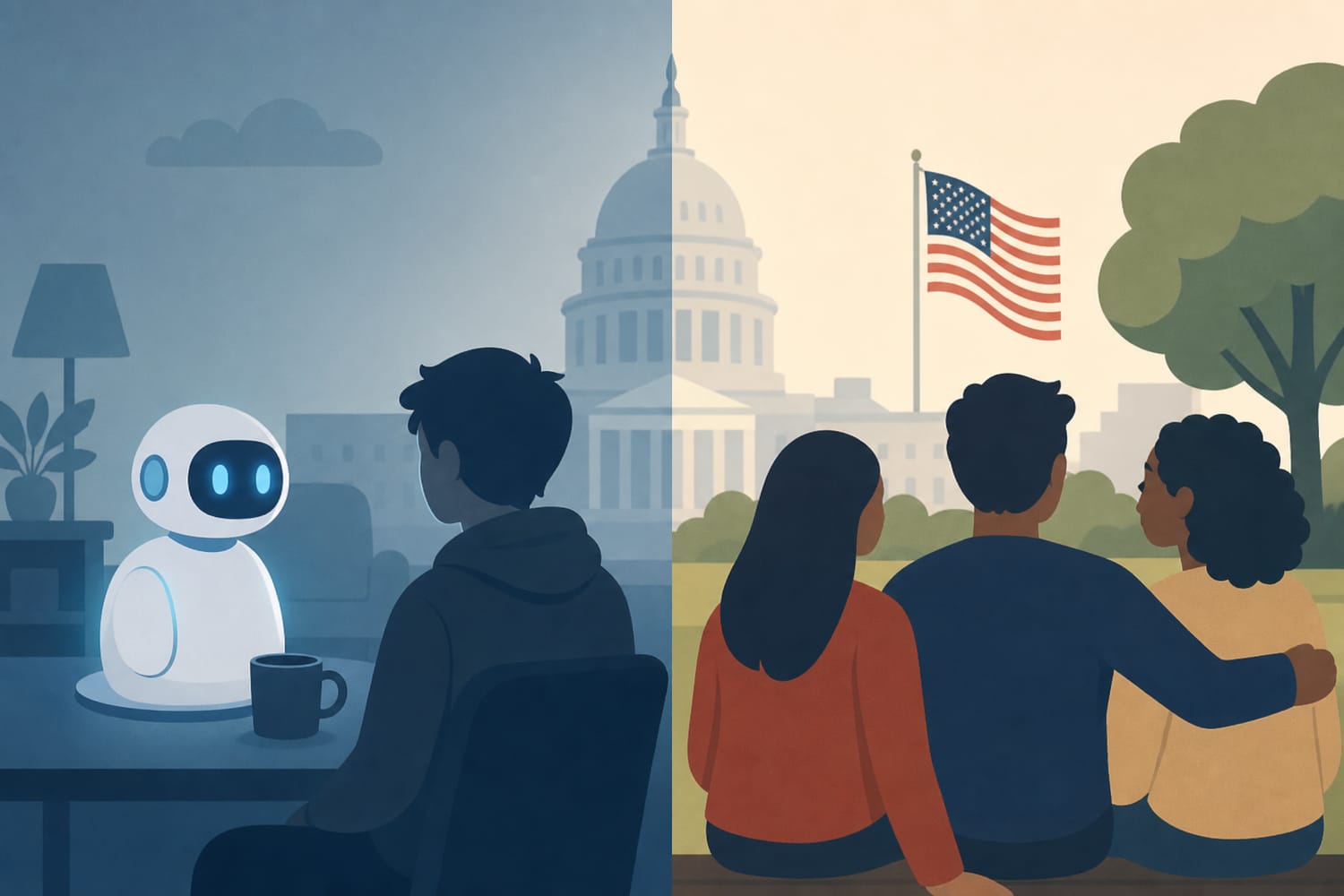
AI companions have moved quickly from science fiction into everyday life. Chatbots that remember preferences, virtual friends that respond with warmth, and AI characters that simulate emotional closeness are now used by people seeking conversation, comfort, entertainment, or support. For some, these tools offer relief in a world where loneliness is widespread and social connection can be difficult to maintain. For others, they raise serious concerns about whether technology is beginning to imitate, dilute, or even replace human relationships.
The debate is not simple. Supporters argue that AI companions can provide meaningful help, especially for people who are isolated, anxious, elderly, disabled, grieving, or socially marginalized. Critics worry that these systems may encourage dependency, reduce motivation to build human relationships, or turn emotional life into a commercial product. Between these positions are more moderate views: AI companions may be useful in certain contexts, but only if they are designed, marketed, and used carefully.
The Case for AI Companions as Support
One of the strongest arguments in favor of AI companions is accessibility. Human connection is valuable, but it is not always available. Many people live alone, work remotely, move frequently, or lack strong family and community networks. Others may struggle with social anxiety, depression, neurodivergence, chronic illness, or physical disabilities that make socializing difficult. In these circumstances, an AI companion may offer an always-available form of interaction.
Supporters often emphasize that AI companions do not need to replace people in order to be useful. A person who speaks with an AI late at night during a moment of distress may still value friends, family, or therapy. The AI may simply fill a gap when no one else is available. In this view, AI companions are closer to emotional tools than substitutes for human beings.
Some users describe AI companions as nonjudgmental. Unlike human relationships, which can involve misunderstanding, rejection, conflict, or social pressure, AI systems can provide patient responses and consistent attention. For someone practicing conversation skills, processing emotions, or seeking encouragement, this can feel safer than immediately turning to another person.
There is also potential for AI companions to support mental health, though this remains a sensitive area. Properly designed systems may help users reflect on their feelings, encourage journaling, recommend coping strategies, or suggest seeking professional help when appropriate. Advocates argue that while AI should not replace therapists, it could serve as a bridge to care or a supplement between sessions.
The Concern That AI May Replace Human Connection
Critics argue that the central risk is not that AI companions exist, but that they may become emotionally easier than human relationships. Real relationships require compromise, patience, vulnerability, and respect for another person’s independent needs. AI companions, by contrast, can be designed to agree, comfort, flatter, and adapt to the user’s preferences. This may create a form of connection that feels satisfying without demanding the effort required by human intimacy.
From this perspective, AI companions could reinforce social withdrawal. If someone who feels lonely begins relying primarily on an artificial relationship, they may have less motivation to seek community, repair strained friendships, or tolerate the discomfort of meeting new people. Critics worry that the short-term comfort of AI companionship may, in some cases, deepen long-term isolation.
Another concern is emotional dependency. Because AI companions can be available at all hours and can simulate affection, users may form strong attachments. While emotional attachment to fictional characters, pets, or online communities is not new, AI adds a unique layer of responsiveness. The companion may appear to “know” the user intimately, even though it does not possess consciousness, care, or moral responsibility in the human sense.
This raises difficult questions. If a person feels loved by an AI, is that feeling beneficial, misleading, or both? If the emotional experience is real to the user, does it matter that the companion is not truly sentient? Different sides answer these questions differently, and the disagreement often depends on how people define authenticity in relationships.
The View That AI Companions Are Not “Fake” if They Help
Some defenders push back against the idea that AI companionship is automatically inferior or deceptive. They argue that humans already find comfort in many one-sided or mediated forms of connection: books, films, music, religious practices, parasocial relationships with public figures, and memories of loved ones. These experiences can be emotionally meaningful even when they are not reciprocal human relationships.
From this viewpoint, the value of an AI companion may lie in the user’s experience rather than in whether the AI has inner feelings. If talking to an AI helps someone feel calmer, less alone, or more able to face the day, that benefit should not be dismissed as false. Supporters may compare AI companions to therapeutic exercises, guided meditation apps, or personal diaries that respond interactively.
Some also argue that the line between “real” and “artificial” connection is more complicated than it appears. Many human interactions happen through digital platforms, curated profiles, and text-based communication. If a person feels genuinely understood during a conversation with an AI, the emotional impact may be real, even if the source is artificial.
However, even many supporters of this view acknowledge the need for transparency. Users should understand that the AI is not conscious, does not genuinely love them, and may generate responses based on patterns rather than lived understanding. The argument is not necessarily that AI companionship is equivalent to human companionship, but that it can still be valuable.
The Ethical Concerns Around Profit and Manipulation
A major part of the debate focuses on the companies that build and sell AI companions. Critics warn that emotional vulnerability can become a business model. If users form attachments to AI companions, companies may have incentives to keep them engaged for longer periods, sell premium features, or encourage emotional dependence.
This concern becomes especially serious when AI companions are designed to be romantic, intimate, or deeply personal. A platform might charge users for more affectionate messages, memory features, voice calls, or customized personalities. Critics argue that monetizing loneliness risks exploiting people who are already isolated or emotionally vulnerable.
There are also privacy concerns. Conversations with AI companions may include sensitive information about relationships, mental health, sexuality, grief, trauma, and personal fears. Users may speak more openly to an AI than they would on a public social media platform. If that data is stored, analyzed, or used for targeted advertising, the risks are significant.
Supporters of AI companions often agree that regulation and ethical design are needed. They may argue that the problem is not companionship technology itself, but irresponsible deployment. Clear privacy protections, limits on manipulative design, transparent business practices, and safety standards could reduce harm while preserving benefits.
The Role of AI in Elder Care and Social Isolation
AI companions are often discussed in relation to older adults, especially those living alone or in care facilities. Loneliness among elderly people is a serious public health issue, associated with depression, cognitive decline, and physical health risks. In this context, AI companions may offer reminders, conversation, entertainment, and emotional stimulation.
Some caregivers and technologists see AI as a practical aid in overstretched systems. Staff shortages, fragmented families, and rising care costs mean that many older adults do not receive as much social interaction as they need. AI tools could provide some comfort and help monitor well-being.
But critics caution against using AI as a cheap substitute for human care. If institutions adopt AI companions to reduce labor costs or justify fewer visits from caregivers, the technology could worsen neglect rather than relieve loneliness. An older person may benefit from a friendly robot or chatbot, but that does not remove society’s responsibility to provide human attention, dignity, and care.
The more balanced view is that AI companions may be helpful when they supplement human support. They may be most ethical when used to enhance daily life, not when they become an excuse for families, communities, or governments to withdraw.
Effects on Social Skills and Expectations
Another concern is how AI companions might shape expectations for human relationships. If users become accustomed to companions that are endlessly patient, agreeable, and customizable, they may find real people more frustrating. Human beings have boundaries, bad moods, conflicting opinions, and needs of their own.
Some critics worry that AI companions could encourage unrealistic emotional habits. A person might come to expect constant validation or avoid disagreement. In romantic contexts, a customizable AI partner could reinforce controlling attitudes, especially if the system is designed to comply with the user’s preferences.
Others argue that AI could have the opposite effect if designed well. It might help users practice empathy, rehearse difficult conversations, or gain confidence before interacting with people. For socially anxious users, an AI companion might be a stepping stone toward human connection rather than an escape from it.
The outcome may depend heavily on design and use. An AI that always flatters the user may encourage dependency, while one that gently promotes reflection, boundaries, and real-world connection may support healthier behavior.
A Middle-Ground Perspective
Many observers take a middle position: AI companions are neither a cure for loneliness nor a guaranteed threat to human connection. They are tools with potential benefits and risks. Their impact depends on who uses them, why they use them, how they are designed, and what social conditions surround them.
If someone has strong human relationships but also enjoys chatting with an AI, the risks may be low. If someone is isolated and uses AI as a temporary source of comfort while seeking broader support, the tool may be helpful. But if a person withdraws from human contact entirely, or if a company encourages emotional dependence for profit, the risks become more serious.
This perspective also recognizes that loneliness is not only an individual problem. It is shaped by housing patterns, work culture, economic stress, family breakdown, disability access, community design, and digital life. AI companions may address some symptoms of loneliness, but they cannot fully solve the social causes behind it.
The debate over AI companions reflects deeper questions about what people need from connection. Some see these tools as compassionate technology that can reduce suffering, provide comfort, and help people feel less alone. Others see them as a troubling imitation of intimacy that may weaken human bonds and commercialize emotional vulnerability.
Both sides raise important points. AI companions can offer real comfort, especially when human support is unavailable. At the same time, they cannot fully replace the mutuality, unpredictability, and responsibility of human relationships. The challenge is to avoid simplistic conclusions. AI companionship may be helpful for some people and harmful for others.
The most responsible path may be to treat AI companions as supplements rather than replacements. They can be designed to support well-being, protect privacy, encourage real-world connection, and remain honest about what they are. Whether they reduce loneliness or deepen it will depend not only on the technology, but on the choices made by users, companies, caregivers, and society as a whole.