
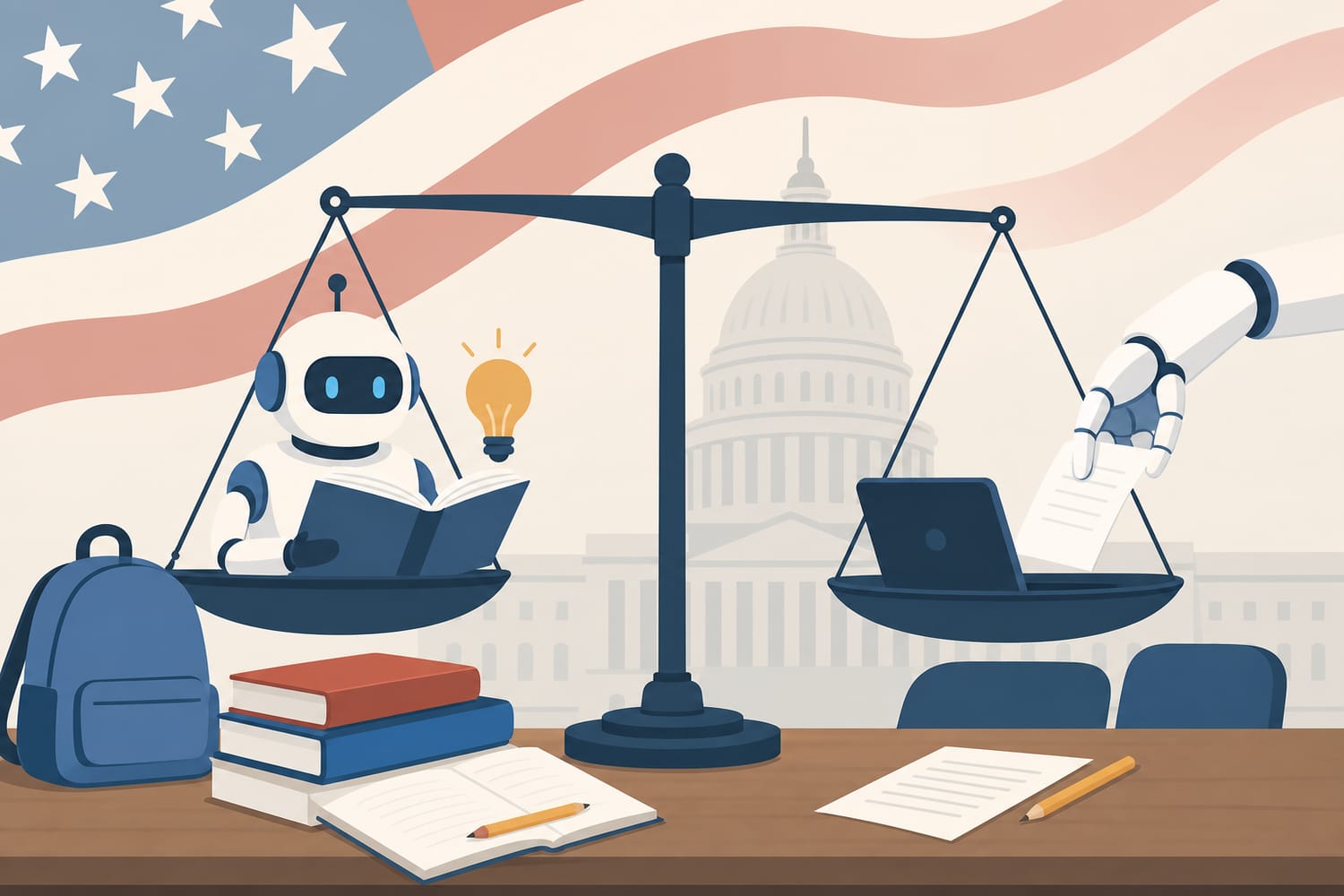
Artificial intelligence has quickly become one of the most debated technologies in education. Tools that can generate essays, summarize readings, explain math problems, translate languages, create study plans, and provide instant feedback are now available to almost any student with an internet connection. For some educators, this represents an exciting opportunity to make learning more personalized, accessible, and efficient. For others, it raises serious concerns about academic honesty, critical thinking, and whether students are actually learning the material they submit.
The debate over AI in the classroom is not simply a question of whether the technology is “good” or “bad.” Different groups see different risks and benefits. Students may view AI as a useful support tool, while teachers may worry that it makes cheating easier to hide. Administrators may focus on policy and fairness, while parents may wonder whether AI will help their children succeed or weaken their independence. The issue is complex because AI can be both a learning tool and a shortcut, depending on how it is used.
The Case for AI as a Learning Tool
Supporters of AI in education argue that it can help students learn in ways that traditional classroom resources sometimes cannot. One of the strongest arguments is that AI can provide immediate, personalized assistance. A student who is struggling with a concept in algebra, grammar, or biology can ask an AI tool for an explanation at any time, rather than waiting for the next class period or tutoring session. This can be especially helpful for students who are too embarrassed to ask questions in front of classmates.
AI can also adapt explanations to different learning styles. For example, a student might ask for a simpler explanation, a step-by-step breakdown, an analogy, or practice questions. In this way, AI can act like a patient tutor that repeats material without judgment. Supporters argue that this can build confidence and help students fill gaps in understanding.
Another argument in favor of AI is accessibility. Students with disabilities, language barriers, or limited academic support at home may benefit from tools that read text aloud, simplify complex passages, translate instructions, or help organize ideas. For multilingual learners, AI can provide vocabulary support and help them understand assignments more clearly. For students with executive functioning challenges, it can help break large tasks into smaller steps.
Supporters also point out that AI is becoming part of the modern workplace. If students will use AI in future careers, then schools may have a responsibility to teach them how to use it responsibly. From this perspective, banning AI entirely may leave students unprepared for a world in which AI-assisted writing, research, coding, and problem-solving are common.
The Concern That AI Encourages Cheating
Critics of AI in the classroom often focus on academic integrity. Their concern is that students can use AI to complete assignments without doing the thinking themselves. A student might ask an AI tool to write an essay, solve a math problem, answer discussion questions, or create a project outline, then submit the result as original work. Because AI-generated work can be difficult to detect reliably, teachers may struggle to know whether a student actually completed the assignment.
This raises questions about fairness. If some students use AI to produce polished work with little effort while others complete assignments independently, grades may no longer reflect actual learning. Students who follow the rules may feel disadvantaged compared with classmates who secretly rely on AI. Teachers may also feel that their ability to assess student understanding has been weakened.
Critics also worry about the long-term effects on learning habits. If students become used to asking AI for answers, they may avoid the productive struggle that helps develop critical thinking, writing ability, and problem-solving skills. Learning often requires confusion, revision, and persistence. If AI removes too much of that process, students may complete assignments more easily but understand less deeply.
Some educators compare the issue to calculators, but others argue that AI is different. A calculator can perform computations, but it does not usually write a complete argument, interpret a poem, or generate a full research summary. Because AI can produce work that appears thoughtful and original, the line between assistance and substitution becomes harder to define.
The Student Perspective
Students themselves may have mixed opinions about AI. Some see it as a practical tool, not unlike spell check, online search engines, or grammar software. They may argue that AI helps them brainstorm ideas, understand difficult readings, improve sentence structure, or study more efficiently. From this point of view, using AI is not necessarily cheating if the student remains involved in the work and uses the tool for support rather than replacement.
Other students may feel pressure to use AI because they believe everyone else is using it. If assignments are difficult, deadlines are tight, or grades carry high stakes, AI can become tempting even for students who are unsure whether it is allowed. Some may not fully understand where the boundary lies. Is it acceptable to ask AI for feedback on a paragraph? What about asking it to rewrite that paragraph? What about using its outline? Without clear rules, students may make different assumptions.
There are also students who avoid AI because they worry it will make them dependent or because they value doing their own work. Some may distrust AI-generated information, knowing that these tools can make mistakes, invent sources, or present biased answers. For these students, AI may be useful in limited situations, but not something they want to rely on heavily.
The Teacher Perspective
Teachers are often at the center of the debate because they must manage both the opportunities and the risks. Some teachers are experimenting with AI by incorporating it into lessons. They may ask students to critique AI-generated essays, compare AI answers with human reasoning, or use AI to brainstorm before writing their own drafts. These educators see AI as something students should learn to evaluate critically rather than simply avoid.
Other teachers are more cautious. They may worry that AI adds another burden to an already demanding job. Instead of only grading and planning lessons, they may now feel responsible for detecting AI misuse, rewriting assignments, and policing technology. AI detection tools are controversial because they can produce false accusations, especially against students whose writing style is simple, formulaic, or non-native. This puts teachers in a difficult position: ignoring AI misuse may feel unfair, but accusing students without strong evidence can damage trust.
Some teachers are changing their assignments in response. They may use more in-class writing, oral presentations, handwritten drafts, personal reflections, or process-based grading. These approaches can make it easier to see how students think and develop their work over time. However, they can also require more class time and may not be practical in every subject or school environment.
The Role of School Policies
Schools and districts are trying to decide how to respond, but policies vary widely. Some institutions have banned AI tools, at least for certain assignments or age groups. Supporters of bans argue that they provide clarity and protect academic integrity. They may also believe younger students need to develop foundational skills before using powerful automated tools.
Others argue that bans are unrealistic. Students can access AI outside school, and enforcement can be inconsistent. A strict ban may also prevent students from learning responsible use. Instead, some schools are creating guidelines that define acceptable and unacceptable uses. For example, a policy might allow AI for brainstorming, tutoring, or grammar feedback, while prohibiting students from submitting AI-generated text as their own.
A major challenge is that AI use exists on a spectrum. Few people object to a student using AI to define a word or explain a concept. More people object when AI writes an entire essay. Between those points are many gray areas: outlining, revising, summarizing, translating, and suggesting arguments. Clear policies need to address these gray areas, but technology changes quickly, making rules difficult to keep up to date.
Equity and Access Concerns
The AI debate also involves equity. On one hand, AI may reduce inequality by giving more students access to tutoring and academic support. Students who cannot afford private tutors may benefit from free or low-cost AI tools. This could help close gaps between students with different levels of family income or educational support.
On the other hand, AI could increase inequality if some students have access to better tools, faster internet, or paid versions with more advanced features. Schools with more resources may be able to train teachers and students in responsible AI use, while underfunded schools may struggle to provide guidance. If AI becomes an expected part of learning, students without reliable access may be disadvantaged.
There are also concerns about bias. AI systems are trained on large amounts of data, and that data may reflect social, cultural, or linguistic biases. If students rely on AI-generated explanations or writing suggestions, they may receive information that is incomplete, slanted, or inaccurate. This makes digital literacy an important part of the conversation.
Finding a Middle Ground
Many educators and researchers suggest that the most practical approach is neither total acceptance nor total rejection. Instead, they argue for teaching students when and how AI can be used ethically. This might include requiring students to disclose AI assistance, explain how they used it, verify its information, and reflect on their own learning process.
Assignments may also need to evolve. If AI can easily complete a task, teachers may reconsider what the task is meant to measure. Rather than asking only for final answers, teachers might emphasize reasoning, revision history, personal connection, discussion, and application. In this model, AI becomes part of the learning environment, but not a replacement for student thought.
At the same time, boundaries remain important. Students still need to learn how to write, calculate, analyze, research, and think independently. AI can support these skills, but it can also weaken them if used carelessly. The challenge is to help students understand the difference between getting help and outsourcing their learning.
The question of whether AI in the classroom is a learning tool or a shortcut for cheating does not have a simple answer. It can be either, depending on the student’s intent, the assignment, the teacher’s guidance, and the school’s policies. AI can provide personalized support, improve accessibility, and prepare students for future workplaces. It can also make dishonest shortcuts easier and complicate how learning is assessed.
The debate is likely to continue as AI tools become more advanced and more common. Rather than focusing only on punishment or unrestricted use, many schools may need to develop thoughtful policies, redesign assignments, and teach students responsible habits. The central issue is not just whether students use AI, but whether they use it in ways that strengthen or replace their own learning.