
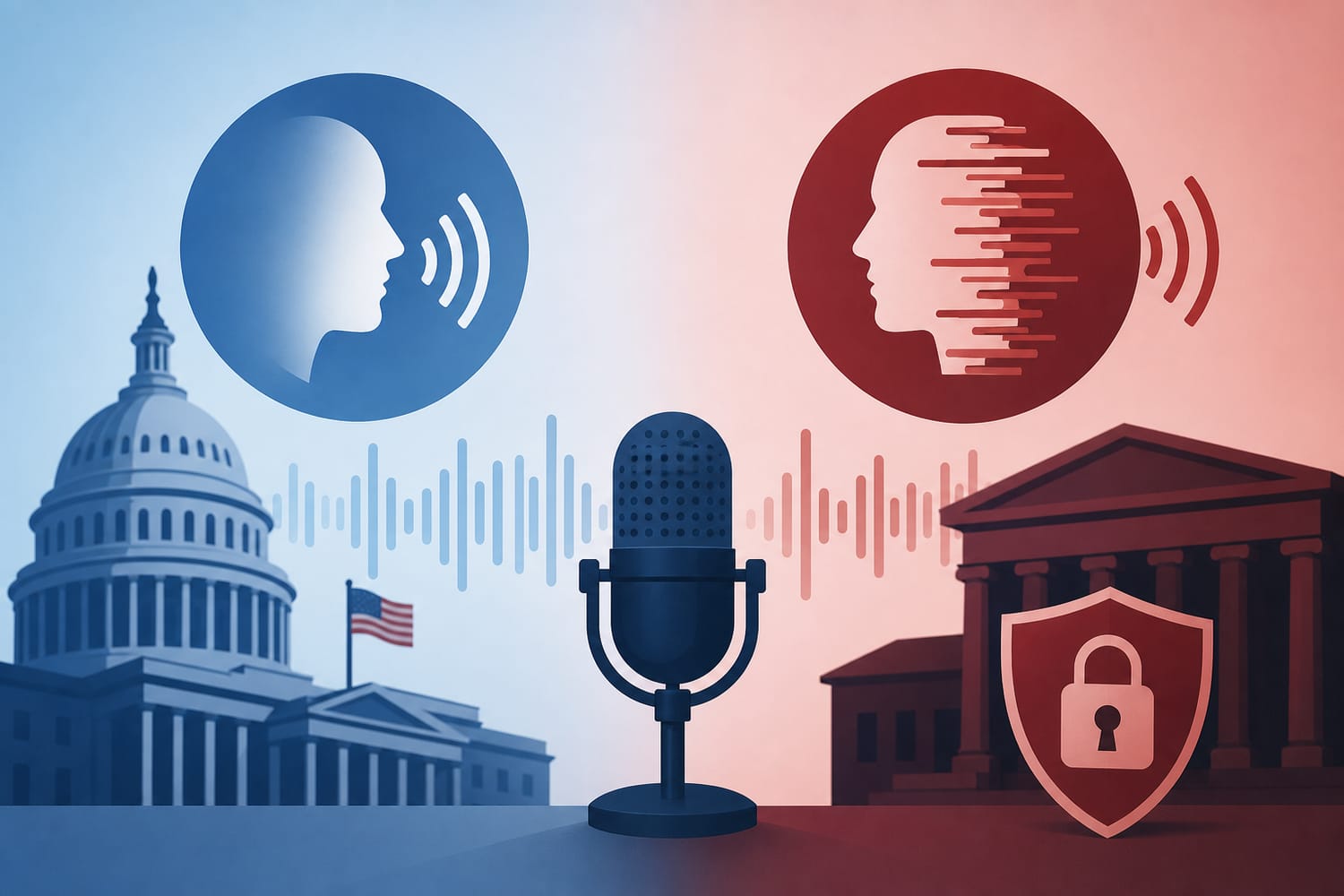
AI voice cloning has moved quickly from a futuristic novelty to a widely available tool. With only a short audio sample, some systems can now generate speech that sounds remarkably similar to a real person. This technology can be used to translate a speaker’s voice into another language, help people who have lost their ability to speak, create audiobooks more efficiently, or allow content creators to produce voiceovers without spending hours in a studio.
At the same time, the same technology has raised serious fears. Scammers can imitate the voice of a family member, executive, public figure, or trusted employee to manipulate people into sending money, sharing private information, or believing false claims. Reports of “grandparent scams,” fake emergency calls, and fraudulent business requests have made voice cloning a major concern for consumers, companies, regulators, and technology developers.
The debate is not simply between people who support innovation and people who fear new technology. Many who see the benefits also recognize the risks. Many who want stronger restrictions do not want to eliminate the technology entirely. The central question is how society should balance useful innovation with protection against fraud, deception, and harm.
The Case for AI Voice Cloning as Helpful Innovation
Supporters of AI voice cloning often argue that the technology has significant positive potential. One of the most frequently mentioned benefits is accessibility. People who lose their voice due to illness, injury, or degenerative conditions may be able to use AI-generated speech that sounds like their own voice. For someone facing the loss of a core part of their identity, this can be deeply meaningful.
Voice cloning can also help people with speech disabilities communicate more naturally. Instead of relying on generic synthetic voices, users may choose a voice that better reflects their age, gender, accent, or personality. In this context, voice cloning is not just a convenience. It can be seen as a tool for dignity, independence, and self-expression.
Creative industries also see promise in the technology. Filmmakers, podcasters, game developers, and audiobook producers can use AI voice tools to reduce production time and cost. Voice cloning may make it easier to edit dialogue, correct mistakes, or create multilingual versions of content while preserving a performer’s vocal style. Smaller creators who cannot afford large production teams may gain access to professional-sounding tools that were once limited to major studios.
Businesses may also benefit. Companies can create consistent customer service voices, training materials, or internal communications more efficiently. In global companies, voice cloning combined with translation could allow executives or educators to communicate across languages in a voice that still sounds familiar to audiences.
From this perspective, AI voice cloning is similar to many previous technologies: powerful, disruptive, and capable of misuse, but not inherently harmful. Supporters argue that the answer is not to ban or stigmatize the tool, but to create responsible standards around consent, disclosure, and security.
The Concern Over Fraud and Impersonation
Critics focus on the fact that voice has traditionally been treated as a sign of identity and trust. People often believe what they hear, especially when it sounds like someone they know. AI voice cloning challenges this assumption. If a scammer can convincingly imitate a loved one, a boss, or a bank representative, the emotional and financial consequences can be severe.
One of the most alarming examples is the family emergency scam. A victim may receive a call from what sounds like a child, grandchild, or spouse saying they have been in an accident, arrested, kidnapped, or otherwise placed in danger. The caller may ask for money urgently and tell the victim not to contact anyone else. Because the voice sounds familiar, the victim may react emotionally before verifying the situation.
Businesses face similar risks. A cloned voice of a CEO or senior manager could be used to instruct an employee to transfer money, approve a payment, or reveal confidential information. These attacks are especially dangerous because they exploit workplace hierarchy and urgency. Employees may feel pressured to act quickly if the request appears to come directly from leadership.
Critics argue that the scale of the threat is different from older forms of impersonation. In the past, a scammer needed acting skill, insider knowledge, or direct access to a target. Now, publicly available audio from social media, podcasts, videos, or voicemails may be enough to generate a convincing imitation. This lowers the barrier for fraud and may allow scams to become more personalized and harder to detect.
For those worried about fraud, AI voice cloning represents not just a new tool for old crimes, but a shift in how people must evaluate trust. The fear is that ordinary people will no longer be able to rely on their ears.
Consent, Ownership, and the Human Voice
Another major part of the debate concerns whether a person’s voice should be treated as personal property, biometric data, artistic identity, or something else. Many people feel instinctively that their voice belongs to them. If a company or individual clones it without permission, they may see that as a violation even if no money is stolen.
Voice actors and performers have been especially vocal about these concerns. For them, a voice is not just a personal trait but a source of income. If studios or platforms can create synthetic versions of a performer’s voice, questions arise about compensation, consent, and job security. Should a voice actor be paid each time their cloned voice is used? Can they refuse certain uses? What happens if a voice model trained on their recordings is used after they die?
Some technology companies argue that licensing systems can address these issues. A performer could give permission for specific uses and receive payment. In theory, this could create new revenue streams rather than eliminate work. However, skeptics worry that workers may be pressured into signing broad agreements or may lose bargaining power if synthetic voices become cheaper than human performances.
There are also concerns involving ordinary people who are not public figures or performers. If someone posts videos online, should their voice be available for AI training? If a child’s voice appears in family content, who has the right to approve or deny future cloning? These questions remain unsettled in many legal systems.
Free Expression and Creative Possibility
Some defenders of voice cloning emphasize free expression, parody, and artistic experimentation. They argue that imitating voices has long been part of comedy, satire, music, and political commentary. Impressionists have mimicked famous figures for generations. AI, in this view, is a new instrument that can expand creative possibilities.
For example, a satirical video might use a recognizable voice to criticize a politician or corporation. A fan project might recreate the voice of a fictional character. A musician might experiment with vocal styles that would otherwise be impossible. Supporters of open creative use argue that overly strict laws could suppress legitimate expression and give powerful individuals too much control over public commentary.
However, this side of the debate also raises difficult boundaries. A human impression usually has cues that signal performance or exaggeration. AI voice cloning can be much more realistic, making it harder for audiences to distinguish satire from deception. If a fake recording spreads without context, it can damage reputations or mislead the public before corrections catch up.
The challenge is deciding when a cloned voice is clearly creative expression and when it becomes harmful impersonation. Disclosure labels, watermarks, and platform rules may help, but they are not always reliable or visible once content is shared widely.
The Role of Technology Companies
Technology companies that build voice cloning tools are central to the debate. Some argue that developers have a responsibility to prevent misuse by requiring user verification, consent from the person being cloned, and limits on sensitive uses. They may also add detection tools, watermarking, audit logs, and restrictions on cloning public figures or private individuals without proof of permission.
Supporters of this approach believe that responsible design can reduce harm while preserving benefits. If platforms refuse to generate voices without consent, scammers may have fewer easy options. If generated audio includes hidden markers, investigators may be able to trace fraud more effectively.
Others are skeptical. They argue that technical safeguards can be bypassed, especially if open-source models or unregulated tools are available. A strict company may prevent abuse on its own platform, but bad actors can move to less restrictive services. Detection tools may also fail as synthetic audio improves.
There is also disagreement about how much responsibility should fall on companies versus users. Some technology developers argue that a tool should not be blamed for every misuse, just as cameras are not blamed for every fake photo. Critics respond that when a tool is specifically capable of impersonating real people, companies must anticipate predictable harm.
Regulation and Legal Responses
Governments are beginning to consider how existing laws apply to AI voice cloning. Fraud, defamation, identity theft, harassment, and privacy laws may already cover some abuses. However, many experts argue that current rules are incomplete or inconsistent.
One possible approach is to require consent before cloning someone’s voice. Another is to mandate clear disclosure when synthetic voices are used in advertising, political messaging, or customer service. Some propose stronger penalties for using AI-generated voices in scams or election interference. Others support treating voiceprints as biometric data, subject to privacy protections.
Regulation also has critics. They warn that broad laws could be difficult to enforce and might restrict beneficial or harmless uses. Small creators and startups may struggle with compliance costs, while criminals may ignore the rules entirely. There is also the risk that laws written too quickly could become outdated as technology changes.
Still, many observers believe some legal clarity is necessary. Without rules, victims may have limited options after harm occurs, and responsible companies may compete against less ethical ones with fewer restrictions.
How Individuals and Organizations Can Respond
Regardless of the broader policy debate, many experts recommend practical changes in how people verify identity. Families can create private code words for emergencies. If a caller claims to be a relative in distress, the recipient can hang up and call back using a known number. People can also be cautious about urgent requests for money, secrecy, or gift cards.
Organizations may need stronger internal verification procedures. A voice call from an executive should not be enough to authorize major financial transfers or sensitive data access. Multi-factor authentication, callback procedures, and employee training can reduce the risk of voice-based fraud.
Some also advise limiting publicly available voice recordings, though this may be unrealistic for professionals, creators, educators, and public figures. In a world where audio and video sharing is common, prevention cannot depend entirely on staying offline.
A Debate Without a Simple Answer
AI voice cloning sits at the intersection of innovation, trust, privacy, creativity, and crime. It can help people communicate, create, and preserve identity. It can also make fraud more convincing, violate consent, and weaken confidence in what people hear.
The most balanced view may be that voice cloning is neither purely helpful nor purely dangerous. Its impact depends on how it is designed, used, regulated, and understood by the public. Supporters are right to point out that the technology has real benefits. Critics are right to warn that those benefits do not erase the risks.
The debate is likely to continue as the tools become more advanced and more accessible. The key challenge will be building systems of trust that do not rely only on the sound of a familiar voice. Society may need new habits, new laws, and new technical safeguards to make room for innovation without opening the door to a new era of fraud.