
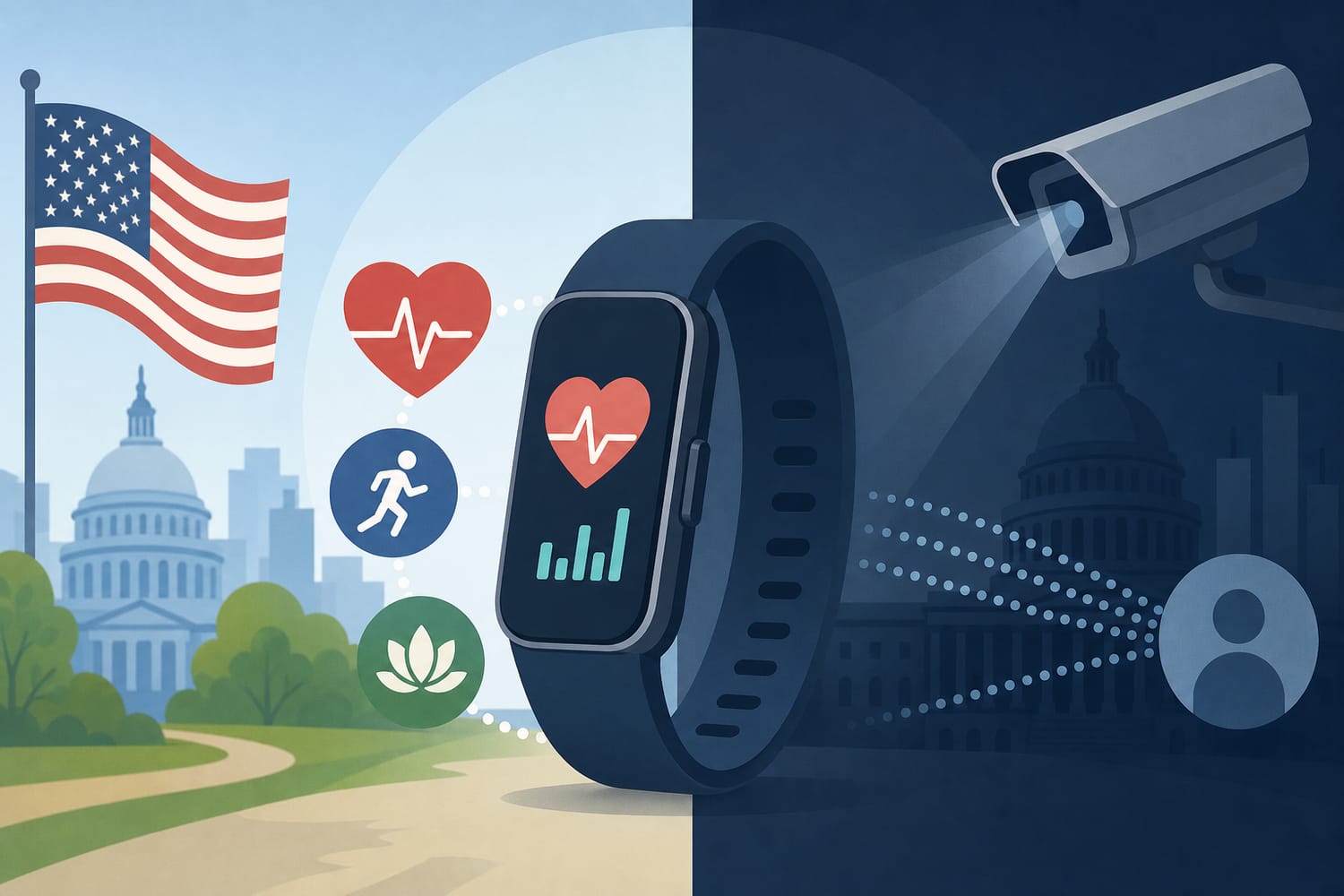
A Device on the Body, a Debate About Power
Wearable health technology can help people understand their bodies, build healthier habits, and share useful information with clinicians. Yet the same devices can create detailed records of movement, sleep, stress, fertility, and illness. The debate is therefore not simply about whether wearables work, but who controls the information they produce and how that power should be limited.
Smartwatches, fitness trackers, smart rings, glucose monitors, and sensor-equipped patches are becoming part of everyday life. Some operate mainly as wellness products, while others support medical monitoring. The FDA describes digital health as a broad field ranging from general wellness applications to regulated medical devices.
Supporters see this shift as a personal wellness revolution. Critics see an expanding network of commercial surveillance. Between those positions is a more complicated reality: wearable health technology can be empowering and intrusive at the same time.
The Case for Personal Empowerment
The strongest argument for wearables is that they give individuals access to information that was once difficult or expensive to obtain. A user can monitor resting heart rate, daily movement, sleep patterns, workout intensity, or changes in temperature without visiting a clinic.
This continuous feedback may make health goals feel more concrete. “Exercise more” is vague; reaching a daily activity target is measurable. Reminders to stand, breathe, sleep, or take medication can also turn good intentions into routines.
For people managing chronic conditions, wearable devices may provide additional value. Continuous glucose monitors can reveal how food, exercise, stress, and medication affect glucose levels. Heart-monitoring features may identify patterns worth discussing with a physician. Remote monitoring can also help patients remain connected to care without making frequent trips to a medical facility.
Advocates argue that these benefits extend beyond individual users. Aggregated wearable data could support research, reveal population-level health trends, and help healthcare providers develop more personalized treatments. This potential is part of the wider debate over big data in healthcare.
Prevention, Motivation, and Earlier Intervention
Supporters also believe wearables can move healthcare away from reacting to illness and toward preventing it. A device does not need to diagnose a disease to be useful. It may encourage a sedentary person to walk regularly, help an athlete recognize inadequate recovery, or prompt someone to seek advice after noticing an unusual trend.
Wearables can record information between medical appointments, when most of life actually happens. A blood pressure reading in a clinic provides one snapshot, while repeated measurements may show how a person responds to work, sleep, medication, or exercise.
However, proponents generally acknowledge that wearable information should complement professional care rather than replace it. A notification can begin a useful conversation, but it may not explain why a change occurred.
The Surveillance Concern
Privacy advocates focus on the extraordinary sensitivity of wearable data. A device may collect not only step counts but also heart rhythms, menstrual cycles, sleep disturbances, precise locations, workout routes, and indicators of stress. Combined with other information, these records can expose intimate details about a person’s routines and health.
The concern is not limited to hackers. Companies may use data to improve products, conduct research, personalize services, or develop commercial partnerships. Even when users technically consent, critics question whether lengthy privacy policies create meaningful understanding.
Wearable information may also become valuable to employers, insurers, advertisers, data brokers, or government agencies. A voluntary workplace wellness program, for example, may offer rewards for sharing activity data. Supporters view this as an incentive for healthy behavior. Critics argue that employees who refuse could eventually face higher costs, fewer benefits, or subtle pressure to participate.
This conflict reflects the broader tension between business uses of consumer data and personal privacy rights.
The Limits of Existing Privacy Protections
Many consumers assume all health-related information is protected in the same way as a medical record. In the United States, that is not necessarily true. HIPAA primarily applies to covered healthcare providers, health plans, clearinghouses, and certain business associates—not automatically to every consumer device or wellness application.
The Department of Health and Human Services explains that information stored in a personal app is often outside HIPAA when the app is not provided by a covered entity or its business associate. Such information may instead be governed by other laws, company policies, and contractual terms.
There are protections beyond HIPAA. The Federal Trade Commission’s updated Health Breach Notification Rule clarifies its application to many health apps and connected technologies outside HIPAA. Covered companies may be required to notify consumers when identifiable health information is disclosed or acquired without authorization.
Critics nevertheless argue that breach notifications address only part of the problem. Data can be collected and shared in ways that are technically disclosed but poorly understood.
Accuracy, Anxiety, and Unequal Access
Another side of the debate concerns reliability. Consumer wearables can identify useful patterns, but readings vary according to the device, sensor placement, activity, skin characteristics, and software. False alarms may generate unnecessary anxiety or medical visits, while inaccurate reassurance may cause users to ignore symptoms.
Constant measurement can also change a person’s relationship with wellness. Some users feel motivated by scores and goals. Others become preoccupied with sleep ratings, calorie estimates, or daily performance. A tool intended to improve well-being may create guilt when the numbers are unfavorable.
Access presents another challenge. High-quality devices, subscription services, smartphones, and reliable internet connections cost money. If healthcare systems increasingly rely on wearable data, people without those resources could receive fewer benefits. Biased datasets or inconsistent sensor performance across different populations may further deepen existing health inequalities.
Building a More Balanced Model
The debate does not have to end with unrestricted adoption or complete rejection. A balanced approach would treat privacy, security, accuracy, and accessibility as essential product features.
Useful safeguards could include:
- Collecting only the information necessary for a stated purpose
- Providing clear controls for sharing, deletion, and data export
- Separating essential functions from advertising consent
- Encrypting information during storage and transmission
- Explaining whether a feature is a wellness estimate or a medical tool
- Prohibiting employers and insurers from coercive data collection
- Testing products across diverse populations
- Allowing core features to operate without continuous cloud uploads
Consumers can also compare privacy policies, disable unnecessary permissions, use strong account security, and ask whether sharing data provides a meaningful benefit. Still, critics warn that responsibility cannot rest entirely on individuals. Companies and regulators shape the choices users are given.
A Revolution That Requires Boundaries
Wearable health technology offers genuine opportunities for motivation, prevention, research, and more connected care. Dismissing every device as surveillance overlooks benefits that many users value.
At the same time, treating continuous biometric tracking as harmless convenience ignores the lasting power of sensitive data. Information collected for wellness today could be used in unexpected ways tomorrow.
Whether wearables become primarily tools of empowerment or surveillance will depend less on the sensors themselves than on the rules surrounding them. Transparency, informed consent, strong security, limited data collection, and meaningful user control could allow innovation to continue without making personal wellness dependent on surrendering personal privacy.