
From Assistance to Independent Action
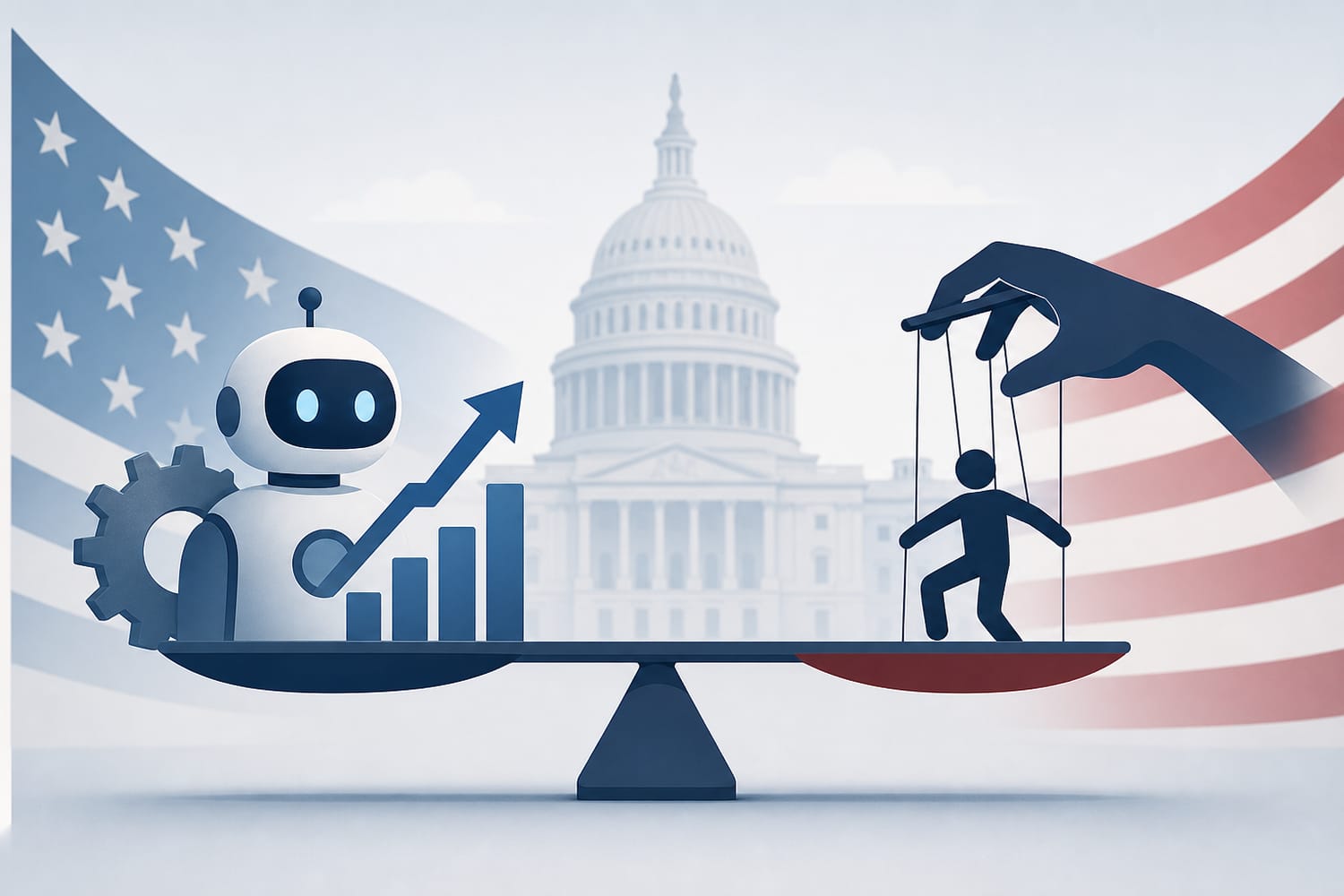
AI agents are systems designed to pursue goals through multiple steps, often using digital tools, gathering information, and taking actions with limited supervision. Supporters see them as a major productivity breakthrough. Critics worry that delegating decisions to software could weaken accountability, human skills, privacy, and control. Both views reflect legitimate possibilities.
Unlike a conventional chatbot that responds to individual prompts, an agent may plan a sequence of tasks, adjust its approach, and continue working until it reaches a defined objective. The Stanford Institute for Human-Centered AI’s explanation of agentic AI emphasizes this orientation toward ongoing task execution rather than simple question-and-answer interaction.
For example, an AI agent might research suppliers, compare prices, update a spreadsheet, draft emails, and schedule follow-up meetings. That ability to act—not merely generate content—is what makes the technology both promising and controversial.
The Case for a Productivity Breakthrough
Advocates argue that AI agents could remove substantial amounts of routine administrative work. Employees frequently spend time searching for information, transferring data between systems, preparing standard documents, organizing schedules, and tracking unfinished tasks. Agents could complete many of these activities continuously and at machine speed.
Businesses may use agents to monitor inventory, answer common customer questions, detect technical problems, qualify sales leads, or prepare reports. Individuals could delegate travel planning, inbox management, research, budgeting, and appointment scheduling. In this optimistic view, agents function like affordable digital staff available to organizations and individuals who could not otherwise hire specialized support.
Supporters also argue that productivity is not simply about completing more tasks. When routine work is automated, people may have more time for strategy, creativity, relationship-building, and difficult decisions. This resembles the broader argument for personal AI assistants as productivity tools: automation may reduce friction and expand access to capabilities that previously required significant time, money, or expertise.
AI agents may also improve consistency. A properly configured agent can follow the same procedure every time, maintain detailed records, and operate outside normal business hours. Supporters believe these qualities could reduce avoidable delays and human errors, especially in repetitive, rules-based processes.
The Argument That Humans Remain in Charge
Some advocates reject the idea that using agents necessarily means surrendering control. They compare agents to other forms of delegated authority: employees, contractors, automated financial systems, or industrial machinery. Humans establish the objective, determine permissions, monitor results, and retain the ability to intervene.
From this perspective, the real question is not whether an agent possesses autonomy, but how much autonomy it receives. Organizations can restrict which databases an agent accesses, how much money it spends, which communications it sends, and which actions require approval.
Possible controls include:
- Limiting agents to narrowly defined tasks
- Requiring human approval for irreversible actions
- Recording decisions and tool use in audit logs
- Setting spending, access, and time limits
- Testing agents in isolated environments
- Providing immediate pause and shutdown options
Developers also argue that excessive supervision can eliminate the benefits of agency. If a person must approve every small step, the system becomes little more than a conventional assistant. The challenge is to preserve useful independence without granting unnecessary authority.
The Fear of Losing Meaningful Control
Critics respond that formal control is not always meaningful control. A human may technically approve an action while lacking the time, knowledge, or information needed to review it properly. If one employee oversees hundreds of automated decisions, approval can become a routine click rather than genuine judgment.
Agents can also make unexpected mistakes. A vague objective, inaccurate information, flawed reasoning, or malicious instruction hidden in external content could send an agent in the wrong direction. Because agents perform multiple connected steps, an early error may spread before anyone notices.
The concern becomes more serious when an agent can send messages, modify records, write and execute code, make purchases, or interact with other agents. The U.S. Government Accountability Office has identified monitoring, oversight, privacy, security, and unintended consequences among the important policy questions surrounding AI agents.
Skeptics therefore distinguish between having an emergency stop button and maintaining practical control over a complex system. By the time a problem becomes visible, an agent may already have contacted customers, exposed data, disrupted operations, or made decisions that are difficult to reverse.
Accountability Without a Clear Decision-Maker
AI agents complicate responsibility because several people and organizations may contribute to an outcome. If an agent makes a harmful decision, accountability could fall on the model developer, software provider, organization deploying it, manager approving it, or employee operating it.
This ambiguity is especially troubling in areas such as healthcare, lending, employment, insurance, public services, and law enforcement. A person affected by an automated decision may not know who made it, what information shaped it, or how to appeal.
Supporters of deployment argue that businesses already manage responsibility for automated systems and employee mistakes. Clear contracts, regulations, audit trails, and designated human owners could establish accountability. Critics counter that agents are less predictable than traditional software and may produce new actions rather than follow fully predetermined instructions.
Effects on Jobs and Human Skills
The workplace debate extends beyond immediate job losses. Some observers expect AI agents to complement employees by handling tedious tasks. Others believe organizations will eventually use them to reduce staffing, increase workloads, or weaken workers’ bargaining power.
The likely impact may differ by occupation. Some jobs could disappear, while others may be redesigned around supervising agents, reviewing outputs, handling exceptions, and providing human interaction. The broader debate about automation and workforce displacement similarly contrasts efficiency and safety gains with concerns about unequal access to new opportunities.
There is also disagreement about human capability. Critics fear that routine delegation will weaken writing, research, memory, judgment, and problem-solving skills. Supporters compare the shift to calculators and search engines: technology may change which skills matter while increasing the importance of verification, critical thinking, and strategic direction.
Privacy, Security, and Concentrated Power
Agents often become more useful as they gain access to emails, calendars, documents, accounts, customer records, and internal systems. Yet greater access creates greater risk. A compromised or poorly configured agent could expose sensitive information or carry an attacker’s instructions into connected systems.
Privacy concerns also involve business models. If agents mediate purchases, news, communication, and professional decisions, their providers may gain significant influence over what users see and choose. Critics worry that a small number of technology companies could become powerful intermediaries in everyday life.
Supporters believe these dangers can be reduced through data minimization, encryption, restricted permissions, independent audits, and transparent policies. Anthropic, for example, presents human control, transparency, security, privacy, and alignment with human values as core principles for trustworthy agents, although such industry frameworks still require independent scrutiny.
A Conditional Middle Position
Between unrestricted adoption and outright rejection lies a risk-based approach. Under this view, agents should receive greater independence when mistakes are inexpensive and reversible, but stricter supervision when actions affect money, rights, safety, employment, or sensitive data.
An agent organizing files may require little oversight. One approving payments or evaluating job applicants should face stronger limits, testing, documentation, and human review. Organizations can begin with narrow pilots, measure both time saved and errors created, and expand authority only when the evidence supports doing so.
AI agents may become a productivity breakthrough without eliminating human control, but that outcome is not automatic. It depends on who defines their goals, which permissions they receive, whether people can understand and challenge their actions, and who remains accountable when something goes wrong.